
This page contains affiliate links. If you buy through them, we may earn a commission at no additional cost to you. Read our affiliate disclosure.
A garbage disposal usually gets replaced under duress — it seized up, it's leaking, or it hums without turning while the sink fills. That's a bad moment to start comparing horsepower and mount systems from scratch. This guide covers six current disposals across the range homeowners actually shop: a budget swap, a mid-range workhorse, a quiet high-output unit, a compact model for shallow cabinets, a high-horsepower unit, and a batch-feed option with a stopper-activated safety switch. Comparisons are based on manufacturer specifications — horsepower, grind stages, sound insulation, mount type — and patterns across owner reviews, not hands-on testing.
- InSinkErator Evolution Excel — Best Overall
- InSinkErator Badger 5 — Best Budget
- Moen GX50 — Quietest
- InSinkErator Evolution Compact — Best for Small Cabinets
- Waste King L-8000 — Best High-Horsepower
- Moen Host Series GXS75C — Best Batch-Feed
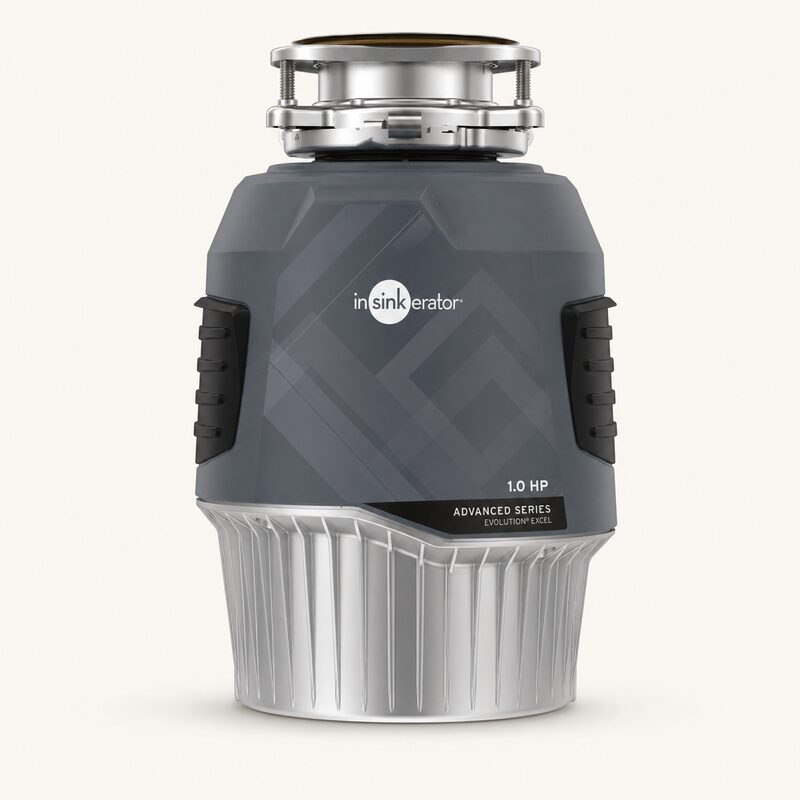
InSinkErator Evolution Excel
The Evolution Excel tops InSinkErator's consumer lineup: a 1.0 HP motor with a three-stage grind (Multi-Grind adds a third auger pass) that handles fibrous scraps — celery, corn husks, onion skin — that stall single-stage units. It's continuous-feed, with SoundSeal Plus insulation, noticeably quieter than the company's budget models, though not silent.
It uses the Quick Lock mount, so swapping an older InSinkErator unit is a no-plumber job — align and twist. A Waste King or Moen unit means also replacing the flange. Septic-safe with an included baffle. Street price: $220–$260.
- Three-stage grind handles fibrous and stringy waste well
- Quieter than most continuous-feed units at this power level
- Quick Lock mount makes same-brand replacement fast
- Costs more than mid-range units with similar horsepower
- Still audible during grinding, just dampened, not silent
- Overkill for a household that runs it a few times a week
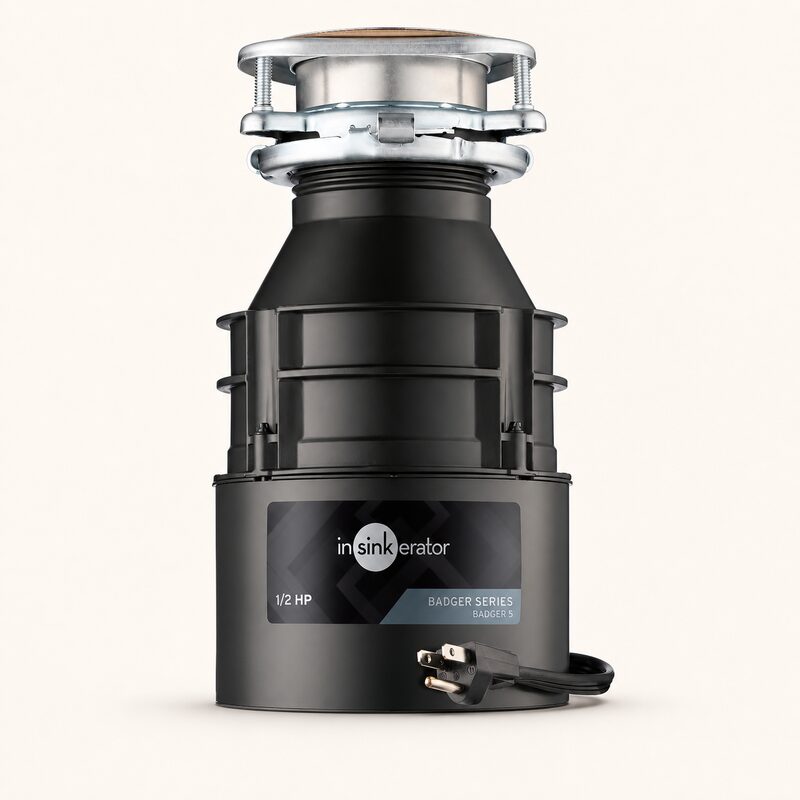
InSinkErator Badger 5
The Badger 5 is the disposal most homeowners already had — a reasonable choice for a straight "replace it exactly" swap. It's a 1/2 HP motor with a single-stage grind and galvanized steel components rather than stainless, the main tradeoff versus pricier models: galvanized parts corrode faster, especially with heavy citrus or high-acid waste. Continuous-feed with essentially no sound insulation, so it runs noticeably louder than the Evolution or Moen lines.
Mounting is InSinkErator's older three-bolt system rather than Quick Lock — slower and less forgiving, but compatible with hardware many homes already have from a decades-old prior unit. Not marketed as septic-safe out of the box. Price: $90–$110, the lowest here.
- Lowest price point of any disposal in this list
- Simple, well-understood design with widely available parts
- Reasonable choice for light, infrequent household use
- Single-stage grind struggles with fibrous or stringy waste
- Galvanized grind components wear faster than stainless
- Loud — minimal sound insulation
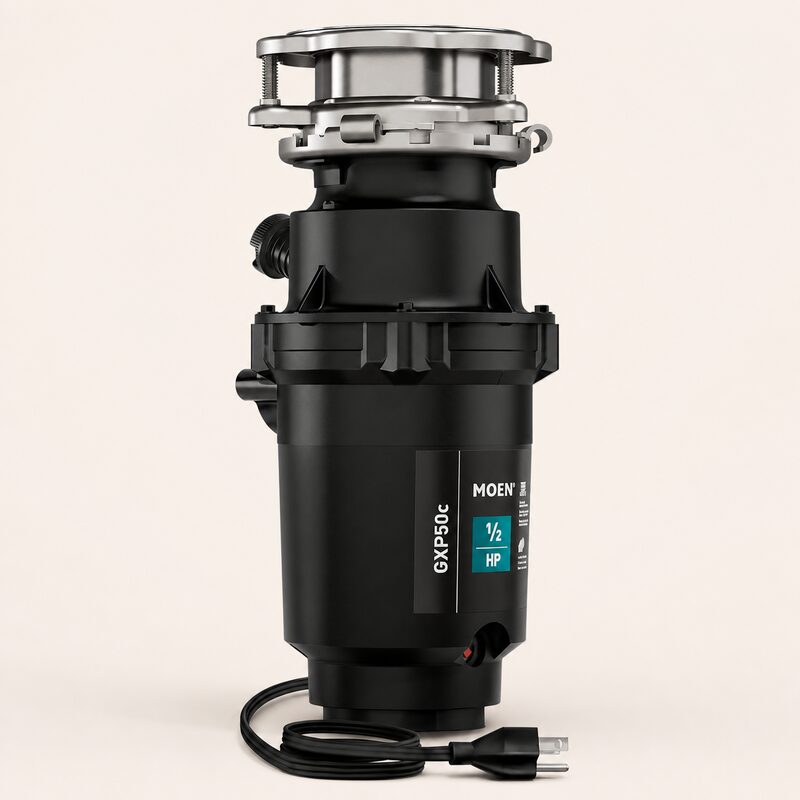
Moen GX50
The GX50 is a 1/2 HP, two-stage grind disposal built around Moen's Sound Reduction technology — insulated housing designed to cut motor and grinding noise more than InSinkErator does at a comparable price. It's continuous-feed and includes Moen's Even Flow pressure balance system to reduce splash-back. For a sink near a living room or open-concept dining area, the noise difference versus a Badger-tier unit is noticeable within the first week.
Mounting is a universal three-bolt system compatible with most under-sink setups regardless of prior brand, though a Quick Lock unit means also replacing the flange and ring. Septic-safe. Typical price: $130–$150.
- Noticeably quieter operation than similarly priced competitors
- Universal mount works with most existing under-sink hardware
- Reasonable price for the noise-reduction feature set
- 1/2 HP and two-stage grind is modest for heavy daily use
- Not rated for the toughest fibrous waste (corn husks, artichoke)
- Fewer third-party repair parts available than InSinkErator
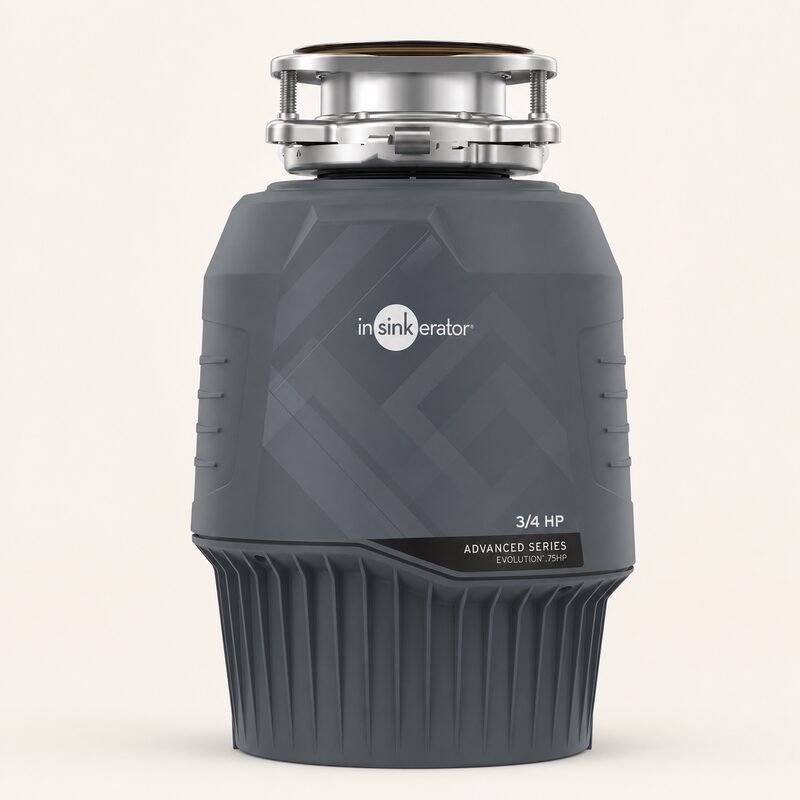
InSinkErator Evolution Compact
The Evolution Compact solves a specific problem: under-sink cabinets with a garbage can, water filter, or shallow depth that won't clear a full-size disposal. It's shorter than the Excel or Badger while still running a 3/4 HP motor and a two-stage grind — not stripped-down on power, just footprint. It carries SoundSeal insulation, one tier below the Excel's SoundSeal Plus.
It's continuous-feed with the same Quick Lock mount as the rest of the Evolution line, so replacing another InSinkErator unit is fast, and it's septic-safe with an included baffle. The tradeoff versus the full-size Excel is capacity under sustained heavy use. Price: $150–$180.
- Shorter housing fits cabinets that can't clear full-size units
- 3/4 HP motor is solid power for the smaller footprint
- Quick Lock mount for fast InSinkErator-to-InSinkErator swaps
- Less sound insulation than the top-tier Evolution Excel
- Smaller grind chamber means slower processing of large loads
- Costs more than the Badger 5 for a mid-tier feature set
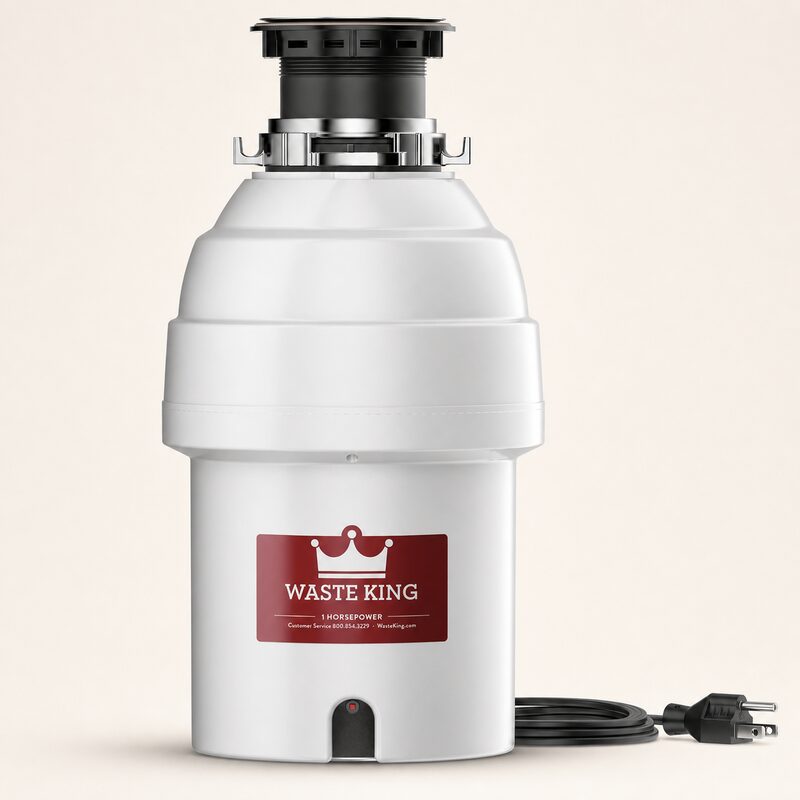
Waste King L-8000
The L-8000 runs a full 1.0 HP permanent-magnet motor with a stainless steel grind chamber, built continuous-feed for households that put real volume through the disposal — large families, frequent cooking, anyone tired of a weaker motor stalling on potato peels. It starts at full torque immediately rather than ramping up, which owner reviews cite as why it clears waste other units jam on.
Sound insulation is lighter than the Evolution line or GX50 — functional, not quiet. Mounting is compatible with InSinkErator's older EZ Mount hardware but not Quick Lock without an adapter. Septic-safe. Price: $150–$180, competitive for the horsepower.
- Full 1.0 HP with immediate full-torque startup
- Stainless steel grind components for durability
- Strong value for the horsepower relative to price
- Louder than the Moen or InSinkErator Evolution units
- Not compatible with Quick Lock mounts without an adapter
- Bulkier housing than the compact-class competitors
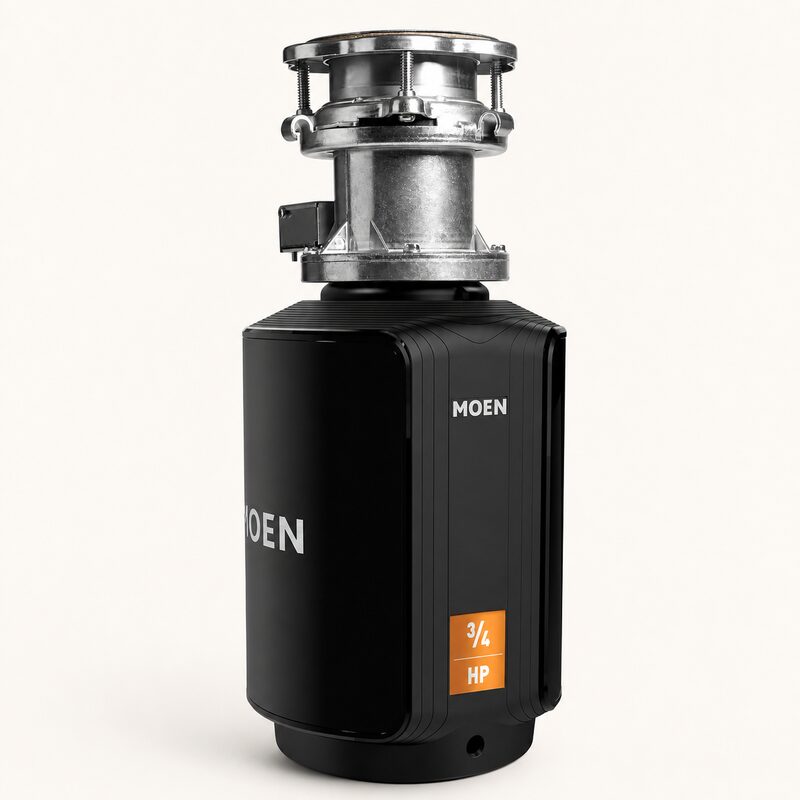
Moen Host Series GXS75C
The GXS75C is a batch-feed disposal: instead of a wall switch, it runs only when a stopper is inserted and turned — the main reason households with young kids, or anyone who's had a close call with a continuous-feed switch, choose this style. It's a 3/4 HP motor with a two-stage grind and Sound Reduction insulation, reasonably quiet for the category, though batch-feed is inherently slower since waste is loaded and ground in batches rather than continuously.
A lost or worn stopper takes the disposal offline until replaced. Mounting is a universal three-bolt system, and it's septic-safe. Switching from continuous-feed usually means rewiring the switch, since batch-feed skips the separate wall switch. Price: $180–$220.
- Stopper-activated design adds a real safety layer for households with kids
- Reasonably quiet operation for a batch-feed unit
- Universal mount works with most existing under-sink hardware
- Slower to process large amounts of waste than continuous-feed
- Disposal won't run at all without the stopper on hand
- Switching from continuous-feed usually means rewiring the switch
How to choose a garbage disposal
Sizing horsepower to your household
1/3 to 1/2 HP suits one to two people running the disposal a few times a week on soft scraps. 3/4 HP is the realistic middle ground for most households — enough torque for peels and occasional fibrous waste without stalling. 1.0 HP earns its cost for larger families, frequent cooking, or anyone who's already replaced an underpowered unit because it kept jamming.
Noise insulation tiers
Sound insulation comes from a dampening pad at the base plus insulation around the grind chamber. Budget units like the Badger 5 skip most of this, so sound comes straight up through the drain. Mid-tier insulation (Sound Reduction, SoundSeal) cuts a noticeable amount of noise. Top-tier insulation (SoundSeal Plus) is the quietest short of commercial-grade units.
Continuous-feed vs. batch-feed safety
Continuous-feed disposals run from a wall switch and stay on while waste is fed in under running water — the standard US setup. Batch-feed disposals only run when a stopper is inserted and turned, blocking a hand from the grind chamber while it runs. That's the main reason to choose batch-feed: households with kids around the sink, or anyone replacing a unit after a near-miss with the switch. The tradeoff is slower processing and dependence on not losing the stopper.
Mounting systems and swap-compatibility
InSinkErator's Evolution line uses a twist-and-lock Quick Lock mount, making swaps between Evolution models fast. Older InSinkErator units and Waste King use variations of a three-bolt or EZ Mount-compatible system. Moen uses a universal three-bolt mount that accepts most existing flanges regardless of prior brand. Same-brand, same-mount replacement is almost always the fastest, cheapest install, since the flange and ring can often be reused. Switching brands or feed type usually means new mounting hardware and switch wiring.
DIY install vs. calling a plumber
A same-brand, same-mount swap with existing wiring in place is a reasonable DIY job for anyone comfortable with basic plumbing and electrical work — it typically takes under an hour. A plumber is the safer call when switching brands, moving from continuous-feed to batch-feed, the drain plumbing needs modification, or there's water damage around the flange.
Frequently asked questions
How long should a garbage disposal last?
Most run 8–15 years with normal use, with higher-horsepower and stainless-steel units lasting toward the longer end. Frequent jamming, rust-colored water, or a persistent hum without the blades turning signal a unit nearing the end of its life.
Can I put any food waste down a garbage disposal?
No. Every brand here advises against grease, fibrous produce in quantity (celery, corn husks, onion skins), bones, and starchy foods like pasta or rice that expand with water. Coffee grounds and eggshells are manageable in small amounts, not as a routine habit.
Is a garbage disposal safe with a septic system?
Most current disposals, including every model here, are marketed as septic-safe. Many plumbers still recommend limiting disposal use with a septic tank anyway, since it adds solid waste volume that increases how often the tank needs pumping.
Do I need a plumber to install a garbage disposal?
Not always. A like-for-like swap — same brand, same mount, existing wiring in place — is a common DIY job. A plumber earns its cost when switching brands or feed types, or the drain plumbing needs adjustment.
What's the difference between continuous-feed and batch-feed disposals?
Continuous-feed units run from a wall switch and keep running while waste is fed in under water. Batch-feed units only run when a stopper is inserted and turned, adding a safety barrier but processing waste more slowly.
Bottom line
For most homeowners replacing a dead unit with no specific constraint, the InSinkErator Evolution Excel is the strongest all-around pick — enough horsepower and grind stages for real kitchen waste, quieter than budget units, and a mount system that makes future swaps easy. A tight budget or simple like-for-like replacement points to the Badger 5. Noise-sensitive kitchens should look at the Moen GX50, tight cabinets call for the Evolution Compact, heavy household use points toward the Waste King L-8000, and homes with young kids are better served by the batch-feed safety of the Moen Host Series GXS75C. In every case, matching mount type to the existing setup — or budgeting for a plumber when switching brands or feed types — determines how easy the install actually is.
Our rankings and editorial scores consider product specifications, aggregated owner feedback, availability, drawbacks, and commercial relationships. Compensation may affect inclusion or ordering; scores are our own assessments and are not Amazon or customer ratings. Commercial relationships do not permit unsupported product claims. Read more about how we review.