
This page contains affiliate links. If you buy through them, we may earn a commission at no additional cost to you. Read our affiliate disclosure.
If your house feels dusty no matter how often you clean, or your allergies flare up worse indoors than out, the basic fiberglass filter your HVAC system came with may be part of the problem. But grabbing the highest-rated filter isn't automatically the fix — one too restrictive for your system can choke airflow and strain the blower motor. We compared manufacturer specs, HVAC-technician guidance, and owner reviews to find seven filters that balance real filtration with real-world airflow, plus a plain-English breakdown of MERV, MPR, and FPR so you buy the right one the first time.
- Filtrete Healthy Living MPR 1900 — Best Overall
- Aerostar MERV 11 — Best Budget
- Honeywell Home FPR 9 Elite Allergen — Best for Allergies
- Nordic Pure MERV 12 Pure Carbon — Best for Odor Control
- Filter King MERV 13 — Best for Wildfire Smoke & Fine Particles
- FilterBuy MERV 8 — Best Basic Multi-Pack
- K&N Washable HVAC Filter — Best Reusable
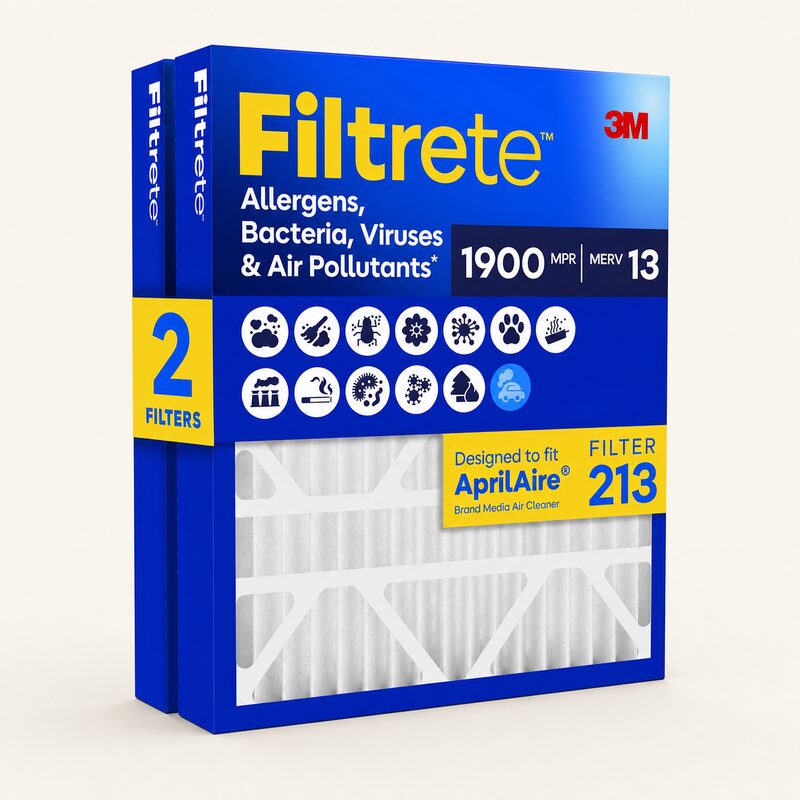
Filtrete Healthy Living MPR 1900
Filtrete's Healthy Living line is rated MPR 1900, roughly MERV 12-13 on 3M's own charts. The charged synthetic media traps smoke, bacteria-carrying particles, and fine dust without the usual airflow penalty of a filter this dense. Sold in common sizes for around $20-25 per filter, rated for 90 days, though pets or high pollen often mean swapping closer to 60.
The pick we'd point most homeowners to first: little tradeoff between filtration and system strain, and easy to find at almost any hardware store.
- Strong filtration (MERV 12-13) without much airflow penalty on most systems
- Widely available at hardware stores, not just online
- Large base of long-term owner reviews
- Pricier than basic MERV 8 filters, especially replaced every 60-90 days
- Older or smaller-tonnage systems sometimes report reduced airflow or blower noise
- Odd sizes sell out faster than standard ones
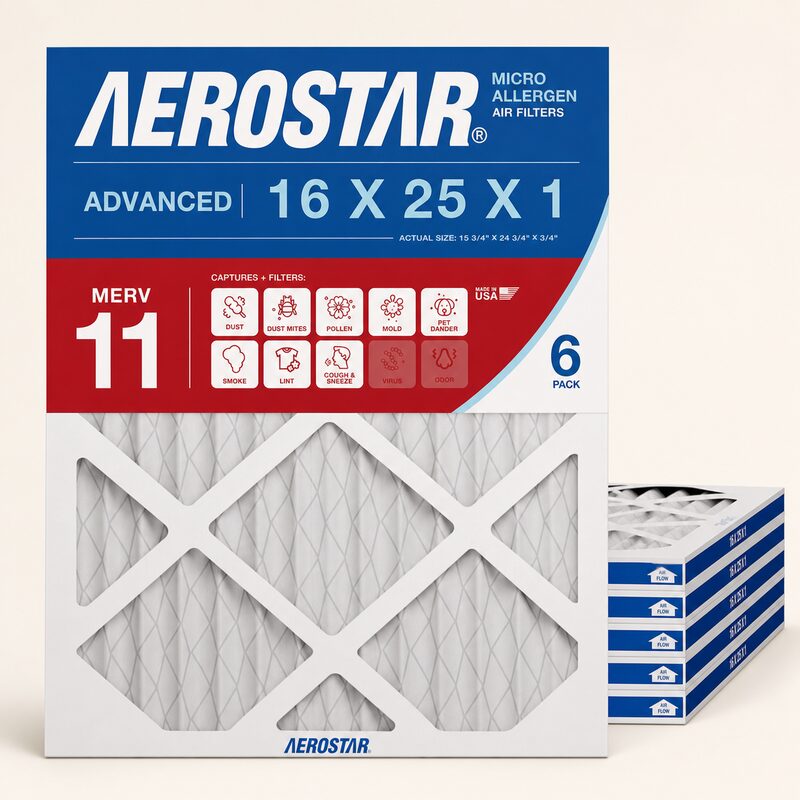
Aerostar MERV 11
Aerostar sells direct-to-consumer online, keeping per-filter cost lower than big-box equivalents at a similar rating. Its MERV 11 pleated media catches dust mites, pollen, mold spores, and pet dander well above basic fiberglass, and multi-packs bring the effective cost to around $6-9 per filter. Aerostar publishes MERV test data rather than a proprietary scale.
Suits budget-conscious homeowners who want a real step up and don't mind ordering online.
- Lower cost per filter than most name-brand MERV 11 options in bulk
- Standard MERV scale with published test data, not a marketing-only rating
- Solid middle-ground filtration without MERV 13 density
- Online-only for most sizes, no same-day option if you run out
- Frame rigidity and edge seal get mixed reviews versus retail brands
- Bulk packs mean a larger upfront purchase and storage space
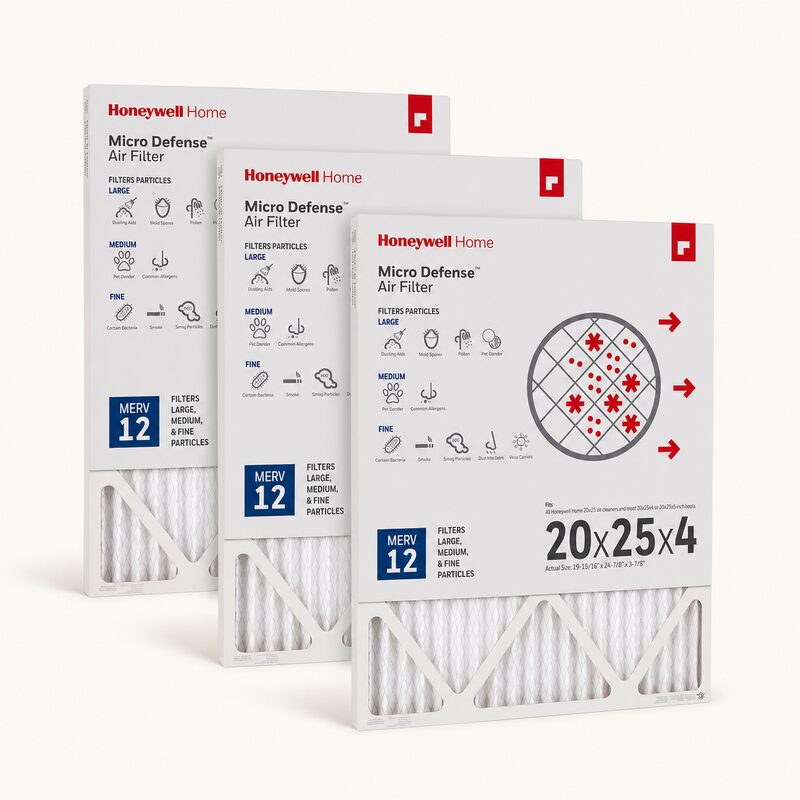
Honeywell Home FPR 9 Elite Allergen
Honeywell rates filters on its own 1-10 FPR scale, and Elite Allergen at FPR 9 corresponds to roughly MERV 11-12. The pleated electrostatic media is marketed specifically for indoor allergens — pollen, dust mite debris, pet dander — matching the symptom most people are trying to fix. Standard sizes run about $15-20 per filter, rated for 90 days, though pets or allergies often mean 60 works better.
Reach for this if allergy symptoms, not general dust, are the main complaint — similar particle sizes to the Filtrete pick, but often easier to find at Honeywell retailers.
- Formulated specifically for allergen capture, the most common upgrade reason
- FPR 9 balances strong filtration with airflow most blowers handle fine
- Widely stocked online with clear sizing guidance
- FPR isn't directly interchangeable with MERV, adding a conversion step
- Priced close to the Filtrete pick with no clear filtration edge
- Cardboard frame reportedly softens in humid climates before 90 days
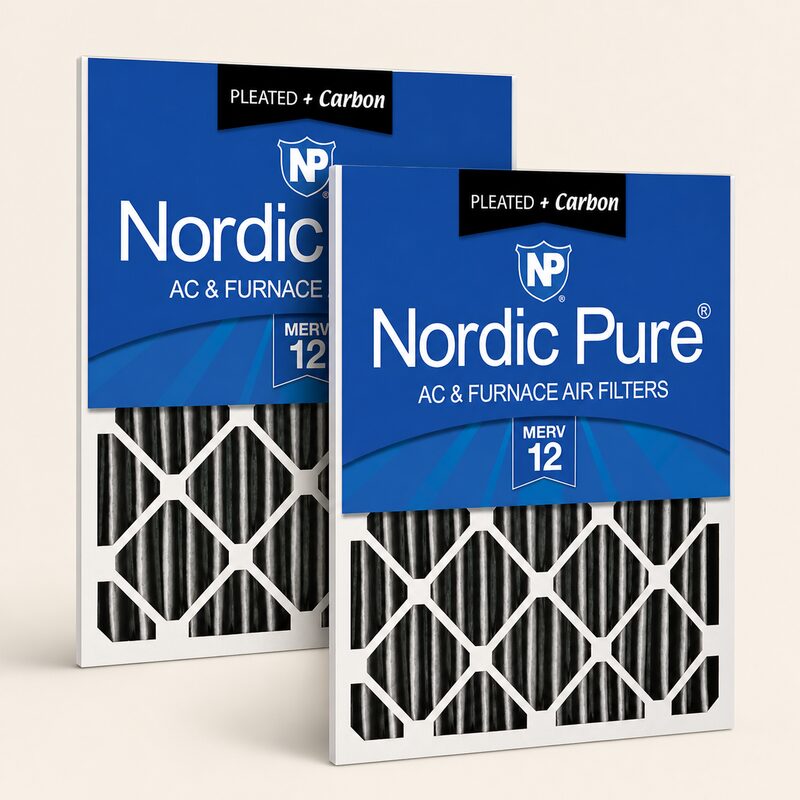
Nordic Pure MERV 12 Pure Carbon
Nordic Pure's Pure Carbon line pairs a MERV 12 pleated filter with an embedded activated carbon layer meant to adsorb odors from cooking, pets, and smoke, not just trap particles. MERV 12 puts it in the same tier as the Filtrete and Honeywell picks above; carbon is the differentiator for lingering smells. It runs around $12-18 per filter, rated for 90 days, though odor control fades faster than the filtration, so replace closer to 60 for smell control.
Good for homes with a smoker, multiple pets, or a kitchen venting into shared returns.
- Carbon layer targets odors that plain pleated filters pass right through
- MERV 12 filtration competitive with pricier allergen-focused filters
- Wide range of standard and custom sizes direct from the manufacturer
- Odor-adsorbing effect fades well before the 90-day filtration claim holds
- Carbon layer adds slightly higher static pressure, which matters on older blowers
- Not sold in physical stores, so replacement takes planning ahead
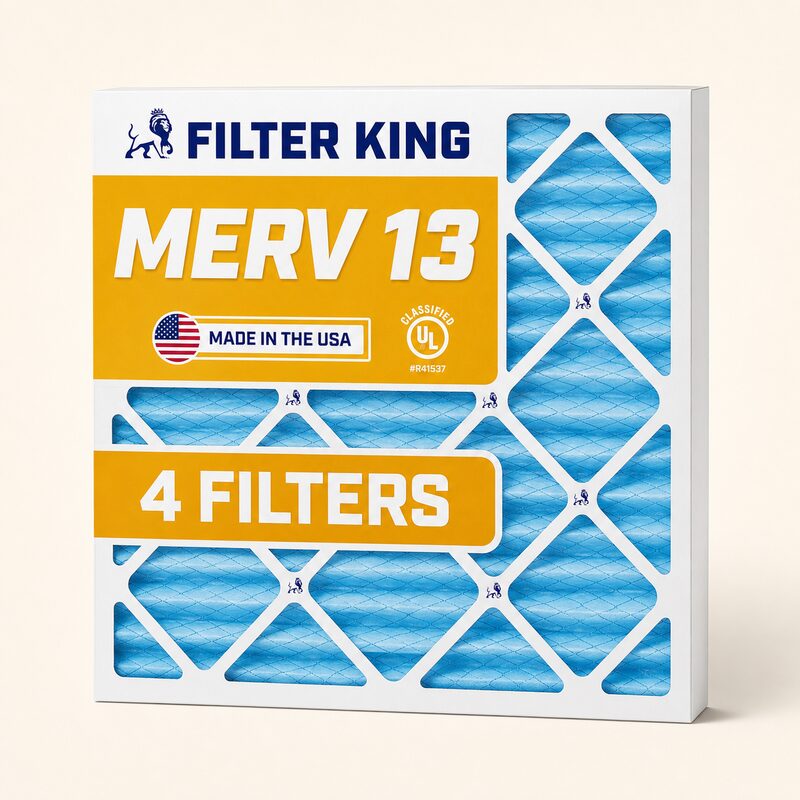
Filter King MERV 13
MERV 13 is the tier HVAC professionals and the EPA point to for wildfire smoke, since it's the lowest rating that reliably captures fine particulate (PM2.5). Filter King's MERV 13 uses a dense pleated media built for that range and has become a common recommendation in smoke-prone regions. Filters run roughly $20-30 each, rated for 90 days, though most owners shorten that to 30-60 during active smoke events.
The catch is airflow: MERV 13 is genuinely restrictive. Confirm your blower can handle it before running one full-time, especially on older furnaces sized for MERV 8-11.
- One of the few residential filters rated for reliable smoke capture
- Priced competitively for a MERV 13 versus boutique smoke-filter brands
- Works well as a seasonal swap-in rather than a permanent upgrade
- Meaningfully restricts airflow on systems not designed for MERV 13
- Clogs faster during heavy smoke events, needing pricier, more frequent swaps
- Overkill and unnecessarily expensive without smoke or respiratory concerns
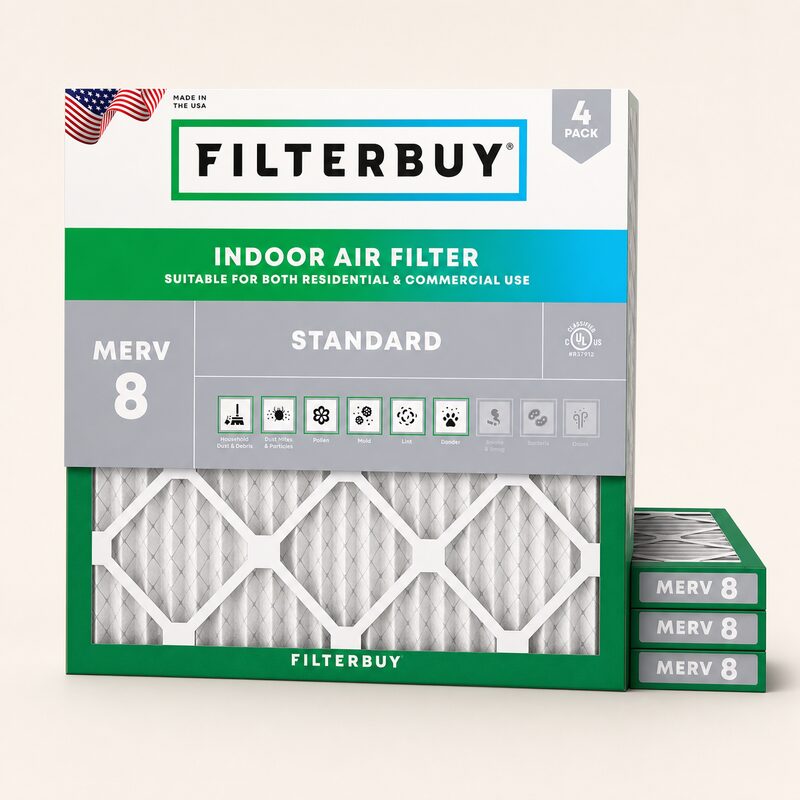
FilterBuy MERV 8
Not every home needs allergen-grade filtration — sometimes the goal is just protecting the HVAC system without adding airflow resistance. FilterBuy's MERV 8 pleated filter is a step up from bare fiberglass, at the rating most manufacturers consider the safe minimum. Sold almost exclusively in bulk multi-packs, it works out to roughly $5-8 per filter, rated for 90 days, an interval that holds up well since MERV 8 doesn't load as fast as denser media.
Good for rental properties, vacation homes, or anyone wanting a reliable, low-maintenance filter without paying for allergen features they don't need.
- Lowest cost per filter on this list when bought in bulk
- Minimal airflow restriction, safe for virtually any blower motor
- 90-day interval holds up reliably; media doesn't clog quickly
- Does little for fine allergens, pet dander, or smoke versus MERV 11-13 picks
- Bulk-only purchasing means a bigger upfront cost and storage need
- Frame quality varies pack to pack; occasional warping reported in humid basements
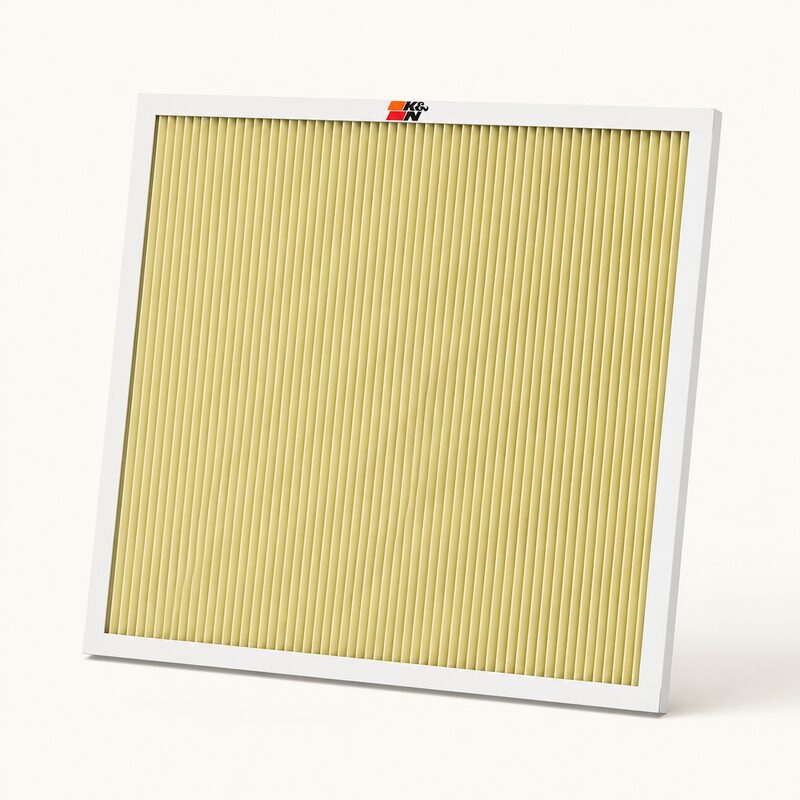
K&N Washable HVAC Filter
K&N built its name on washable automotive filters, and its HVAC line applies the same idea: a reusable media rated MERV 8-11 depending on model, meant to be rinsed and reinstalled instead of thrown away every one to three months. Upfront cost runs higher, around $50-70, but drops sharply over time since one filter can last years with cleaning every 60-90 days — rinse, dry fully, occasionally reapply the charge treatment.
Good for homeowners who want to cut recurring filter costs and waste, and don't mind the extra maintenance.
- Pays for itself over time by eliminating repeat purchases
- Reduces cardboard and filter media waste versus disposables
- Reasonable MERV 8-11 filtration once properly maintained
- Requires hands-on cleaning every 60-90 days or filtration degrades
- Higher upfront cost than any disposable filter on this list
- Must be completely dry before reinstalling, or it risks mold in the housing
How to choose an HVAC air filter
MERV vs. MPR vs. FPR, explained
MERV (Minimum Efficiency Reporting Value) is the industry-standard scale, running 1-16 for residential filters, measuring how well a filter captures particles. MPR is 3M's proprietary scale for Filtrete filters, focused on particles between 0.3 and 1 micron; it doesn't map one-to-one onto MERV, but MPR 1900 generally performs around MERV 12-13. FPR is Honeywell's own 1-10 scale, and FPR 9 is roughly MERV 11-12. When comparing brands, convert to MERV first.
Getting the size right
The size printed on your old filter (like 16x25x1) is nominal, not exact — actual filters run slightly smaller to fit the housing. Match that nominal size rather than measuring yourself, and check the depth ("x1" vs "x4"), since those aren't interchangeable without a different housing.
The airflow and static pressure tradeoff
Higher MERV ratings capture smaller particles, but denser media also restricts airflow, forcing the blower to work harder. Most single-stage systems handle MERV 8-11 comfortably, 12-13 acceptably, and anything above only with a system designed for it. Weaker airflow, a louder blower, or longer cycles after switching filters signal it's too restrictive.
How often to actually replace it
Manufacturer intervals (usually 60-90 days) assume average conditions. Pets, smokers, high pollen counts, nearby construction, or more people home all load filters faster. A rule HVAC pros repeat: hold the filter to a light source monthly and replace it once you can't see light through it, regardless of the calendar.
Frequently asked questions
What MERV rating do I actually need?
For most homes without specific allergy, asthma, or smoke concerns, MERV 8-11 covers everyday dust without stressing the system. Step up to MERV 12-13 if allergies or pet dander are a documented problem, and confirm with a technician before going higher.
Can a higher-MERV filter damage my furnace or AC?
Indirectly, yes. A filter too dense for your blower's capacity raises static pressure, reducing airflow, lengthening run times, and in some cases causing a frozen evaporator coil — a real risk on older systems, which is why manufacturers recommend confirming blower compatibility above MERV 13.
Is a washable filter actually cheaper long-term?
Generally yes, if you clean it on schedule. Upfront cost runs 3-5 times a single disposable, but since it's reused for years instead of replaced quarterly, total cost over 2-3 years typically comes out lower than a comparable disposable.
How do I know if my filter is already too clogged?
Hold it up to a bright light. If light passes through clearly, it's still functioning; if it looks gray or blocks most light, it's overdue regardless of the calendar. Reduced airflow, longer run times, and more dust settling around the house are common signs.
Bottom line
For most US homeowners, the Filtrete Healthy Living MPR 1900 hits the best balance of allergen-level filtration and safe airflow, which is why it tops this list. If cost is the deciding factor, the Aerostar MERV 11 multi-pack delivers similar performance for less. Whichever you choose, match the MERV rating to your system's actual capacity rather than the highest number on the shelf, and check the filter monthly rather than waiting for the 90-day mark.
Our rankings and editorial scores consider product specifications, aggregated owner feedback, availability, drawbacks, and commercial relationships. Compensation may affect inclusion or ordering; scores are our own assessments and are not Amazon or customer ratings. Commercial relationships do not permit unsupported product claims. Read more about how we review.