
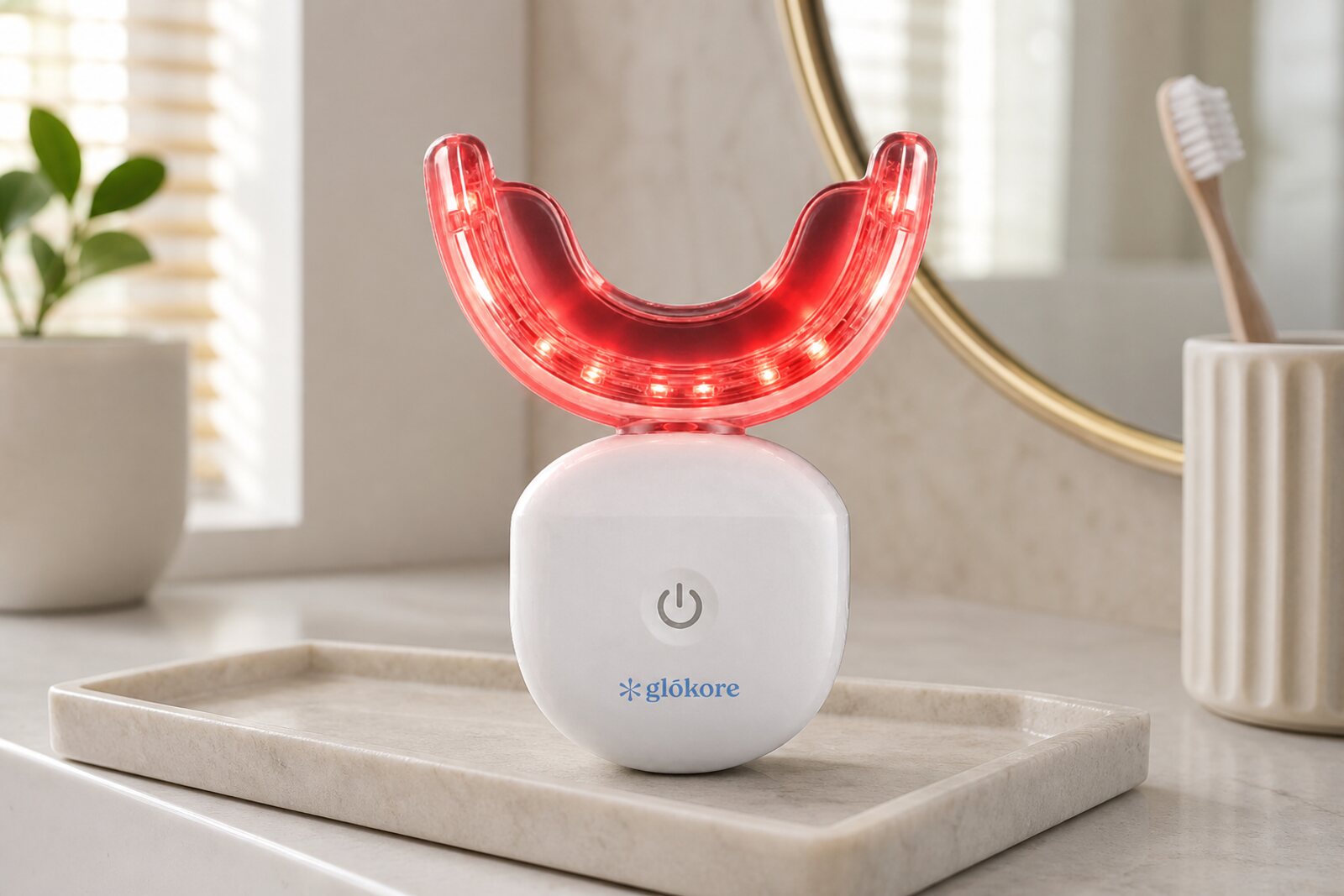
Coffee stains build up faster than expected, whitening strips are messy and can leave gums stinging by day three, and somewhere in a scroll through reviews you start wondering if these LED kits actually work or the light is mostly for show. The honest answer: the whitening gel or serum does the actual bleaching, and the LED's job is speeding up how fast that gel activates — an accelerator, not a stand-alone whitener. Here are six devices worth considering, starting with a cordless multi-wavelength pick and moving through the Amazon kits people actually buy and re-buy.
- Glokore Oral Care Plus — Best Overall
- AuraGlow Deluxe Whitening Kit — Best Classic LED Mouthpiece Kit
- MySmile LED Teeth Whitening Kit — Best Budget Pick
- GLO Brilliant Teeth Whitening Device — Best Heat-Plus-Light Combo
- Crest Whitestrips with Light — Best Strip-Based System
- Cali White LED Teeth Whitening Kit — Best Vegan Formula
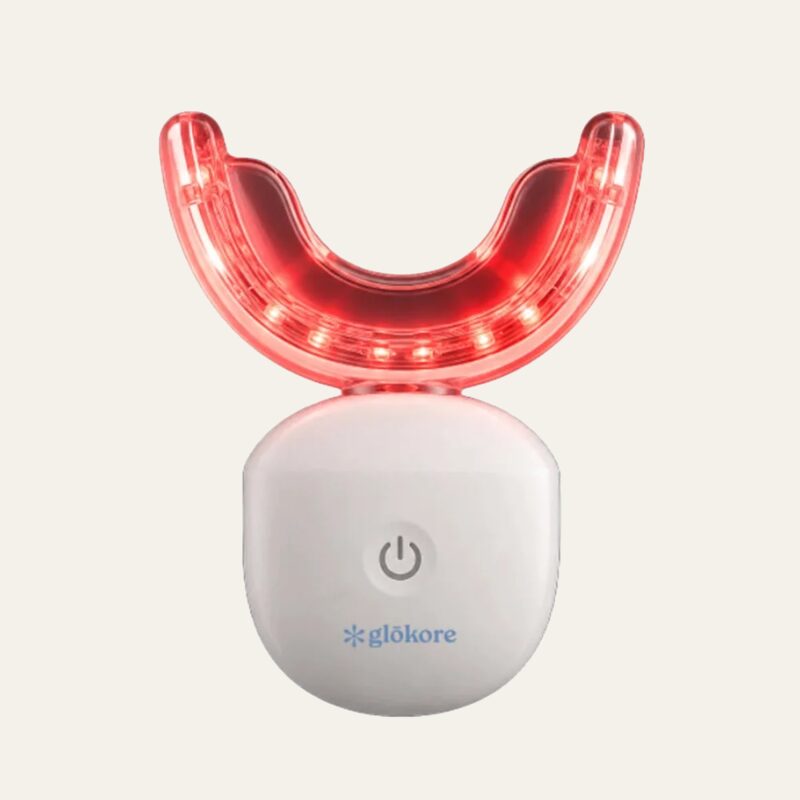
Glokore Oral Care Plus
Most LED whitening kits use a single blue LED array built into a tray or handheld wand. The Glokore Oral Care Plus uses three wavelengths in one cordless mouthpiece: 460nm blue light for the whitening portion of a session, plus 620nm red and 850nm near-infrared light marketed toward gum comfort. Blue light in this range is the established mechanism for accelerating peroxide-based gels; the red and near-infrared addition is the more novel piece, and it's worth being clear-eyed about where that evidence actually stands, covered below.
The "best overall" spot comes down to practicality. It's cordless and rechargeable off a 500mAh battery, rated IPX6 for water resistance, so it can be rinsed off without worrying about a control box near an outlet the way corded units require. Sessions run 10-15 minutes. The workflow is simple: apply gel to the mouthpiece tray, insert it, and let the device run while the LED accelerates the gel — a single molded piece leaves less room for positioning error than a hand-held wand. It ships with a charging cable and manual, backed by a 60-day money-back guarantee.
Pros: Cordless and rechargeable; IPX6 water resistance for easy rinsing; hands-free mouthpiece reduces positioning errors; short 10-15 minute sessions; 60-day money-back guarantee.
Cons: Sold direct only, no Amazon return process or Prime shipping; red/near-infrared gum-comfort claims rest on thinner, still-developing research than blue-light whitening; results still depend heavily on the gel or serum used, not the LED alone.
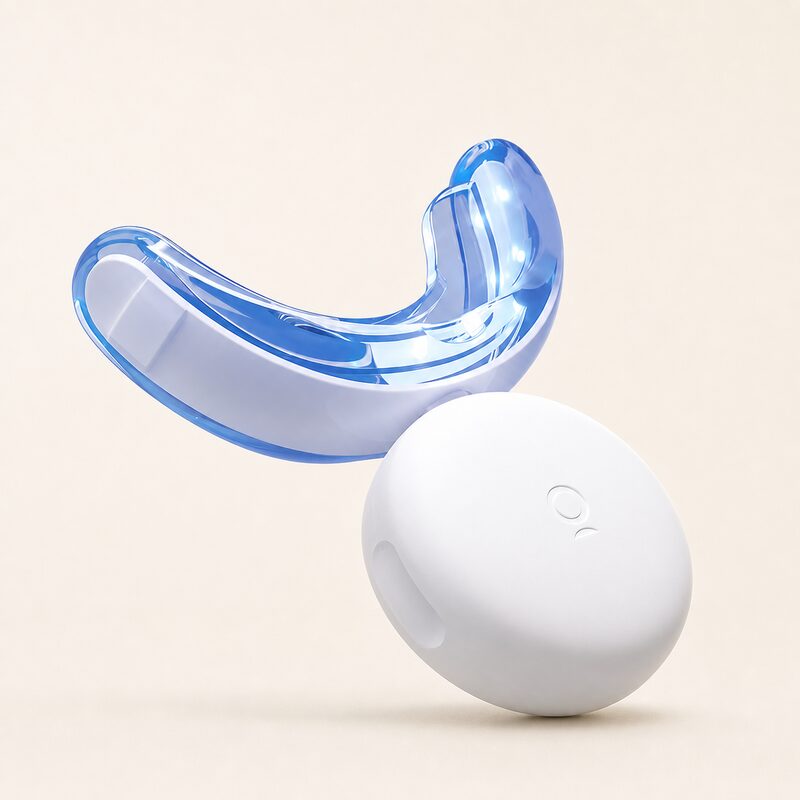
AuraGlow Deluxe Whitening Kit
AuraGlow is one of the longest-running names in at-home LED whitening, and the Deluxe kit is the standard version most people buy. It pairs a blue LED mouthpiece with carbamide peroxide gel syringes, following the same mechanism as the Glokore device — gel whitens, light speeds it up — and ships with several syringes plus a shade guide to track progress.
The mouthpiece is corded, not cordless: cheaper to make, but it means staying near an outlet each session. It's a known quantity with a long Amazon track record, which matters if you'd rather buy something with years of reviews behind it.
Pros: Long Amazon track record; multiple gel syringes included; straightforward corded design, no charging to manage.
Cons: Corded, less convenient than rechargeable mouthpieces; single blue-light wavelength only; carbamide peroxide can cause temporary sensitivity.
MySmile LED Teeth Whitening Kit
MySmile became one of Amazon's top-selling whitening brands largely on price — the kit usually costs less than half of what premium devices run, while still including a blue LED mouthpiece, gel syringes, and a shade guide. It's a reasonable low-risk entry point for testing whether LED whitening is worth the routine before spending more, though build quality and gel concentration tend to run lower than pricier kits, so results are typically more gradual.
Pros: Low price for the category; fast Amazon shipping; enough gel for multiple sessions to start.
Cons: Lower gel concentration means slower, more subtle results; plastic build feels less durable over time; single blue LED only.
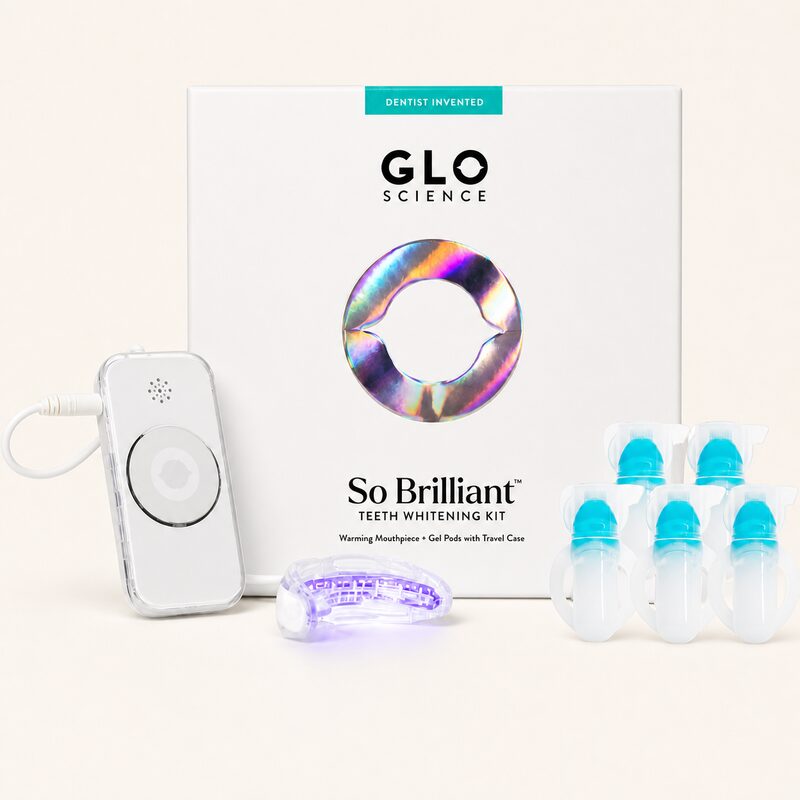
GLO Brilliant Teeth Whitening Device
GLO Brilliant takes a different approach than the light-only devices here — it combines warmth with LED light in a handheld mouthpiece, on the idea that gentle heat plus light accelerate gel more than light alone. It's priced well above the budget kits and pairs with a proprietary gel formulated specifically for the device rather than a generic syringe, so refills come from GLO rather than cheaper alternatives — a real ongoing cost beyond the upfront price.
Pros: Heat-plus-light mechanism genuinely differs from blue-light-only devices; gel formulated specifically for the device; handheld design allows flexible positioning.
Cons: Higher upfront price than most kits here; ongoing cost of proprietary refill gel; handheld design requires holding it in place for the session.
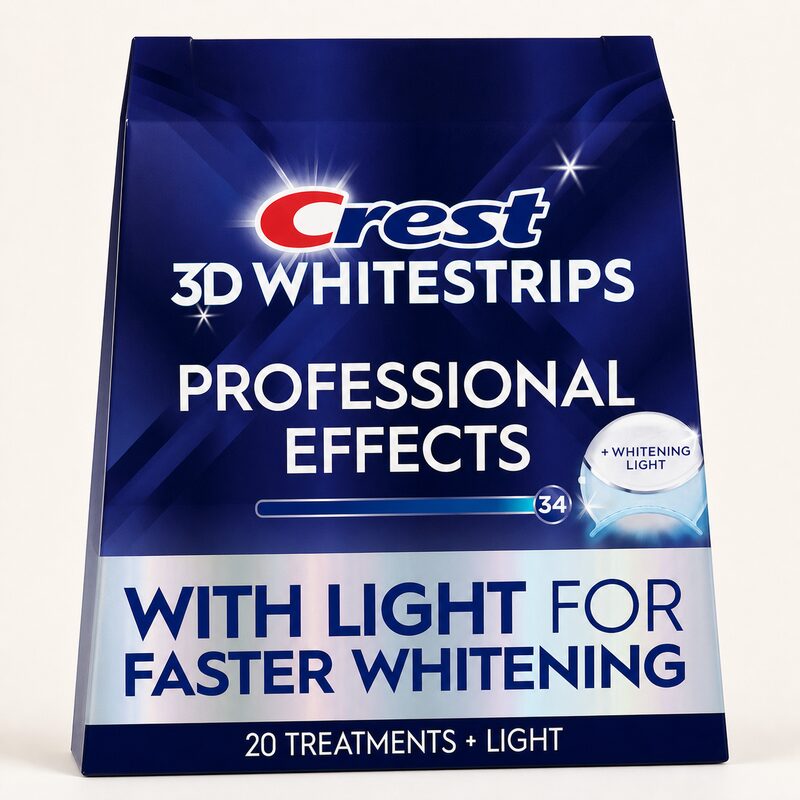
Crest Whitestrips with Light
Crest is the name most people already trust, and its whitestrips-plus-light kits pair the familiar flexible strip with a small handheld blue-light accelerator used after the strips go on. For anyone who finds a mouthpiece tray or gel syringe less familiar than a strip they already know how to use, this is the most drugstore-comfortable option here.
The trade-off: strips are shaped for the visible front teeth and don't reach molars or the full arch the way a mouth tray can, so coverage stays limited to the smile line. It's a reasonable middle ground for LED-accelerated whitening without switching to gel syringes.
Pros: Familiar strip format from a trusted drugstore brand; no gel syringes or tray to manage; widely available on Amazon.
Cons: Strips cover only the visible front teeth, not the full arch; separate light device adds a step versus all-in-one mouthpieces; can be uncomfortable for sensitive gums since strips press against the gumline.
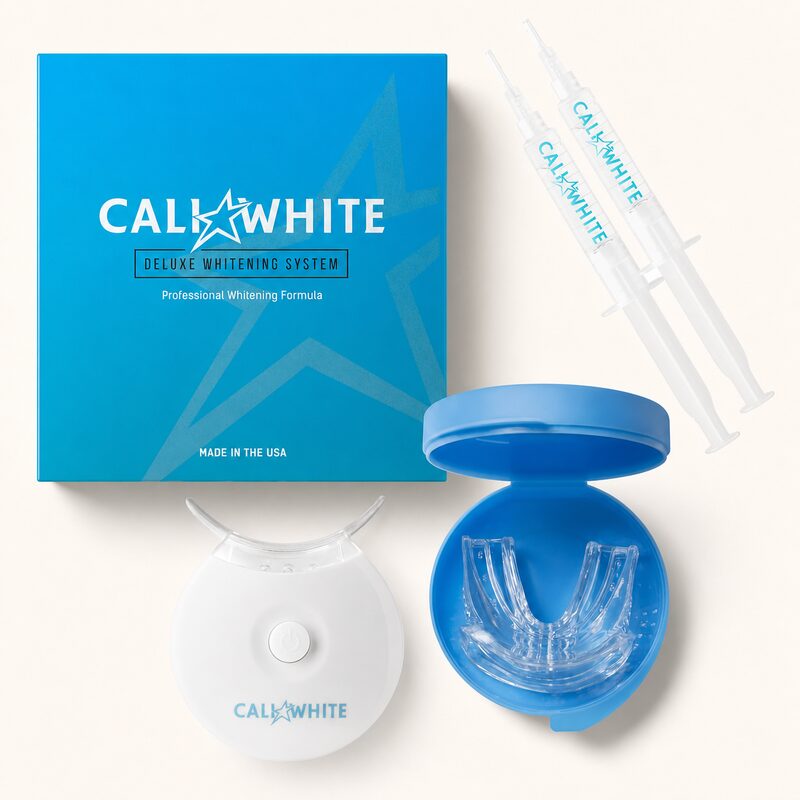
Cali White LED Teeth Whitening Kit
Cali White built its Amazon following on formula transparency — the gel is marketed as vegan and cruelty-free, with peroxide as the active ingredient like most kits here, but without the animal-derived additives some competing gels use as fillers or flavoring. It ships with a blue LED mouthpiece, gel syringes, and a shade guide, at a mid-price point that appeals mainly to buyers who care about the ingredient list over speed of results or lowest price.
Pros: Vegan, cruelty-free gel formulation; mid-range price; standard tray-based mouthpiece familiar from other kits.
Cons: Whitening speed comparable to other peroxide-gel kits, not necessarily faster; corded rather than cordless; results still depend on gel concentration and consistency.
How LED whitening actually works
The gel does the whitening — the LED speeds it up
Every device here relies on a peroxide-based gel (carbamide or hydrogen peroxide) to break down stain compounds in enamel. The LED accelerates that reaction; it doesn't replace it. A blue LED alone, aimed at bare teeth with no gel, whitens nothing, and a low-concentration or expired gel won't be fixed by more light — the gel does the heavier lifting.
Blue light vs. red and near-infrared light
Blue light (450-470nm) is the standard mechanism across nearly every device on the market, including every kit here. Red light (620-660nm) and near-infrared light (800-850nm) are increasingly marketed for gum comfort and soft-tissue support, as on the Glokore device. This is a newer application in consumer oral care — red-light therapy has research behind it in other contexts like skin healing, but evidence specific to at-home oral gum applications is still emerging rather than settled, a plausible add-on benefit rather than a proven one.
Managing sensitivity
Peroxide gels are the most common cause of temporary tooth sensitivity after whitening, regardless of device. Shorter, more frequent low-concentration sessions tend to cause less sensitivity than fewer high-concentration ones. Noticeable discomfort usually calls for reducing session frequency or switching gel strength, not assuming the device is defective.
When to see a dentist instead
None of these devices change the color of fillings, crowns, veneers, or other restorations, so front-tooth dental work can end up mismatched after whitening elsewhere in the mouth. Deep intrinsic stains — from certain childhood medications or trauma to a tooth — also typically don't respond to over-the-counter peroxide gels no matter how long they're used. A dentist can identify whether a stain suits at-home whitening or needs an in-office approach, and flag cavities or gum issues worth addressing first.
Frequently asked questions
How many shades whiter can I expect from an LED kit?
Results vary by starting shade, stain type, and gel concentration, and shade-guide claims are best-case scenarios. Surface stains from coffee, tea, or wine typically respond faster than deeper intrinsic discoloration. Consistent use over the recommended course of sessions, not a single treatment, produces a noticeable change.
Will these devices make my teeth sensitive?
Some temporary sensitivity is common with peroxide-based whitening, regardless of device — it comes from the gel, not the LED, and usually fades within a day or two. Anyone with sensitive teeth, exposed roots, or recent dental work should check with a dentist first.
Do the red-light gum-comfort claims on devices like the Glokore actually hold up?
The idea that red and near-infrared light can support soft tissue has support in broader light-therapy research, but rigorous independent studies specific to at-home oral-care devices are still limited. Our guide to red light therapy for gums separates that clinical evidence from the newer at-home mouthpiece claims. Treat it as an emerging area worth trying, not a settled, clinically proven benefit.
Can I use these kits if I have crowns, veneers, or fillings?
Whitening gels only affect natural enamel, not restorative materials, so crowns, veneers, and fillings won't change color along with the rest of your teeth — which can leave a visible mismatch in a front tooth. A dentist can advise on timing or replacement.
Do I need the manufacturer's specific gel, or can I use any whitening gel?
AuraGlow, MySmile, and Cali White use standard syringe gel that's broadly interchangeable between similar tray-style devices. GLO Brilliant and Glokore are built around proprietary gel or serum, so refills need to come from the manufacturer.
Bottom line
An LED light by itself doesn't whiten anything — the gel does the work, and the light speeds it along. The Glokore Oral Care Plus stands out for its cordless, waterproof, hands-free mouthpiece with an added red and near-infrared component, though that gum-comfort piece is still a developing area of evidence, not a settled one. For buyers who'd rather shop and return through Amazon, AuraGlow and MySmile cover the classic corded-kit experience at two price points, GLO Brilliant and Crest's strip-based system offer distinct mechanisms if tray-based mouthpieces aren't appealing, and Cali White fills the niche for anyone prioritizing a vegan formula. Whichever device you pick, gel concentration and session consistency matter more than the light technology alone — and any stain that doesn't respond after a full course, or any restoration in the front teeth, is worth a conversation with a dentist rather than more sessions with the same kit.
Our rankings and editorial scores consider product specifications, aggregated owner feedback, availability, drawbacks, and commercial relationships. Compensation may affect inclusion or ordering; scores are our own assessments and are not Amazon or customer ratings. Commercial relationships do not permit unsupported product claims. Read more about how we review.