
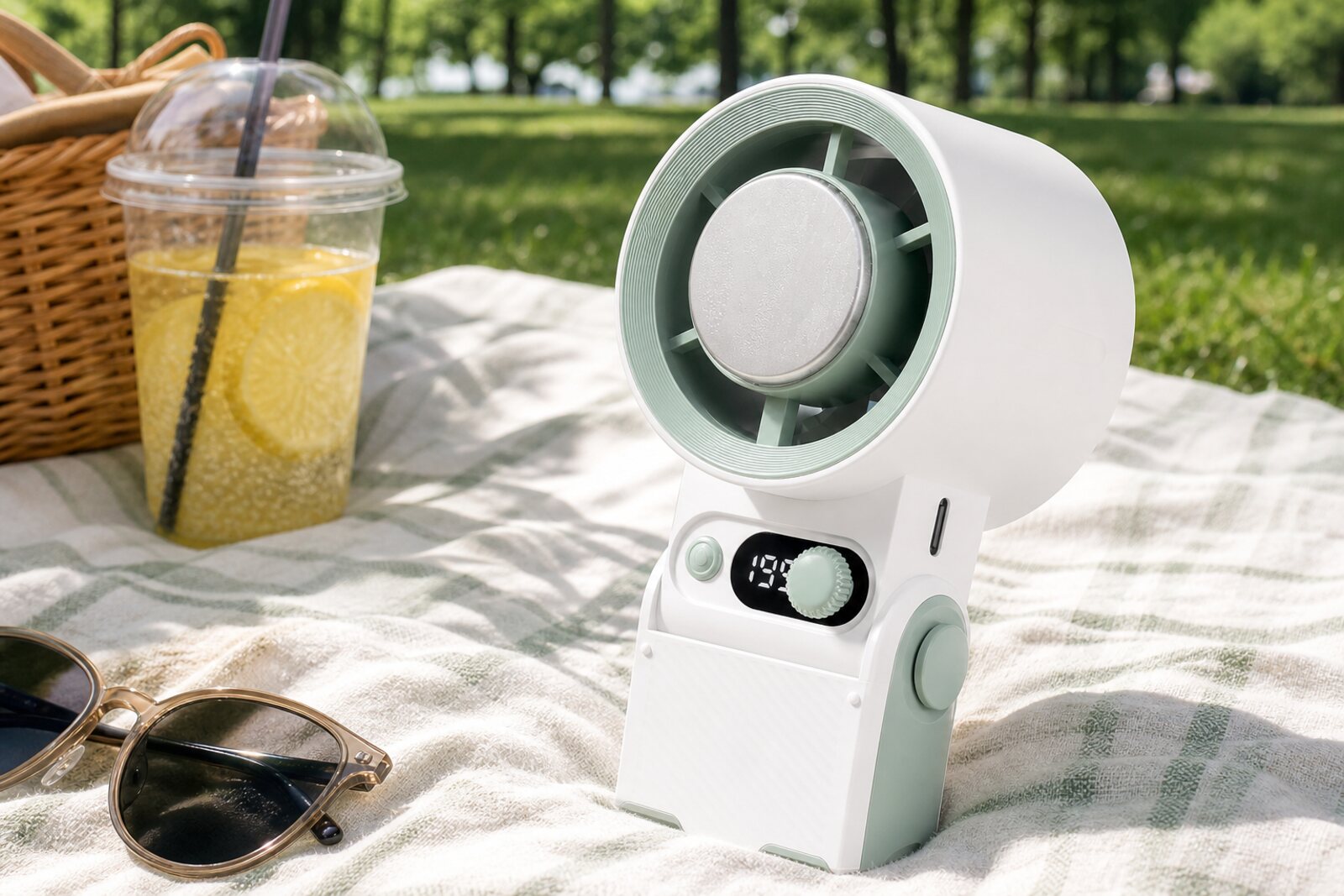
Summer heat doesn't wait for air conditioning — it hits on the subway platform, the stroller walk, the theme park line, or mid-hot-flash at work. A portable fan is the usual fix, but the category ranges from tiny pocket units to hands-free neck fans to misting fans that add water into the mix, and battery claims on the box don't always mean what they sound like. Here's an honest look at six options, starting with a true pocket-sized pick and moving through the handheld and neck fans people actually buy on Amazon.
- Glacier Pocket Fan — Best Overall
- JISULIFE Handheld Fan — Best Classic Handheld
- TORRAS Coolify Neck Fan — Best Hands-Free Pick
- Gaiatop Mini Portable Fan — Best Budget Pick
- HandFan Portable Misting Fan — Best for Dry Heat
- Amacool Bladeless Neck Fan — Best for Hair Safety
Glacier Pocket Fan
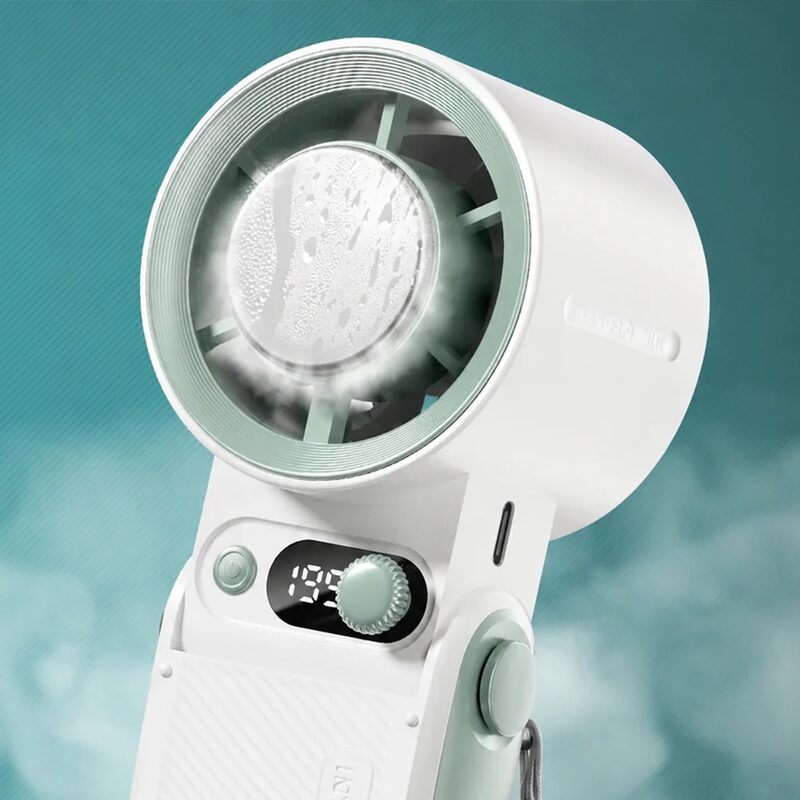
Most fans marketed as "handheld" are still a few inches too wide to disappear into a pocket. The Glacier Pocket Fan is actually sized to fit a pocket, purse, or glove box — smaller than every other unit here. It works three ways: gripped in hand, folded 90 degrees into a desk stand, or clipped to a detachable lanyard for hands-free neck wear.
The manufacturer lists a 10,000 mAh battery, a large capacity for something this size, roughly comparable to a full phone power bank: over 24 hours on the lowest speed and around 4 hours at the highest, with a full USB-C recharge in about 4 hours. Treat the top end as a best case at the lowest setting only, not what running it wide open gets you.
Speed is set with a turn dial rather than click-through buttons, ramping continuously instead of jumping between fixed settings. It also has a metal contact plate behind the blades that the manufacturer markets as a "cold plate" for pressing against skin. We won't repeat the specific temperature-drop claims made for it, since a plate powered off a small USB battery isn't in the same league as real refrigeration — treat it as a cool-to-the-touch bonus, not a substitute for airflow.
Pros: Genuinely pocket-sized unlike most "handheld" fans; large 10,000 mAh battery with a long low-speed runtime; USB-C recharging; three carry modes; stepless dial control.
Cons: Sold direct from the manufacturer's site only, so there's no Amazon return process or independent review history to lean on; the "cold plate" marketing goes well beyond what a small USB-powered component can actually do; its compact size trades away some raw airflow compared to bulkier handhelds.
JISULIFE Handheld Fan
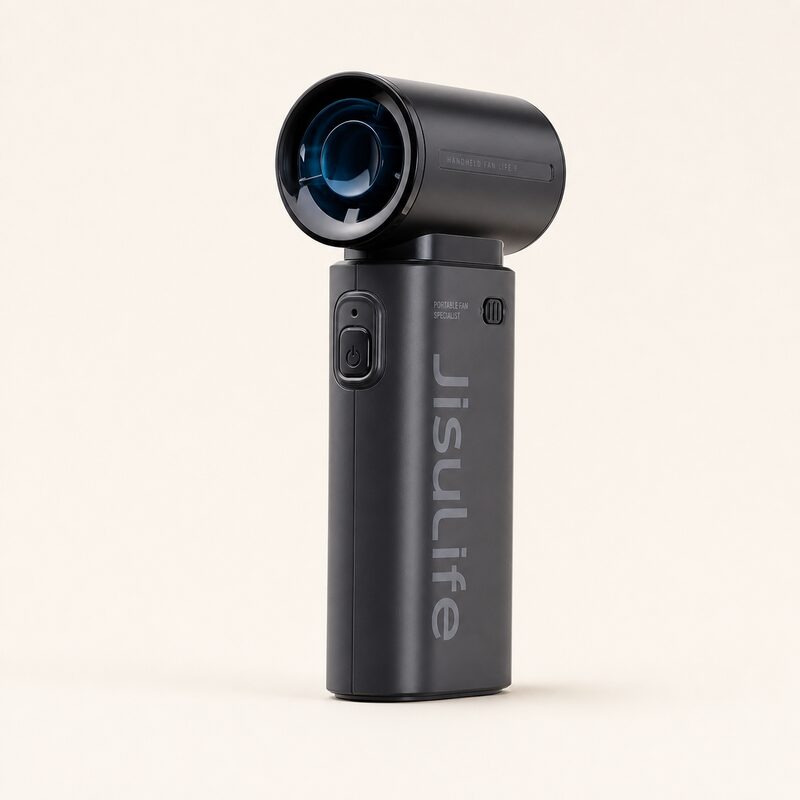
JISULIFE is one of the best-known names in handheld fans and a fixture on Amazon's bestseller lists. Battery capacity runs 4,000-6,000 mAh depending on the model, with 3-5 speeds and manufacturer-stated runtimes of 18-30 hours on the lowest setting. It runs bigger than the Glacier — closer to a chunky phone case — buying bigger blades and more airflow at the cost of true pocket portability.
Pros: Long track record and huge Amazon review base; multiple models at different price and battery sizes; simple button controls; fast Prime shipping and easy returns.
Cons: Too bulky to disappear into a pocket; higher speeds cut runtime well below the advertised low-speed hours; cheaper models feel less durable with daily carry.
TORRAS Coolify Neck Fan
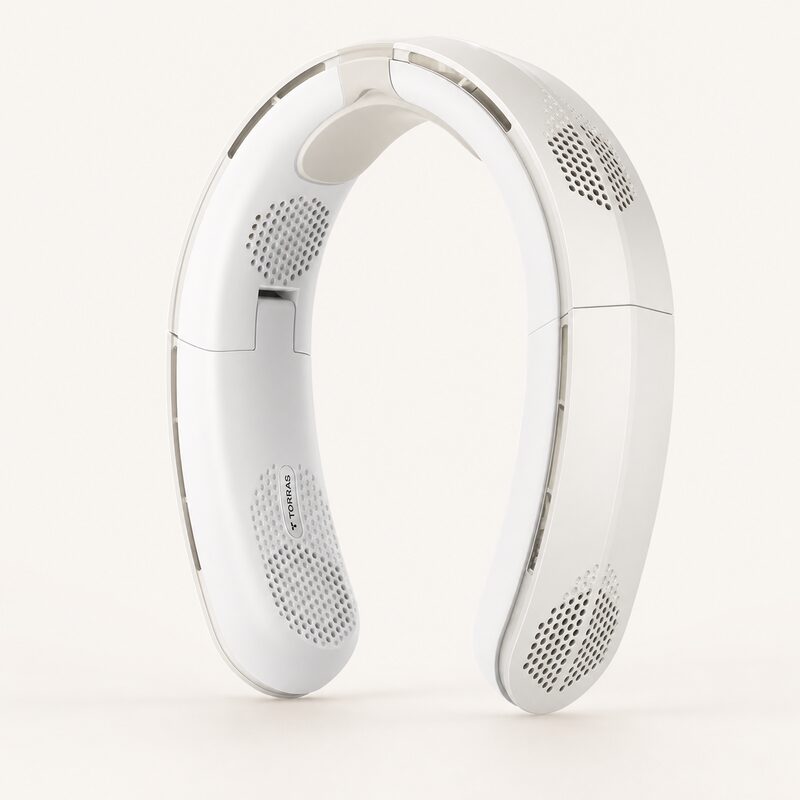
TORRAS's Coolify line wears around the neck like a small horseshoe, keeping both hands free for commutes and stroller walks. The Coolify 2S carries a 5,000 mAh battery with 3 speeds: roughly 28 hours of fan-only use on low versus about 4 hours with its semiconductor cooling plates at max, the same thermoelectric concept behind the Glacier's cold plate. Charging is Type-C, about 2 hours, but it only blows air across the face and collarbone, with no aiming.
Pros: Fully hands-free wear; large battery with a long low-speed runtime; fast Type-C charging; established brand with a deep Amazon review history.
Cons: Can't be aimed like a handheld fan; the cooling plates drain the battery far faster than fan-only mode; sits directly on the neck, uncomfortable for some in humid weather.
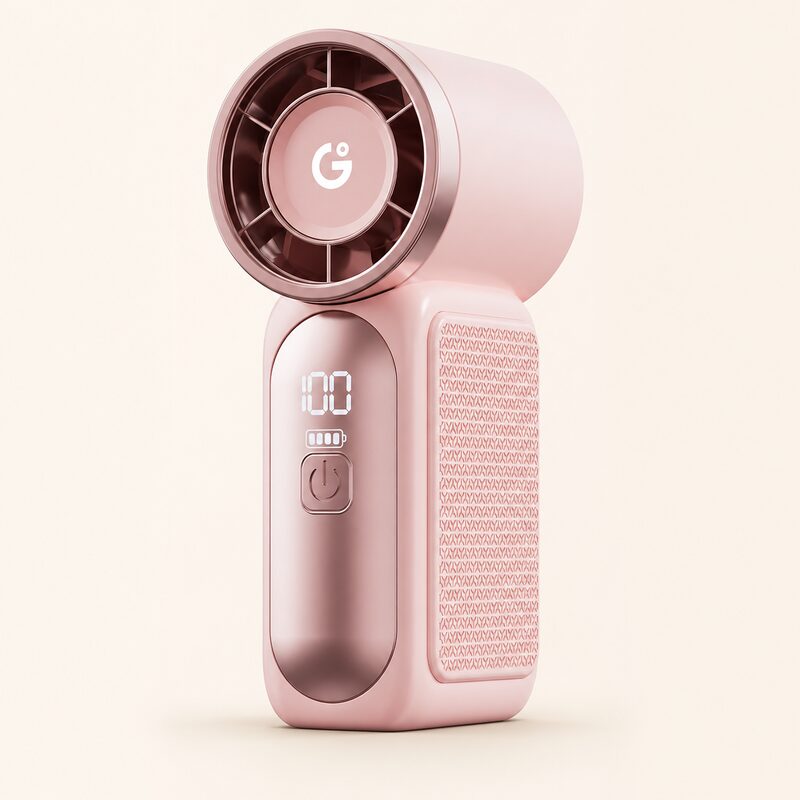
Gaiatop Mini Portable Fan
Gaiatop's mini fans are consistently the cheapest option that still holds up to daily use. Entry models run a 2,000 mAh battery, 3 speeds, and a 3-to-10-hour runtime, recharging in about 3 hours; a turbo version steps up to 4,000 mAh and 15 hours on low. It's the fan to buy as a cheap backup in a diaper bag or glove box rather than a daily-carry primary — the smaller battery and blades mean shorter runtime and less airflow than the pricier picks here.
Pros: Lowest price on this list; light enough for a bag or glove box as a spare; simple 3-speed control; available in clip-on and desktop-stand versions.
Cons: Smallest battery of the group, so runtime drops fastest at higher speeds; less total airflow than the larger handheld and neck fans; noticeably more basic build quality.
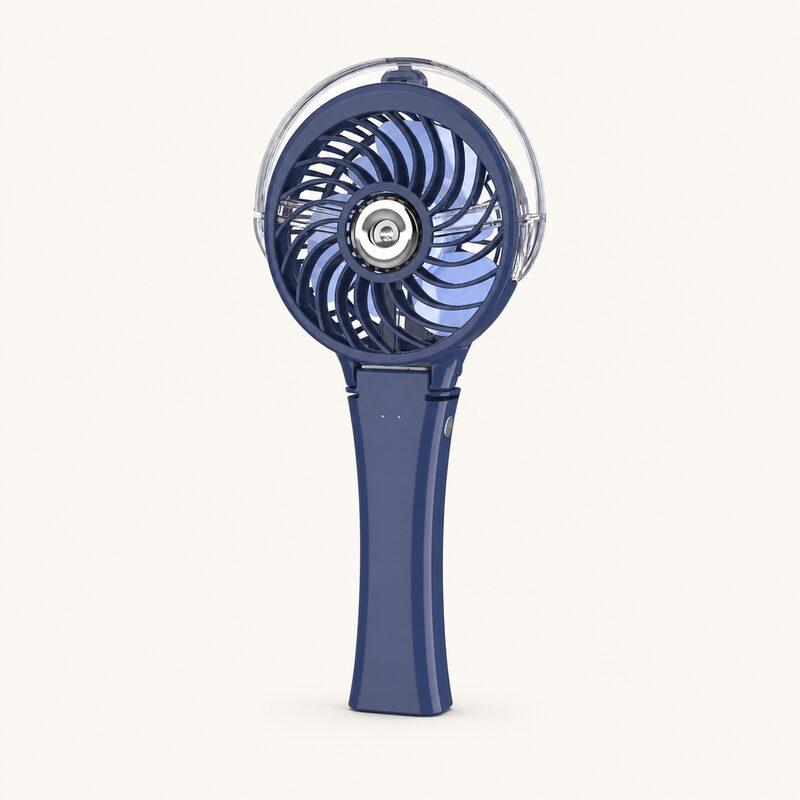
HandFan Portable Misting Fan
HandFan's misting models add a small 50-55 ml water reservoir that sprays a fine mist alongside the airflow. Battery capacity runs 2,600-5,200 mAh with 3 speeds and a roughly 4-hour Type-C recharge; a full tank lasts about 30-40 minutes of intermittent misting. Misting adds real cooling through evaporation — genuinely useful in dry heat like a desert climate, but less so once the air is already humid.
Pros: Evaporative misting adds real cooling beyond plain airflow in dry heat; foldable, travel-friendly design; multiple battery-size options.
Cons: Water tank needs refilling every 30-40 minutes of misting; far less effective in humid climates; the reservoir and nozzle need occasional cleaning to avoid mineral buildup or mold.
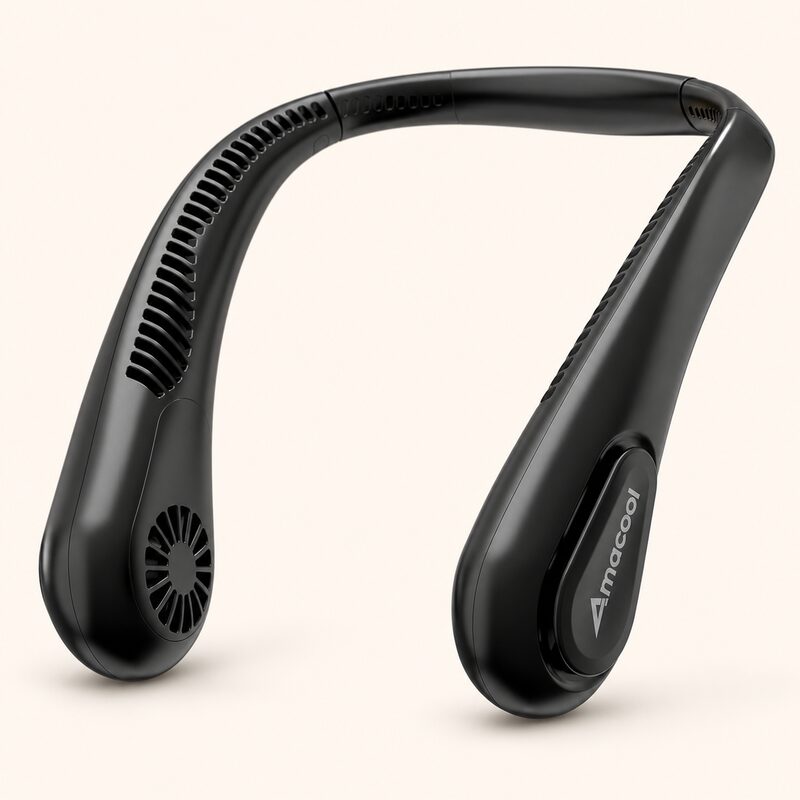
Amacool Bladeless Neck Fan
Amacool skips exposed blades entirely, using two internal turbo motors pushing air through roughly 60 vents built into the band — a real advantage for anyone with long hair that open-blade fans can catch. It runs a 5,000 mAh battery, 3 speeds, a 3.5-to-9-hour runtime depending on speed, and 5V/2A Type-C charging. At about 274 grams it's heavier than the Coolify, but it's a straightforward fan without added cooling plates, keeping the price lower and battery drain more predictable.
Pros: Bladeless design removes any hair-catching risk; hands-free wear; sizable battery; predictable battery drain with no separate cooling-plate mode.
Cons: Heavier on the neck than lighter competitors; no cooling mechanism beyond airflow; can't be aimed like a handheld fan.
How to choose a portable fan
Handheld vs. neck vs. clip styles
Handheld fans like JISULIFE and Gaiatop give the most control and the most airflow per battery size. Neck fans like TORRAS and Amacool trade aiming flexibility for both hands free — better for commuting or pushing a stroller. Clip-on fans mount to a stroller rail, car seat, or desk. A true pocket fan like the Glacier splits the difference, at the cost of the smallest blade size here.
Battery math: mAh vs. runtime, honestly
A bigger mAh number means longer runtime only when comparing the same fan at the same speed — runtime depends more on motor draw at that speed than on the battery number alone. The "all-day battery" claim on any box was almost certainly measured at the lowest speed, not the one worth using on a 95-degree day.
Misting fans and when they help
Plain airflow doesn't lower air temperature — it speeds up sweat evaporating off skin, which is why moving air feels cooler even though a thermometer in front of it won't move. A misting fan adds real evaporative cooling by putting water into that airflow, genuine physics rather than marketing. It depends on the air being dry enough to absorb the moisture, so it's a real advantage in dry heat but little help once the air is already humid.
Noise: when it matters
Most personal fans run roughly 35-45 decibels on lower settings, about library-quiet, louder at max speed. That matters most next to a sleeping baby or at a desk near coworkers — stick to the lower speeds if quiet matters more than raw airflow.
Frequently asked questions
Do portable fans actually cool the air, or just move it around?
Just move it, for the plain-airflow fans — they don't lower air temperature, they speed up sweat evaporation. Devices marketed with "cooling plates" add a small thermoelectric component on top of airflow, but treat any specific temperature-drop number with skepticism; a component that size isn't equivalent to air conditioning.
How long will the battery actually last on a hot day?
Less than the biggest number on the box. Runtime claims are almost always measured at the lowest speed, and running any of these on high can cut that to a quarter or less of the advertised maximum.
Are bladeless neck fans safer for long hair than handheld fans?
Yes, structurally. Bladeless designs like the Amacool push air through small fixed vents with nothing for loose hair to catch on, unlike open-blade fans with exposed blades behind a grille.
Can misting fans be used indoors without causing humidity problems?
Occasional indoor use is fine, but misting fans are built for outdoor or semi-outdoor use where the extra moisture disperses. Regular use in an enclosed space can add noticeable humidity, and the tank needs periodic cleaning to avoid mineral scale or mold.
Is the Glacier Pocket Fan available on Amazon?
No — it's sold direct from the manufacturer's site rather than through Amazon, so there's no Prime shipping or Amazon return process; any refund runs through the manufacturer's own policy.
Bottom line
For anyone who wants something that genuinely fits in a pocket rather than just being labeled "handheld," the Glacier Pocket Fan is the strongest pick — a large battery for its size, three ways to carry it, and a cold-touch bonus feature worth treating as exactly that, not a substitute for airflow. Buyers who'd rather shop through Amazon have solid options at every price: JISULIFE for the classic handheld, TORRAS Coolify for hands-free wear, Gaiatop on a budget, HandFan for dry heat over humidity, and Amacool if long hair rules out exposed blades. Whichever you pick, plan around the low end of its advertised runtime — that's what you'll get once it's running on a speed worth using.
Our rankings and editorial scores consider product specifications, aggregated owner feedback, availability, drawbacks, and commercial relationships. Compensation may affect inclusion or ordering; scores are our own assessments and are not Amazon or customer ratings. Commercial relationships do not permit unsupported product claims. Read more about how we review.