
This page contains affiliate links. If you buy through them, we may earn a commission at no additional cost to you. Read our affiliate disclosure.
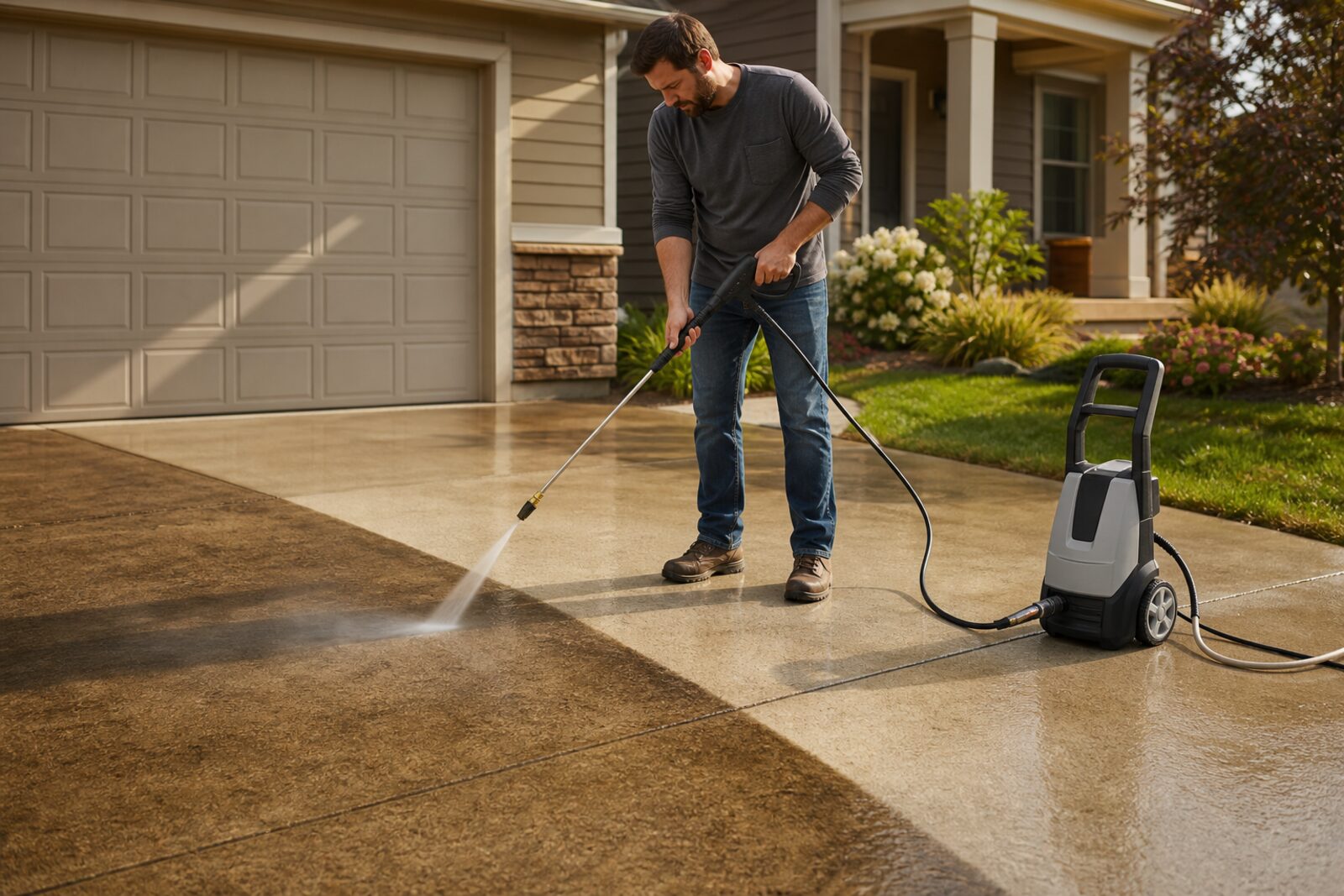
A pressure washer strips grime off a driveway in minutes and can just as easily gouge a groove into a wood deck if you use the wrong nozzle. We compared PSI, GPM, motor design, and owner reviews across six widely sold electric and gas pressure washers to help you match the right one to your siding, deck, driveway, or car.
- Sun Joe SPX3000 — Best Overall Electric
- Ryobi RY142300 — Best for Everyday Home Use
- Greenworks GPW2700 — Best Budget
- Westinghouse WPX3200 — Best Gas
- Karcher K5 Premium — Best Induction Motor / Quietest Electric
- DeWalt DWPW2400 — Best for Trades / Heavy Use
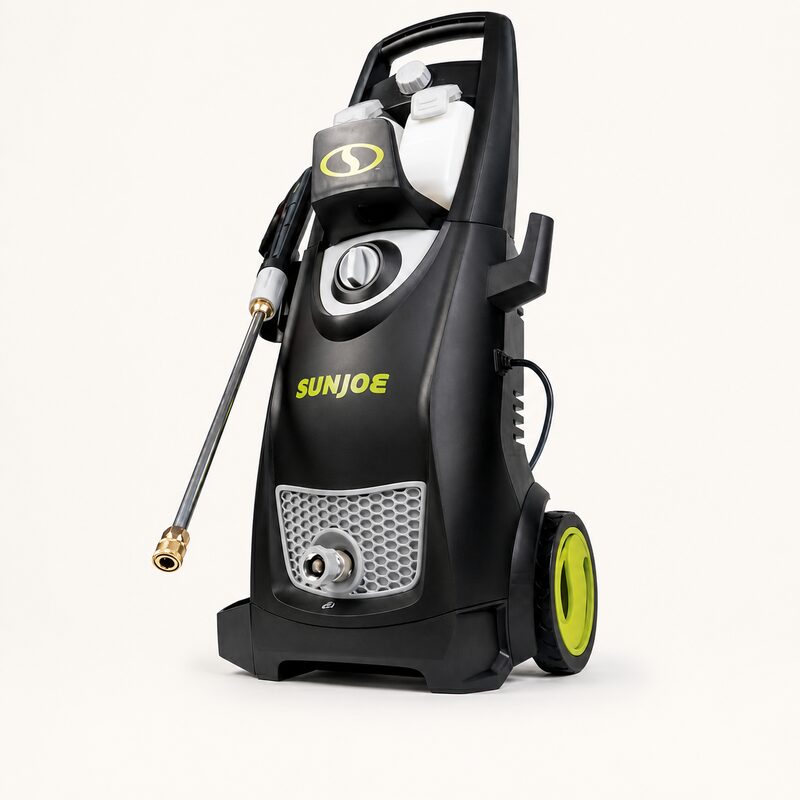
Sun Joe SPX3000
Rated for 2,030 PSI and 1.76 GPM (about 3,570 "cleaning units" — PSI multiplied by GPM, a rough measure of cleaning speed), the SPX3000 handles driveways, siding, patio furniture, and vehicles without the gouging risk of 3,000+ PSI machines. It's one of the best-reviewed electric washers on Amazon by volume, so parts and troubleshooting help are easy to find.
It ships with five nozzle tips (0°, 15°, 25°, 40°, soap), a detergent tank, a 20-foot hose, and a 35-foot cord — enough reach for a two-car driveway from one outlet. Like most washers this price, it uses a universal motor, which is louder and shorter-lived under heavy use than induction motors in pricier models. Typical price is $130–$160.
- Strong all-around PSI/GPM balance for driveways, siding, and vehicles
- Large, well-documented owner base for parts and troubleshooting
- Long hose and cord reduce how often you move outlets
- Universal motor is louder and less durable long-term than induction designs
- Plastic quick-connect fittings reported as a wear point after a season or two
- Not powerful enough for large-area concrete stripping or commercial use
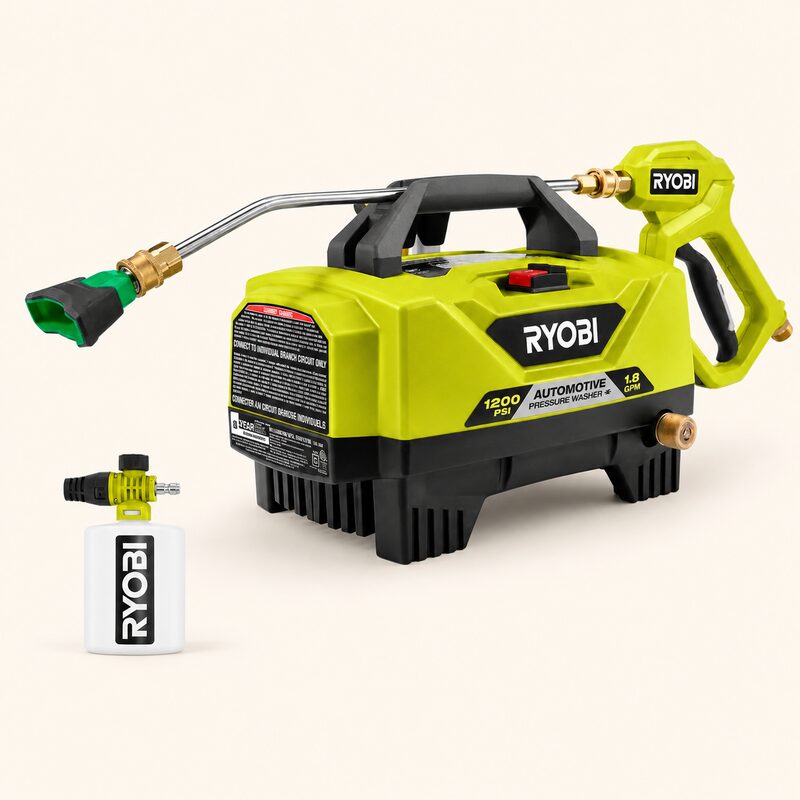
Ryobi RY142300
Ryobi's RY142300 is rated for 2,300 PSI and 1.2 GPM (about 2,760 cleaning units), a middle-of-the-road spec aimed at routine cleaning — decks, fences, siding, walkways, cars — rather than stripping years of buildup off concrete. Ryobi backs it with a 3-year warranty, longer than most electric washers this price.
It includes onboard storage for its four nozzles (0°, 25°, 40°, soap), a 20-foot hose, and a 35-foot cord, and folds flat for storage. Like the Sun Joe, its universal motor means more noise and wear under frequent use, and owner reviews note the detergent siphon works best with thin, Ryobi-branded soap rather than thicker aftermarket concentrates. Typical price is $140–$170.
- 3-year warranty is longer than most competitors at this price
- Compact, foldable storage design
- Onboard nozzle storage keeps tips from getting lost
- Lower GPM than the Sun Joe SPX3000 means slower rinsing on large areas
- Detergent tank performs best with Ryobi's own thin soap, not thicker concentrates
- Universal motor noise and lifespan trade-offs same as other budget electrics
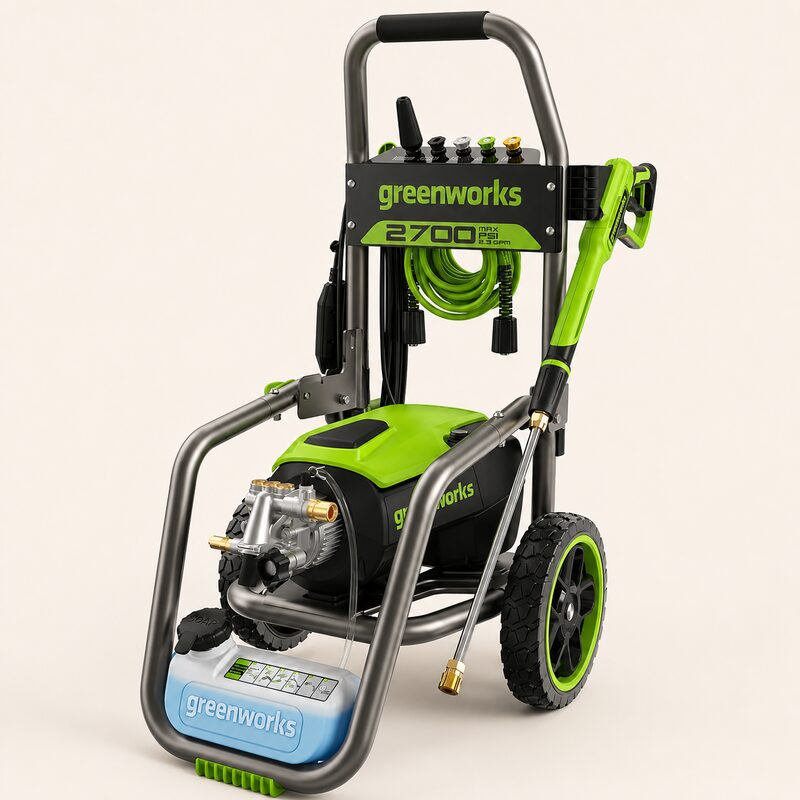
Greenworks GPW2700
The GPW2700 is rated for 2,700 PSI and 1.2 GPM (about 3,240 cleaning units) — higher PSI than the Ryobi or Sun Joe at a lower typical price, making it a reasonable first washer or a secondary unit for driveway and patio duty. It includes four nozzles, a detergent tank, and a 35-foot cord.
The tradeoff is fit and finish: owner reviews flag plastic hose connectors and a shorter hose (often around 20 feet or less) as the first parts to wear out under regular use. It's capable for occasional jobs but not built for daily-use durability like the pricier picks here. Typical price is $100–$130.
- Highest PSI-to-price ratio in this roundup
- Onboard detergent tank and nozzle storage included
- Good fit for occasional, light-duty homeowner use
- Plastic fittings and hose reported as the most common failure point
- Higher PSI with modest GPM means more caution needed on wood and paint
- Shorter effective lifespan under frequent or commercial-style use
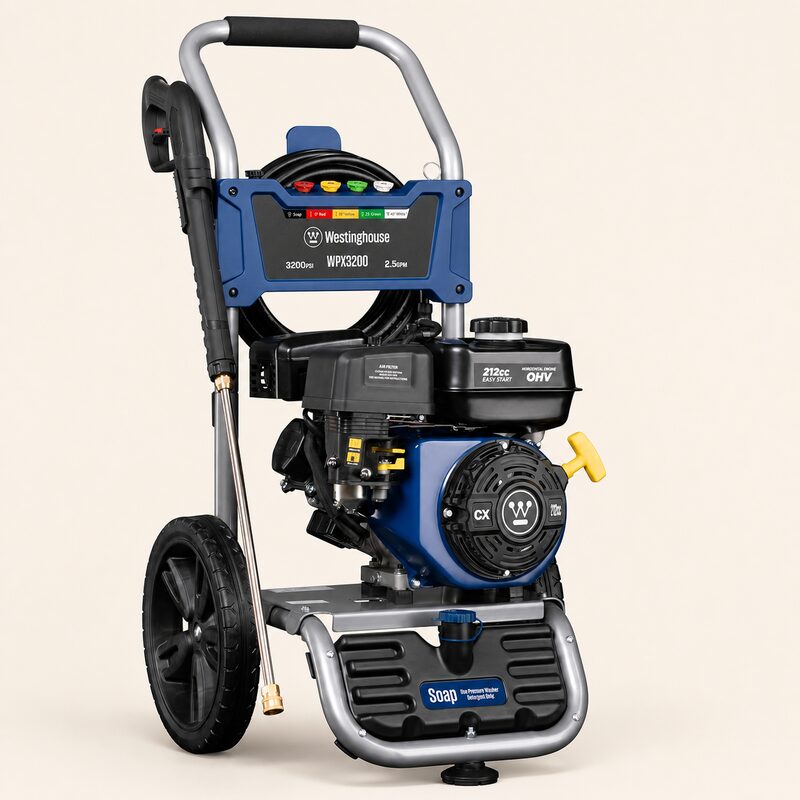
Westinghouse WPX3200
The WPX3200 is rated for 3,200 PSI and 2.5 GPM (about 8,000 cleaning units) — more than double the electric washers above — driven by a 4-stroke engine instead of a corded motor. That gap matters most on large driveways, stripping old paint or stain, and heavy equipment, where a lower-GPM electric would mean standing in one spot much longer for the same result.
Being gas-powered means no cord or outlet needed, useful for detached garages or rural properties. The tradeoffs are the usual ones: louder operation, periodic oil changes and fuel stabilizer for storage, exhaust that rules out indoor or enclosed-garage use, and roughly 60 pounds of weight. It includes five nozzles and a 30-foot hose. Typical price is $330–$400.
- Roughly double the GPM of the electric picks, cutting large-job time significantly
- No cord or outlet dependency — works anywhere
- Well-suited to heavy stripping jobs electric washers struggle with
- Requires oil changes, fuel stabilizer, and more maintenance than electric
- Loud engine noise and exhaust rule out indoor or enclosed-space use
- Heavier and bulkier to store and move than any electric model here
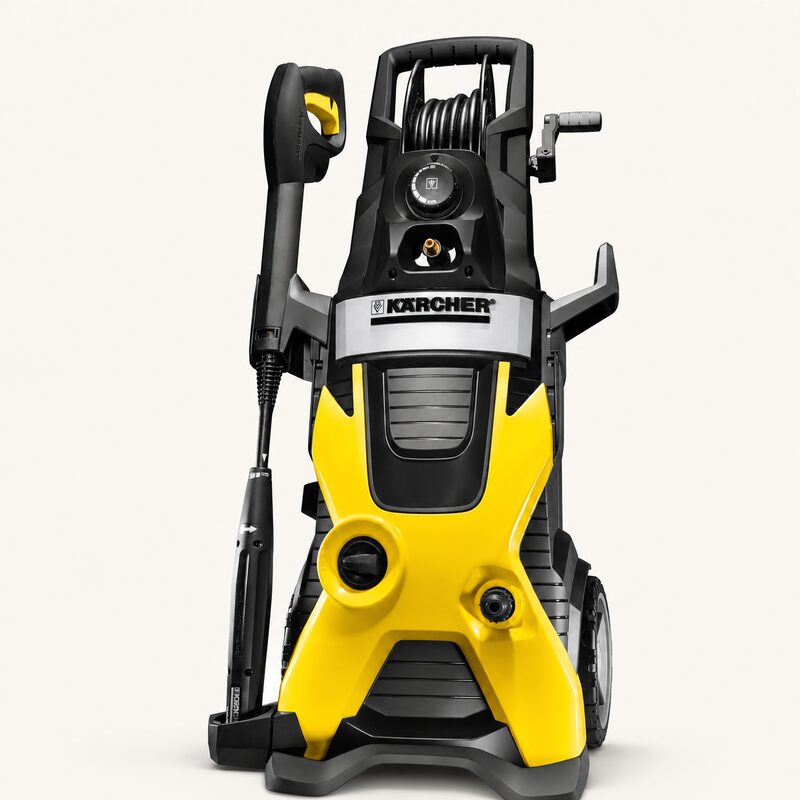
Karcher K5 Premium
The K5 Premium is rated for 2,000 PSI and 1.4 GPM (about 2,800 cleaning units) — similar to the Ryobi on paper, but Karcher uses an induction motor instead of a universal motor. Induction motors run quieter, generate less heat, and generally last longer under repeated use, which is why Karcher backs this model with a longer warranty than most competitors.
It includes a Vario Power wand for adjusting pressure without swapping nozzles, a Dirtblaster rotating nozzle for tough small-area buildup like grill grates or tires, and an integrated detergent tank. The induction motor adds weight versus the Sun Joe or Ryobi, and it costs noticeably more for a similar PSI rating. Typical price is $280–$330.
- Quieter, longer-lasting induction motor versus universal-motor competitors
- Vario Power wand adjusts pressure without changing tips
- Dirtblaster nozzle handles small, stubborn buildup well
- Meaningfully more expensive than similarly-rated PSI/GPM electric washers
- Heavier than comparable universal-motor units
- Shorter hose than some competitors, requiring more repositioning on large jobs
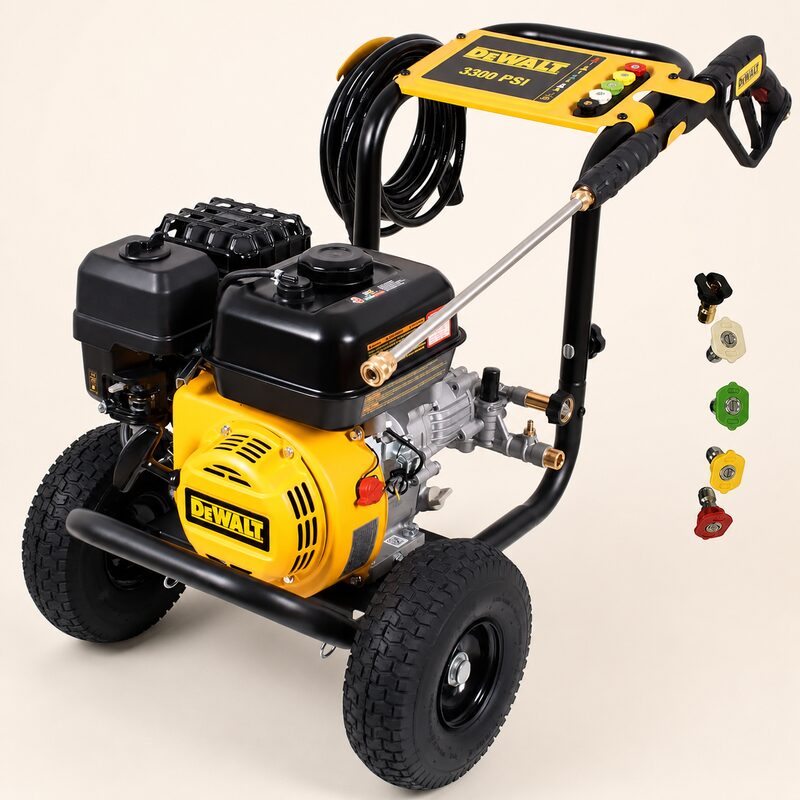
DeWalt DWPW2400
The DWPW2400 is rated for 2,400 PSI and 1.1 GPM (about 2,640 cleaning units), similar on paper to the Ryobi or Karcher, but built around a brushless induction motor and a ruggeder frame aimed at contractors and frequent users rather than weekend cleaning. It ships with a metal-reinforced spray gun and a longer expected duty cycle than typical homeowner-grade electrics.
It includes four nozzle tips, an integrated detergent tank, and a compact cart built to survive repeated loading into a truck bed. The brushless motor runs quieter and cooler than universal-motor washers under sustained use, but it costs and weighs more than lighter homeowner models, and its GPM is on the low end of this roundup. Typical price is $250–$300.
- Brushless induction motor built for frequent, heavy-duty use
- Reinforced spray gun and cart survive job-site handling better than homeowner units
- Runs cooler and quieter than universal-motor competitors under sustained load
- Lower GPM than several cheaper picks means slower work on large open surfaces
- Priced above comparable homeowner-grade electrics with similar PSI
- Overkill in size and durability for occasional, light residential use
How to choose a pressure washer
PSI × GPM = cleaning power
PSI measures the force behind the water; GPM measures the flow. Multiplying the two gives "cleaning units," a rough measure of how fast a washer strips dirt. Two washers with identical PSI but different GPM won't clean at the same speed — the higher-GPM machine rinses a driveway faster because it's moving more water, not hitting harder. Compare cleaning units, not PSI alone.
Matching PSI to the surface
Concrete, brick, and stone generally handle higher PSI (2,500 and up) since they don't compress or splinter. Wood decks, fences, vinyl or fiber-cement siding, and painted surfaces are different — pressure above roughly 1,500–1,900 PSI at close range can gouge softwood, strip paint unevenly, or force water behind siding. "Soft washing" — a wide nozzle (25° or 40°), more distance, and detergent dwell time instead of raw force — is the safer approach for siding and decking. Test an inconspicuous spot first and start with the widest nozzle.
Electric vs. gas, honestly
Electric washers are lighter, quieter, low-maintenance, and cheaper for occasional home use, but GPM is capped by what a household outlet supports, limiting speed on large jobs. Gas washers deliver more PSI and GPM and aren't tied to an outlet, but are louder, produce exhaust that rules out indoor use, and need oil changes and fuel stabilizer for storage. For a few cleanings a year, electric is simpler and cheaper; for large properties or frequent heavy use, gas earns its upkeep.
Induction vs. universal motors: noise and longevity
Universal (brushed) motors are cheaper and common in budget electrics, but run louder, hotter, and wear out sooner under frequent use. Induction and brushless motors — in the Karcher K5 and DeWalt DWPW2400 here — run quieter and cooler and last longer, which matters more if you'll use the washer weekly rather than a couple times a season.
Nozzles, degrees, and surface cleaners
Most washers ship with color-coded tips: 0° (a pinpoint jet, most aggressive), 15°, 25°, 40°, and a wide soap nozzle. Wider angles spread the same PSI over more area — why 25° or 40° is standard for siding and decking. A rotating surface cleaner attachment evens out pressure on flat concrete and cuts driveway or patio cleaning time significantly.
Hose, cord, and winterizing
Electric washers typically ship with 25–35 feet of cord and 20–25 feet of hose; an undersized extension cord can cause voltage drop and motor strain, so check the manual before adding one. Gas washers skip the cord but are limited by hose length and how far you can move the unit. Before winter storage, run pump antifreeze through the system per the manufacturer's instructions and drain the hose — leftover water that freezes can crack seals or damage the pump. Gas models also need fuel stabilizer or an empty tank to prevent carburetor gumming.
Frequently asked questions
What PSI do I actually need for a driveway?
Most concrete and brick driveways clean well at 2,500–3,200 PSI with a 15° or 25° nozzle, especially with a surface cleaner attachment. Higher PSI mainly helps with stubborn oil stains, where detergent dwell time matters more than raw pressure.
Can I use a pressure washer on my siding or deck?
Yes, but at lower pressure and a wider nozzle than concrete. Vinyl or fiber-cement siding and wood decking generally do best under 1,500–1,900 PSI with a 25° or 40° nozzle held at a distance, relying on detergent and soft washing rather than close-range blasting. Check manufacturer guidance for your specific siding or decking material.
Is a gas pressure washer worth it over electric for home use?
For routine cleaning a few times a year — driveways, decks, siding, cars — an electric washer in the 2,000–2,700 PSI range is usually enough and cheaper to buy, run, and maintain. Gas makes sense for large properties, frequent heavy-duty stripping, or no convenient outdoor outlet.
Why does my pressure washer motor sound louder over time?
Universal (brushed) motors, common in budget electrics, wear down brushes over time and tend to get louder and hotter with age, especially under frequent use. Induction and brushless motors avoid this wear pattern and stay quieter longer, part of why they cost more upfront.
Do I need a separate surface cleaner attachment?
Not strictly, but it's worthwhile if you'll clean driveways, patios, or garage floors regularly. A surface cleaner spins two jets under an enclosed housing, distributing pressure evenly and cutting streaking compared to a standard wand — it's usually sold separately and needs to match the washer's PSI and GPM.
Bottom line
For most homeowners tackling driveways, siding, decking, and cars, the Sun Joe SPX3000 is the strongest overall electric pick — its PSI/GPM balance, long hose and cord, and large owner base make it a safe default. Step up to the Karcher K5 Premium if motor noise and longevity matter more than upfront price, choose the Ryobi RY142300 or Greenworks GPW2700 for budget and simplicity, and move to the Westinghouse WPX3200 or DeWalt DWPW2400 for large areas, heavy stripping, or frequent use where a gas engine or contractor-grade motor pays for itself.
Our rankings and editorial scores consider product specifications, aggregated owner feedback, availability, drawbacks, and commercial relationships. Compensation may affect inclusion or ordering; scores are our own assessments and are not Amazon or customer ratings. Commercial relationships do not permit unsupported product claims. Read more about how we review.