
This page contains affiliate links. If you buy through them, we may earn a commission at no additional cost to you. Read our affiliate disclosure.
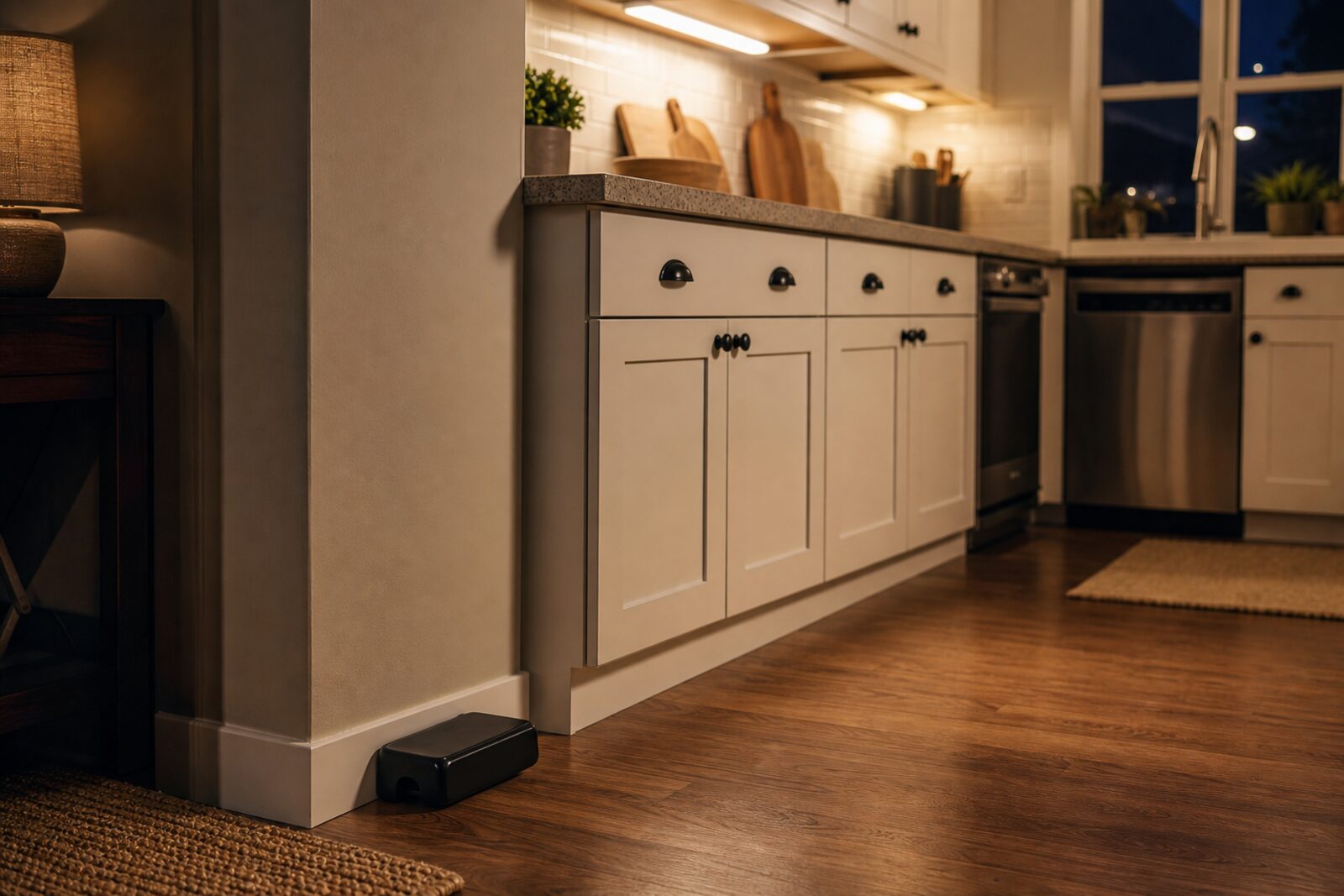
Seeing one roach scurry across the kitchen floor at night rarely means there's just one. Roaches hide in wall voids and behind baseboards during the day, so a single sighting usually points to an established population you haven't seen yet. This guide compares six widely sold roach killers — gel bait, bait stations, an insect growth regulator, a dust, a barrier spray, and a fogger — by active ingredient and intended use, so you can build a real treatment plan instead of grabbing whatever's under the sink.
- Advion Cockroach Gel Bait — Best Overall
- Combat Max 12 Month Roach Killing Bait — Best Bait Stations
- CimeXa Insecticide Dust — Best for Severe Infestations
- Gentrol IGR Point Source — Best for Breaking the Breeding Cycle
- Ortho Home Defense Insect Killer — Best Barrier Spray
- Hot Shot Fogger — Best for a Very Narrow Use Case
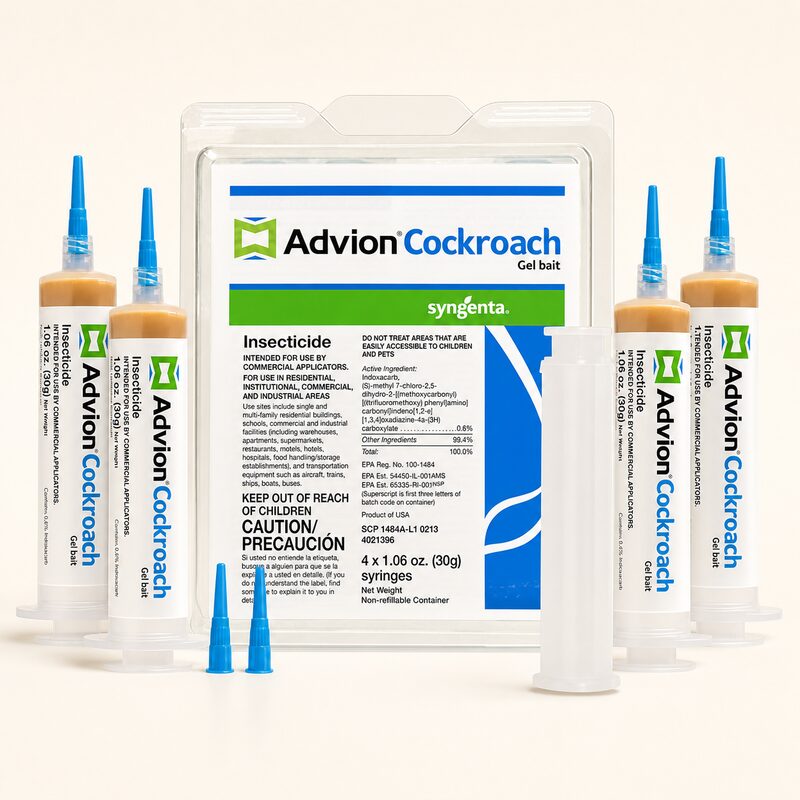
Advion Cockroach Gel Bait
Sold in a plunger syringe with reusable tips, usually $20–$30 for a kit covering dozens of placements. The active ingredient, indoxacarb, is slow-acting on purpose: a roach that feeds lives long enough to carry the toxin back to others through contact and droppings — the "domino effect" that lets gel reach roaches that never touched it directly.
It's the same class professional exterminators carry, effective against German roaches (the fast-breeding species behind most US kitchen infestations) and the larger American roach. Place rice-grain dots in cracks, under the fridge, and along cabinet hinges, not out on a bare countertop. Expect a noticeable drop in sightings within one to two weeks.
- Same active ingredient professionals use
- Secondary kill reaches roaches never fed on directly
- Small dots stay out of sight, off food surfaces
- Takes one to two weeks before activity visibly drops
- Roaches can develop aversion to a single active over time
- Dries out in high heat or direct sun
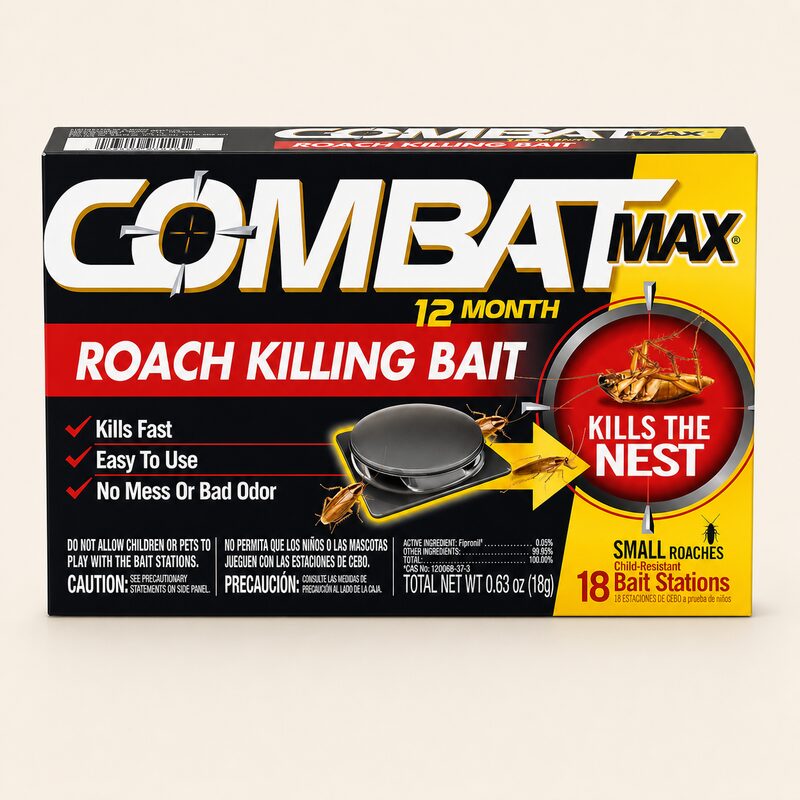
Combat Max 12 Month Roach Killing Bait
Sold in packs of 8 to 18 self-contained plastic stations, typically $8–$12, using fipronil as the active ingredient. Like gel, it's a slow-acting bait built for the domino effect, not instant kill — the difference is delivery. A sealed station is pre-loaded and tamper-resistant, a good fit for renters who'd rather not handle a gel syringe.
Stations work well as a supplement to gel or a first step for a mild problem, placed under sinks, behind appliances, and in cabinet corners. They offer fewer placement points than gel, so a heavier infestation usually needs gel or dust added too. The "12 month" branding refers to shelf life inside the station, not a guaranteed fix that lasts unmonitored.
- No mixing or handling bait directly
- Sealed design is safer around kids and pets than exposed gel
- Inexpensive and widely available
- Fewer placement points than gel
- Less effective alone against a heavy infestation
- Fipronil resistance is documented in some populations
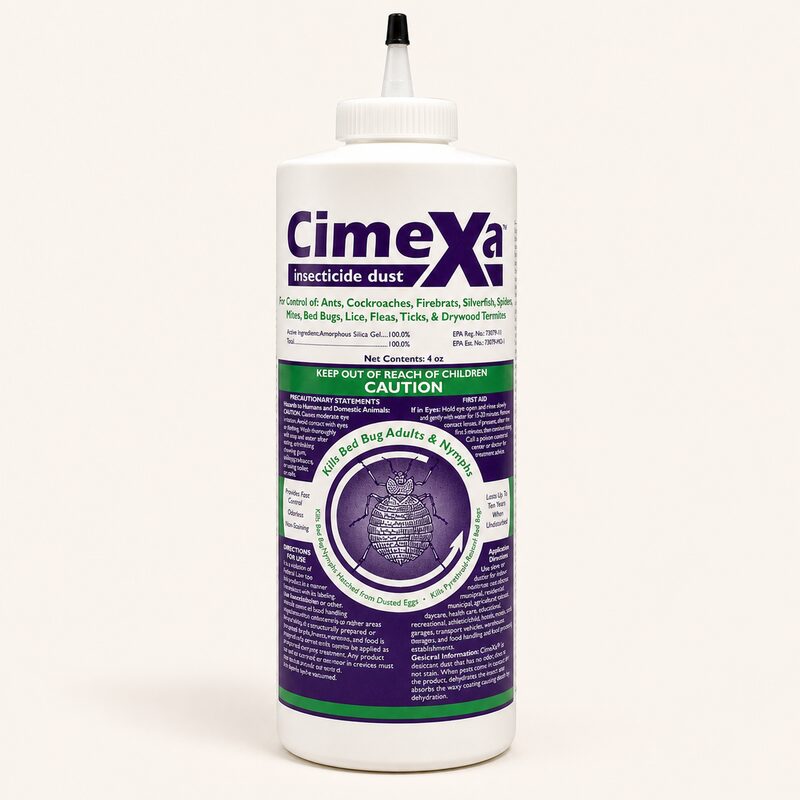
CimeXa Insecticide Dust
A fine amorphous silica gel dust, roughly $20–$25 for a 4-ounce bottle that lasts because only a barely visible layer is needed. Unlike bait, it isn't a poison in the usual sense — it abrades the roach's waxy coating so it dehydrates, a mechanical kill roaches can't build resistance to. Plain boric acid dust works similarly but clumps in humid areas.
Dust is the tool for wall voids, outlet covers, and other spots bait and sprays can't reach — where a heavy infestation hides when gel and stations alone aren't working. It stays effective for months as long as it stays dry; moisture reduces it to a paste. Keep it off any surface roaches or pets can lick, and never layer it over bait, since tracked dust can make roaches avoid feeding.
- Reaches wall voids gel and sprays can't
- Stays effective for months in dry areas; no resistance buildup
- A small bottle covers a large area
- Loses effectiveness once damp or mopped
- Overapplication is common; a visible layer isn't more effective
- Must be kept separate from bait or it interferes with feeding
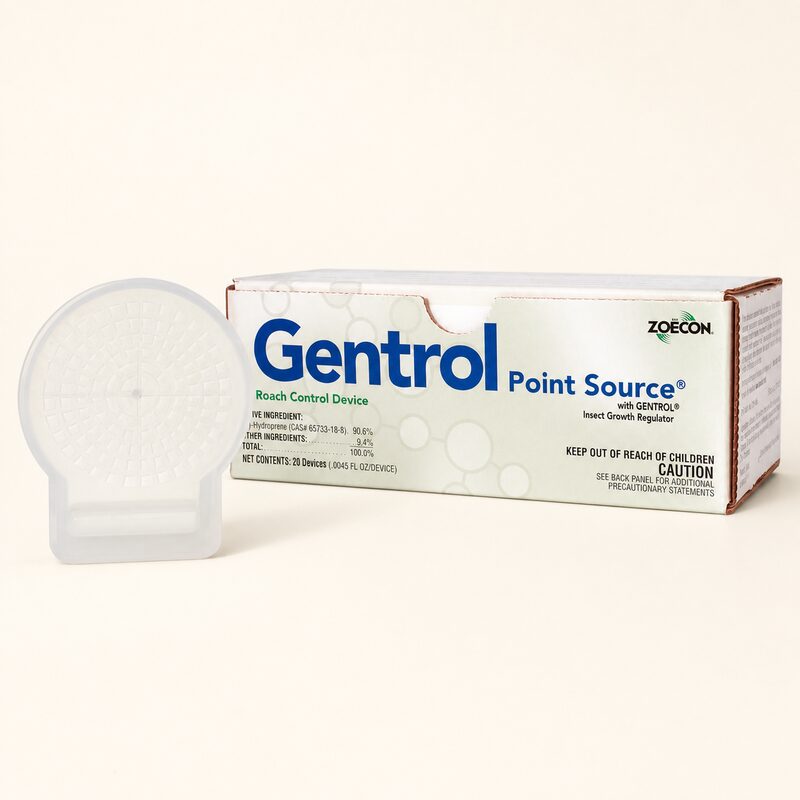
Gentrol IGR Point Source
Small resin discs, sold in packs of roughly 24 to 60 for $15–$25, containing hydroprene, an insect growth regulator (IGR) rather than an insecticide. It doesn't kill adult roaches outright — it mimics juvenile hormone, preventing nymphs from reaching reproductive age, so the population stops replacing itself even while some adults remain.
This is the step most home treatments skip, and it's usually the missing piece when bait alone stalls around week three or four: a female German roach can produce an egg case every few weeks, so without an IGR new generations keep hatching. Tuck discs into the same harborage areas as bait and dust, and leave them for months — the goal is long-term suppression, not a quick kill.
- Targets the reproductive cycle bait and dust don't
- No resistance buildup like some bait actives
- Long-lasting; doesn't need replacing as often as bait
- No visible knockdown alone; a complement, not a fix
- Slow by nature; works across a generation
- Easy to skip because there's no immediate "roaches are dying" feedback
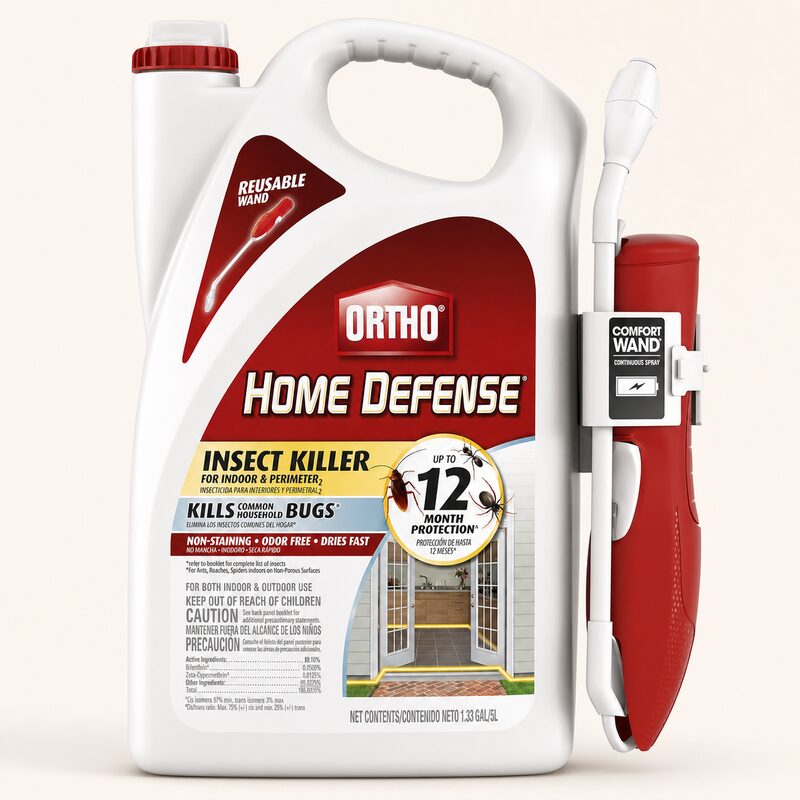
Ortho Home Defense Insect Killer for Indoor & Perimeter
A ready-to-use trigger sprayer, generally $10–$15, built around bifenthrin in most current formulations, delivering a residual barrier rather than a one-time knockdown. Sprayed along baseboards, thresholds, and the foundation, it keeps killing roaches that cross the treated surface for roughly a month or more per the label.
Its job is stopping roaches from entering from outside or adjoining units, not eliminating an indoor colony — bait and dust do that work. This is also where spray and bait conflict: spraying near gel dots or stations kills or repels the roaches you need alive to carry bait home. Use it as a perimeter treatment, kept away from active bait placements.
- Keeps working on treated surfaces for weeks
- Good for sealing entry points from outside
- Widely available and inexpensive
- Sprayed near bait, it can repel roaches from feeding
- Does nothing for roaches already established inside wall voids
- Must stay clear of food areas and dry before kids or pets touch it
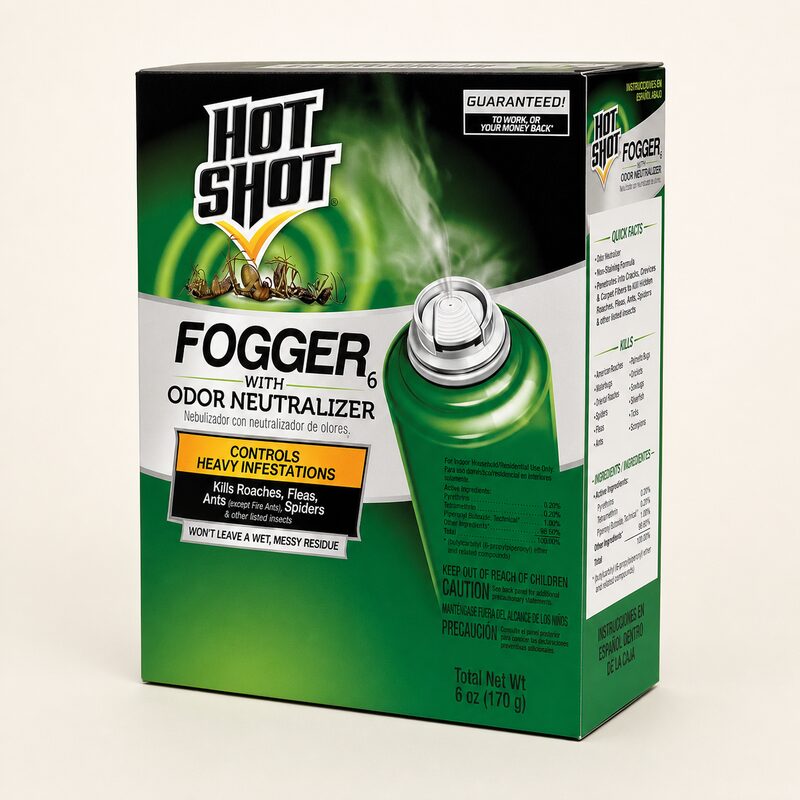
Hot Shot Fogger
An aerosol "bug bomb," usually sold in 2- or 3-can multipacks for $8–$12, releasing a pyrethroid fog that kills exposed insects on contact. It requires clearing the room of people, pets, and food, and staying out for hours per the label.
Foggers are honestly the wrong tool for most roach infestations. The fog reaches open air and exposed surfaces only, not the wall voids and appliance motors where roaches actually live, so sightings often return within days. Foggers can also scatter roaches deeper into voids, and leftover residue can repel roaches from bait for days. The one legitimate use is an isolated, low-level problem in a contained space, like an empty rental between tenants, not an active kitchen infestation.
- Fills an entire room without targeted application
- Can knock down exposed roaches quickly in a low-level, contained situation
- Cheap and available at most grocery stores
- Doesn't reach wall voids or appliance motors, where the colony lives
- Can scatter roaches into new areas instead of eliminating them
- Residue can repel roaches from bait for days
- Requires clearing the home for hours and covering food-contact surfaces
How to actually get rid of roaches
Sanitation comes first
Crumbs on the counter, grease behind the stove, or a dripping pipe give roaches food, water, and shelter regardless of what's applied. Wipe counters nightly, don't leave pet food out overnight, and fix leaks. Sanitation won't eliminate an existing colony, but skipping it means bait competes with easier food and takes longer to work.
Bait placement matters more than bait choice
Roaches feed near where they hide, so gel dots and stations belong in cracks, behind appliances, and along cabinet hinges — not in the open. Small, frequent placement points outperform a few large ones, and bait should stay undisturbed once placed; cleaning the exact spot can degrade it.
IGRs break the cycle bait alone can't
Bait and dust kill roaches present today; an IGR like Gentrol prevents the next generation from reaching reproductive age. A female German roach can produce dozens of offspring from a single egg case, so skipping the IGR is a common reason a "handled" population rebounds later.
Why spraying near bait backfires
A spray needs to repel or kill on contact; bait needs roaches to walk up, feed, and carry it home — opposite mechanisms. Spraying near a bait placement can kill the roaches needed to spread it, or make the area smell like insecticide, which a roach avoids. Keep sprays limited to entry points, away from every bait placement.
When to call a pro
Call a licensed pest control company if daytime sightings become common, if bait and dust show no improvement after three to four weeks, or if the infestation spans multiple rooms or a shared wall with a neighbor. A professional can also access void injection and building-wide IGR programs not sold over the counter.
Frequently asked questions
Why do I still see roaches a week after putting out bait?
Expected. Baits are intentionally slow-acting so roaches survive long enough to carry the toxin back to others, so it typically takes one to two weeks before sightings drop.
Can I use bait, dust, an IGR, and spray all at once?
Yes, but not in the same spots. Keep gel, stations, dust, and IGR discs in harborage areas, and limit spray to entry points, away from every bait placement.
Are foggers ever a good idea for roaches?
Rarely, for an active infestation. Foggers only reach open air, not the voids where roaches live, and can scatter a colony instead of eliminating it. They make more sense for a contained, low-level problem in an empty space.
German roach or American roach — does it change the approach?
The strategy is similar, but German roaches are smaller, breed faster, and are behind most US kitchen infestations, which is why bait and IGRs are the priority. American roaches are larger and more often enter from outside through drains or foundation gaps, so a perimeter spray matters more for them.
Is it safe to use these products with kids or pets in the house?
No pesticide is fully risk-free. Sealed stations are lower-exposure than open gel dots; silica dust must go only where it can't be licked or inhaled; sprays need to dry and stay clear of food contact. Always follow the specific label.
Bottom line
Advion Cockroach Gel Bait is the strongest starting point for most households — professional-grade active ingredient, precise placement, and a secondary kill effect that reaches roaches never touched directly. Pair it with Combat Max stations for lower-traffic areas, add CimeXa dust in wall voids for a heavier infestation, and include Gentrol IGR discs so the population stops reproducing while bait handles roaches already present. Ortho Home Defense earns a spot for sealing entry points, kept away from bait. Skip the fogger unless it's an isolated, low-level problem in an empty space — for an active infestation, it does less than anything else on this list.
Our rankings and editorial scores consider product specifications, aggregated owner feedback, availability, drawbacks, and commercial relationships. Compensation may affect inclusion or ordering; scores are our own assessments and are not Amazon or customer ratings. Commercial relationships do not permit unsupported product claims. Read more about how we review.