
This page contains affiliate links. If you buy through them, we may earn a commission at no additional cost to you. Read our affiliate disclosure.
A smart thermostat is one of the few home upgrades that can pay for itself: the Department of Energy estimates smart setback scheduling can save around 10% a year on heating and cooling by adjusting temperatures when a home is empty or asleep. But the category isn't one-size-fits-all — some units need a low-voltage wire most older systems lack, some lean hard into one voice assistant, and only a few ship with room-by-room sensors that fix hot and cold spots. Below are five widely available models for a US home in 2026, with the wiring, ecosystem, and sensor tradeoffs that matter before buying.
- Google Nest Learning Thermostat (4th Gen) — Best Overall
- Ecobee Smart Thermostat Premium — Best for Room Sensors
- Amazon Smart Thermostat — Best Budget
- Honeywell Home T9 — Best for Large or Multi-Room Homes
- Ecobee Smart Thermostat Enhanced — Best Value
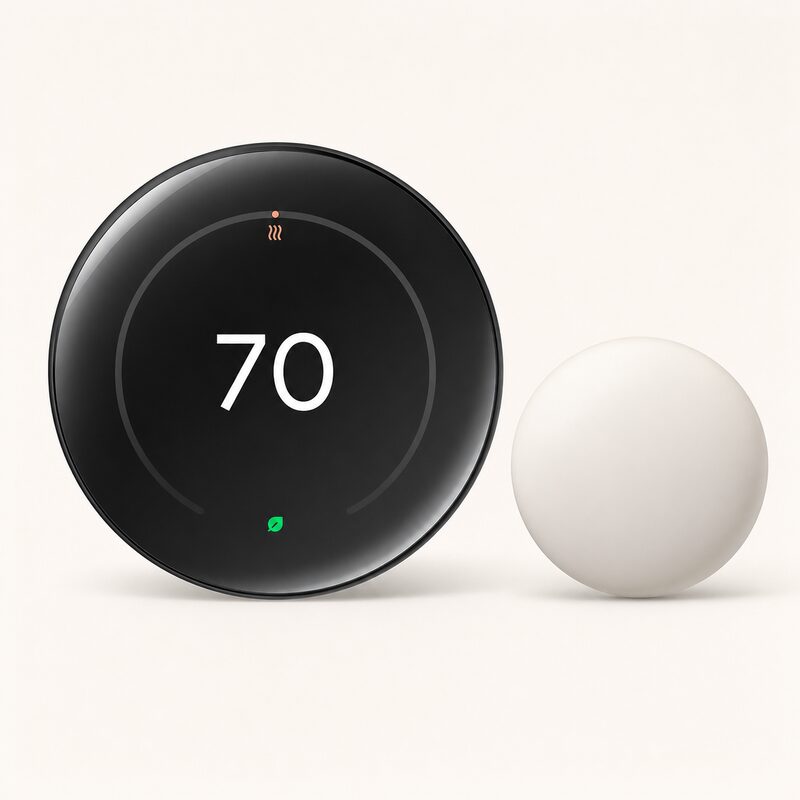
Google Nest Learning Thermostat (4th Gen)
Google's fourth-generation Learning Thermostat, released in 2024, redesigned the classic Nest dial into a flatter unit with an edge-lit display Google calls Farsight. It still watches the temperatures a household sets manually for the first week or two and builds its own schedule, adjusting further from occupancy sensing and local weather data. Nest lists compatibility with most 24V systems, including many heat pumps, though unusual multi-stage HVAC setups should run its compatibility checker first.
Nest doesn't strictly require a C-wire — it can draw power from other wires in many systems, with a separate Power Connector sold for setups that need one. Owner reviews are mixed: some install in twenty minutes, others find the battery-based power insufficient without the connector. Nest integrates deeply with Google Home and Assistant, and works with Alexa through a connected skill, though that voice experience is more built-out on the Google side. Price is typically around $280.
- Auto-scheduling learns a household's routine without manual programming
- Broad HVAC compatibility including many heat pump configurations
- Large, legible display and one of the more polished mobile apps in the category
- Room sensors are sold separately and add to the total cost
- Some systems without a C-wire report power issues until the separate Power Connector is installed
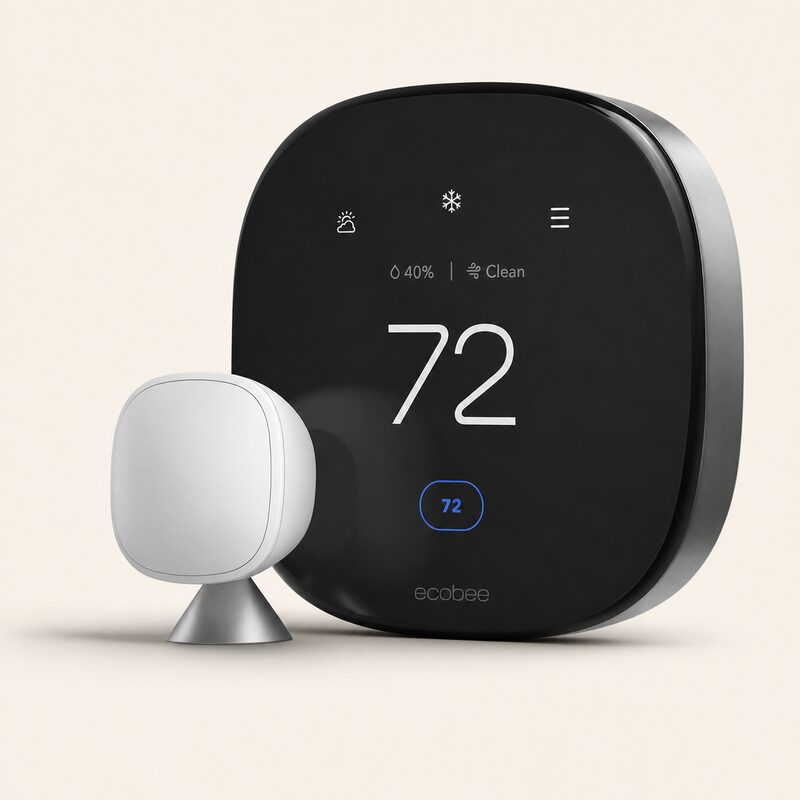
Ecobee Smart Thermostat Premium
Ecobee's flagship ships with one SmartSensor in the box, built around the idea that a single reading near a hallway doesn't reflect how a whole house feels. The sensor tracks both temperature and occupancy wherever it's placed, and the system can average sensors together or prioritize occupied rooms — the fix for a hallway thermostat making a back bedroom too hot or cold. Additional SmartSensors sell in multi-packs for wider coverage.
The Premium adds a built-in air quality monitor tracking CO2, VOCs, and humidity, plus a far-field microphone for built-in Alexa voice control, alongside Google Assistant and HomeKit support. Installation needs an existing C-wire or the included Power Extender Kit, and some older two-wire heat-only systems need extra work — Ecobee's compatibility checker should be run first. Price generally lands around $250.
- Included room sensor addresses uneven temperatures better than any single-point thermostat
- Built-in air quality monitoring is unusual at this price point
- Works natively with Alexa, Google Assistant, and HomeKit rather than favoring one
- Higher upfront price, and full-house sensor coverage costs more still
- Power Extender Kit installation is more involved than plug-and-play for homes without a C-wire
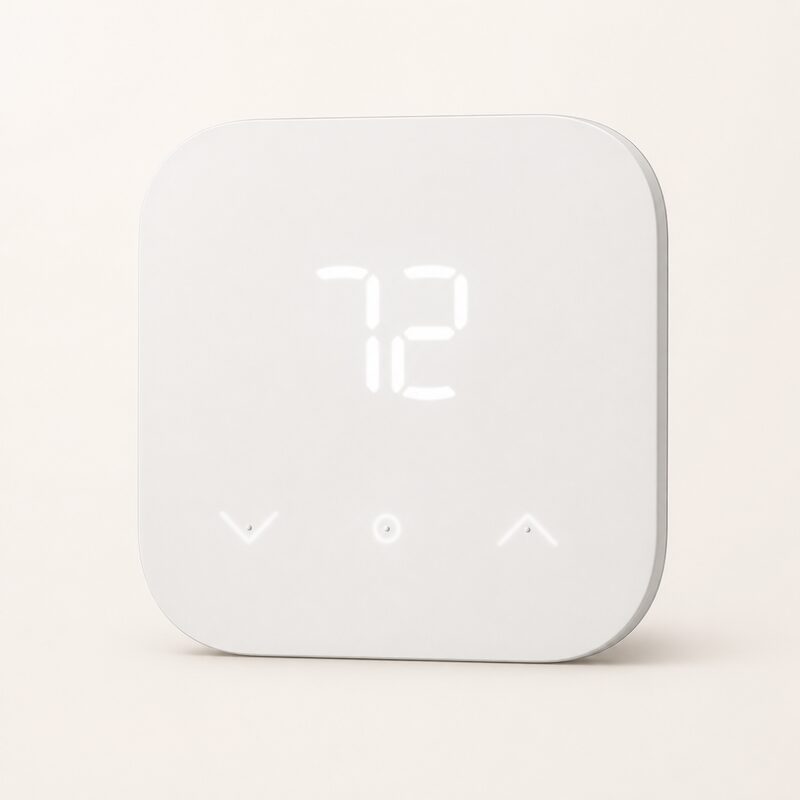
Amazon Smart Thermostat
Manufactured for Amazon by Resideo (Honeywell's smart-home spinoff), this is the simplest, least expensive thermostat here, typically $60–$80. It's ENERGY STAR certified and covers the basics: app and Alexa voice scheduling, phone-based geofencing, and compatibility Amazon lists as covering most single-stage systems. It's more limited than the others — no color touchscreen, no learning algorithm, no room-sensor option — the tradeoff that keeps the price low.
Unlike Nest, this thermostat generally requires a C-wire for reliable operation; Amazon's installation guidance recommends one, and owner reviews report inconsistent results without it. Voice control favors Alexa, and while there's a basic Google Assistant path, most reviewers treat this as an Alexa-household product rather than ecosystem-neutral.
- Lowest price of any thermostat here while still offering app and voice scheduling
- Simple installation and interface, straightforward for a first smart thermostat
- Generally needs a C-wire, which some older homes don't have
- No learning schedule and no compatible room-sensor ecosystem
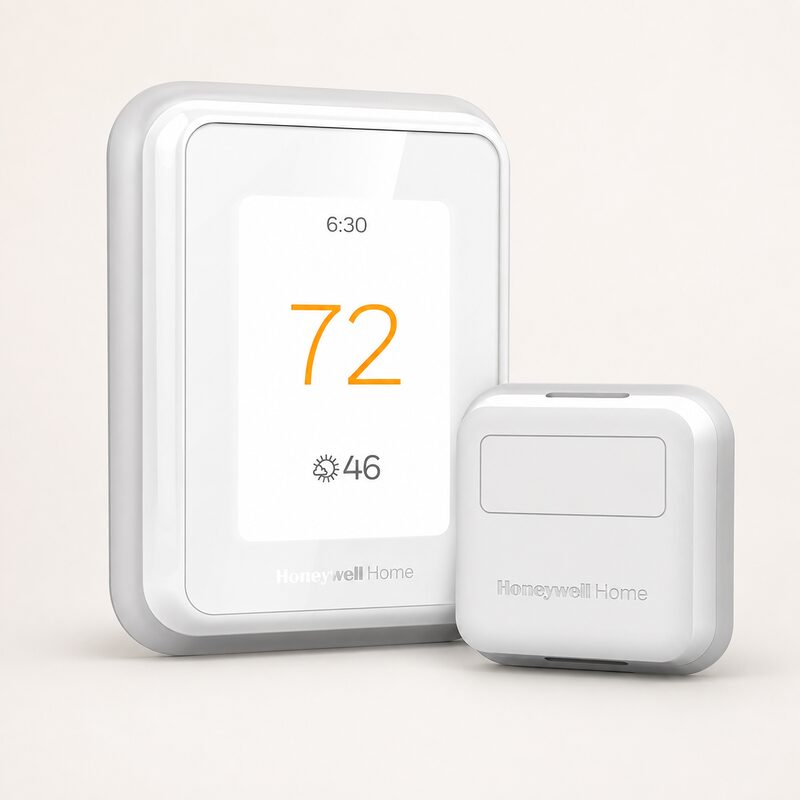
Honeywell Home T9
The T9 is Resideo's own mid-range thermostat (sold under the Honeywell Home brand) and, like Ecobee's Premium, is built around smart room sensors rather than a single reading point. It ships with an optional sensor bundle in many listings and supports several additional sensors, letting a household prioritize comfort in whichever rooms are occupied — useful in larger homes where bedrooms, offices, and living areas rarely need conditioning at the same time.
Compatibility spans most conventional and heat pump systems, though most installations benefit from or require a C-wire; Honeywell sells a separate adapter for homes without one, worth budgeting for if a compatibility check comes back uncertain. The T9 supports Alexa and Google Assistant with geofencing that can use multiple household members' phone locations. Pricing typically runs $130–$170 depending on bundled sensors.
- Multi-sensor room prioritization is a strong fit for larger, multi-zone homes
- Geofencing supports multiple household members' phones, not just one
- C-wire adapter is often a separate purchase, adding to real installed cost
- No learning schedule — schedules are manually set rather than adaptive
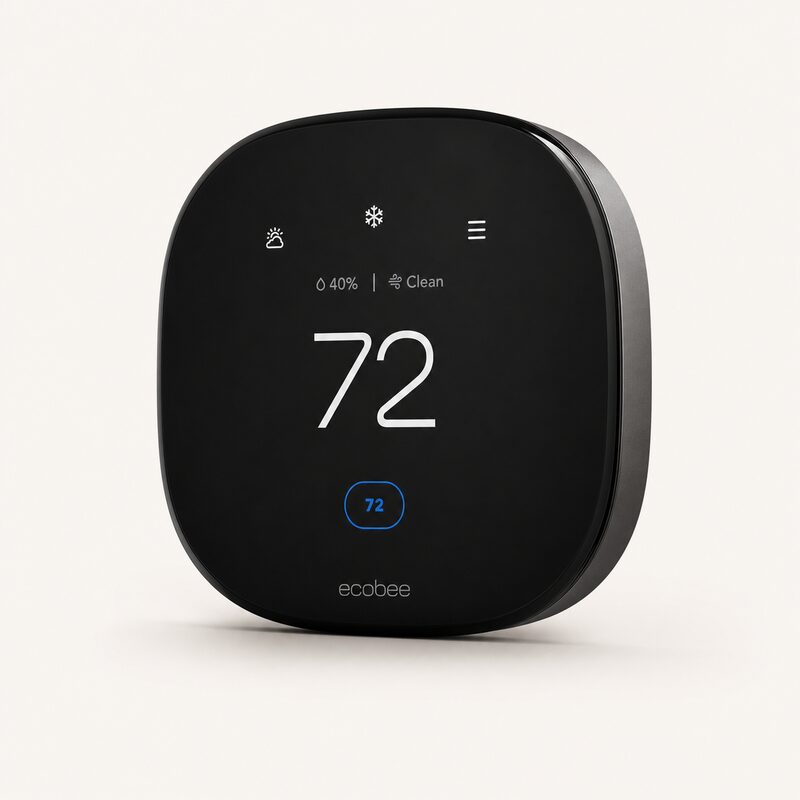
Ecobee Smart Thermostat Enhanced
Ecobee's mid-tier model replaced the older Ecobee3 Lite in the lineup, sitting between the budget Amazon thermostat and Ecobee's own Premium flagship. It includes one SmartSensor in the box — the same room-sensing technology used in the Premium — a meaningful upgrade over the base configuration of cheaper competitors. It drops the Premium's air quality monitor and far-field Alexa microphone, but still supports Alexa, Google Assistant, and HomeKit through the app and a connected voice device.
Like the rest of Ecobee's lineup, it includes a Power Extender Kit for systems without a C-wire, and heat-only two-wire systems are the most common compatibility exception. Street price generally runs $150–$180, making it a balanced option: sensor-based comfort without paying for the Premium's extras.
- Includes a room sensor standard, unlike most thermostats in its price range
- Supports Alexa, Google Assistant, and HomeKit without favoring one
- No built-in microphone, so voice control needs a separate Alexa or Google device
- Additional SmartSensors for more rooms are sold separately
How to choose a smart thermostat
Check C-wire compatibility before anything else
The single most common installation snag is power, not features. Older HVAC systems, especially heat-only setups, sometimes lack the low-voltage common wire (C-wire) that smart thermostats use to stay powered and connected. Nest can often run without one, drawing power from other wires, though a separate power accessory is sometimes needed; Ecobee and Honeywell both include or sell power-extender or adapter kits for this; the Amazon Smart Thermostat generally expects a C-wire present. Every manufacturer publishes a free compatibility checker using the wire labels on the existing thermostat's base plate — worth five minutes to avoid a return.
Pick the ecosystem you'll actually use
A household relying on Alexa will get a smoother experience from the Amazon Smart Thermostat or Ecobee's built-in Alexa microphone on the Premium model. A Google Home household will lean toward Nest, which has the deepest integration there. Honeywell's T9 and Ecobee's Enhanced model split the difference, supporting both without strongly favoring either.
Decide whether room sensors matter
A thermostat mounted in a hallway only knows the temperature at that one spot, which is why a back bedroom or home office can run warmer or cooler regardless of the setting. Ecobee's Premium and Enhanced models, along with the Honeywell T9, build multi-room sensing in as a core feature; Nest sells a comparable sensor separately. For a single-story home with even temperatures this may not matter much; for a multi-zone layout, it often solves complaints a standard thermostat never will.
Look into utility rebates before buying
Many electric and gas utilities across the US offer instant or mail-in rebates, commonly $25–$100, for ENERGY STAR–certified smart thermostats, and some partner directly with Nest or Ecobee to apply the rebate at checkout. Availability varies widely by state and utility, so it's worth checking before purchase.
Frequently asked questions
Do I need a C-wire for a smart thermostat?
It depends on the model and existing HVAC system. Ecobee and Honeywell both include or sell adapter kits that let their thermostats run without one, Nest can often run without a C-wire using power drawn from other wires, and the Amazon Smart Thermostat generally expects a C-wire already in place. Running a compatibility checker with the existing thermostat's wire labels before buying is the safest way to know for certain.
Will a smart thermostat actually lower my energy bill?
The Department of Energy estimates consistent setback scheduling — lowering heating or raising cooling when a home is empty or overnight — can save around 10% a year on heating and cooling costs. Smart thermostats automate that setback through geofencing, occupancy sensing, or learned schedules, but savings depend on baseline habits; someone who already adjusts a thermostat diligently will see a smaller jump than someone who previously left it constant.
Do I need room sensors, or is a single thermostat enough?
A single thermostat is enough for smaller or single-story homes with fairly even airflow. Larger homes, multi-story layouts, or a chronically hot or cold room benefit from a thermostat supporting room sensors, such as Ecobee's Premium or Enhanced models or the Honeywell T9.
Can I install a smart thermostat myself?
Most of these models are designed for homeowner installation, generally taking 20–45 minutes with a screwdriver and a smartphone, and each brand provides a step-by-step in-app wiring guide. Homes with unusual HVAC configurations — dual-fuel systems, heat pumps with auxiliary heat, or an unclear C-wire situation — are worth confirming with a compatibility check first, and an HVAC technician can handle installation for a modest fee if the wiring feels uncertain.
Which smart thermostat works best with Alexa specifically?
The Amazon Smart Thermostat is the most Alexa-native option by design, and Ecobee's Premium adds a built-in far-field microphone for direct Alexa voice control without a separate smart speaker. Honeywell's T9 and Ecobee's Enhanced model both support Alexa through the app and any existing Echo device, while Nest's Alexa integration is more limited compared to its Google Assistant support.
Bottom line
For most US homeowners, the Google Nest Learning Thermostat (4th Gen) is the strongest all-around pick — broad compatibility, an adaptive schedule, and a polished app. Households fighting uneven room temperatures should look at the Ecobee Smart Thermostat Premium or Honeywell Home T9, both built around sensor-based comfort. Budget-focused buyers, especially those already in an Alexa household, get real value from the Amazon Smart Thermostat, and anyone wanting Ecobee's sensor approach without the Premium's price tag should look at the Smart Thermostat Enhanced. Whichever model fits, confirm C-wire or adapter compatibility with the existing HVAC system first — that detail decides how smooth installation day actually is.
Our rankings and editorial scores consider product specifications, aggregated owner feedback, availability, drawbacks, and commercial relationships. Compensation may affect inclusion or ordering; scores are our own assessments and are not Amazon or customer ratings. Commercial relationships do not permit unsupported product claims. Read more about how we review.