
This page contains affiliate links. If you buy through them, we may earn a commission at no additional cost to you. Read our affiliate disclosure.
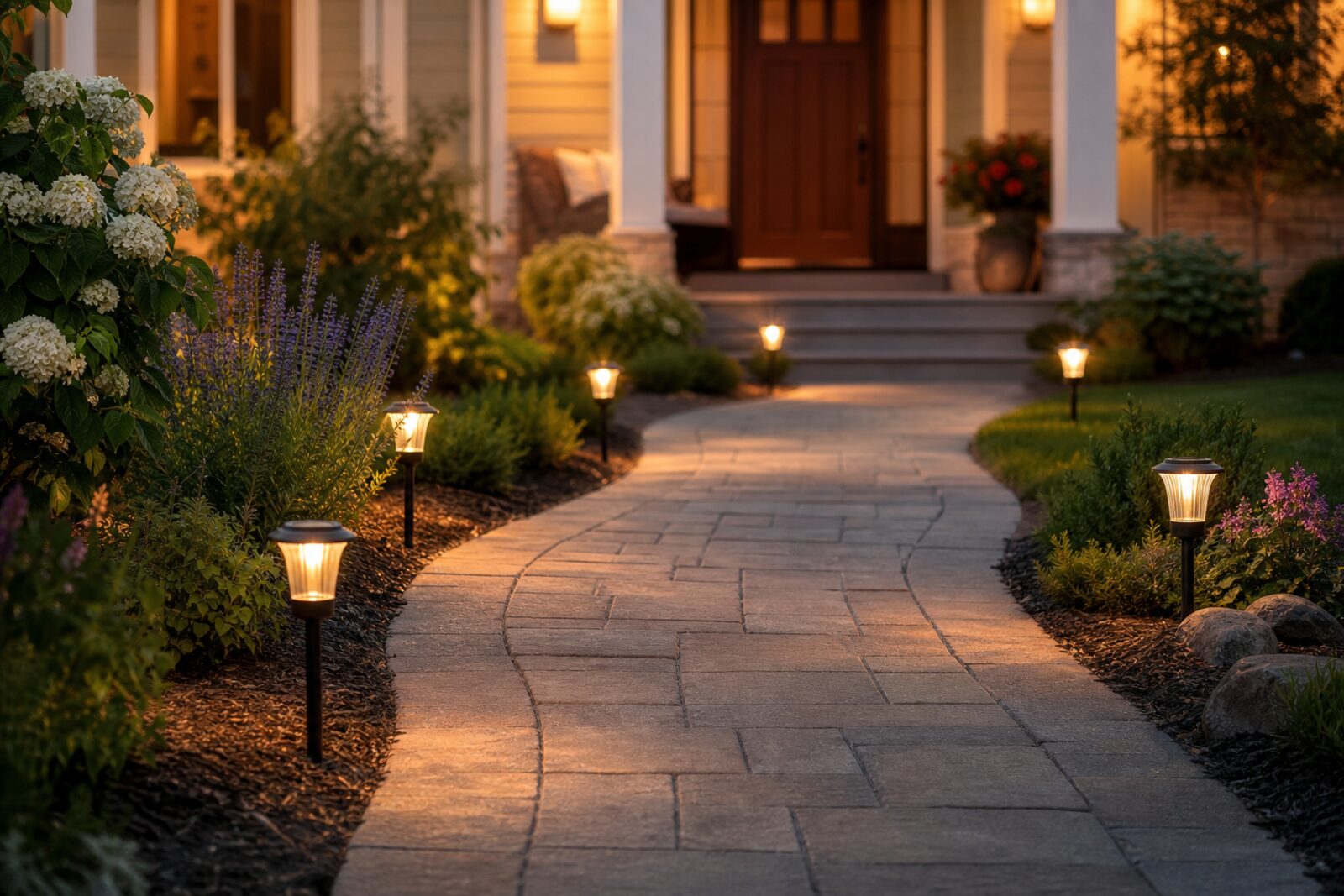
Solar outdoor lights solve a real problem: getting light onto a path, patio, or dark yard corner without running a wire. They're also oversold constantly, with photos showing floodlight-bright beams no coin-cell panel actually produces. This guide covers six widely-sold options across path, spotlight, security, and string formats, with honest expectations on brightness, runtime, and winter performance.
- Ring Solar Pathlight — Best Overall Path Light
- Aootek 182 LED Solar Motion Security Light — Best Security/Motion
- Brightech Ambience Pro Solar String Lights — Best String Lights
- URPOWER 2-in-1 Solar Spotlights — Best Landscape Spotlights
- LITOM Solar Landscape Spotlights — Best Value Spotlights
- GIGALUMI Solar Path Lights — Best Budget Multi-Pack
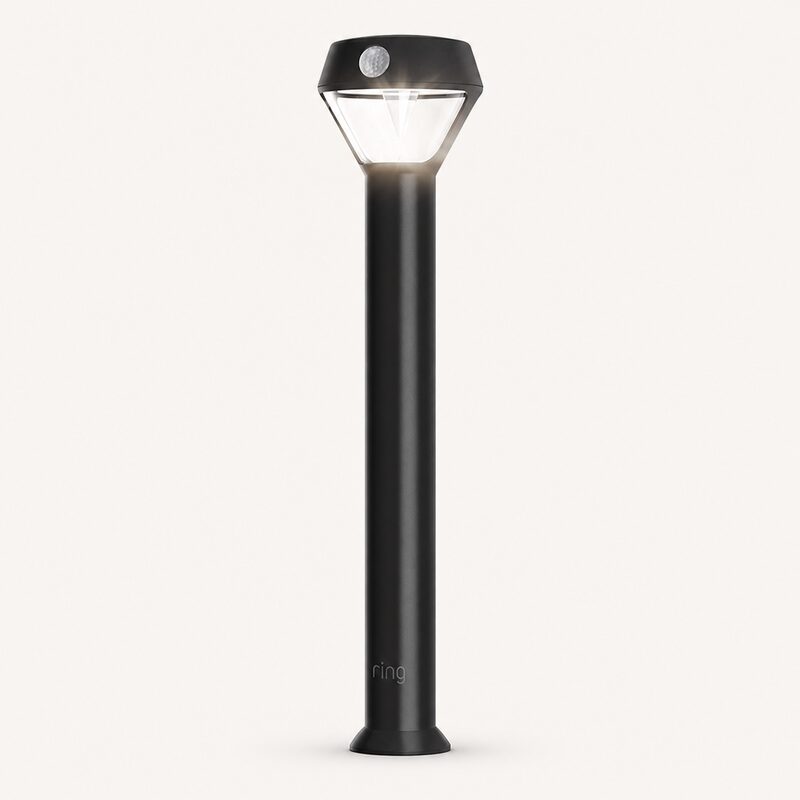
Ring Solar Pathlight
Ring's Pathlight is a stake-mounted path light that ties into the Ring app and, with a Ring Bridge, into Ring's broader smart lighting system. On its own it's a simple dusk-to-dawn light: a panel charges the battery by day and it comes on at night as soft accent lighting — not bright enough to read by, but enough to outline a walkway edge.
Runtime on a full summer charge covers a full night, shortening in December and January. The housing is weatherproof year-round and the stake needs no tools. Price runs $25–$35 per light, sold individually.
- Clean design that reads as a real fixture, not a solar toy
- No subscription needed for basic dusk-to-dawn operation
- Full smart features need a Ring Bridge, an added cost
- Priced above generic path lights for similar light output
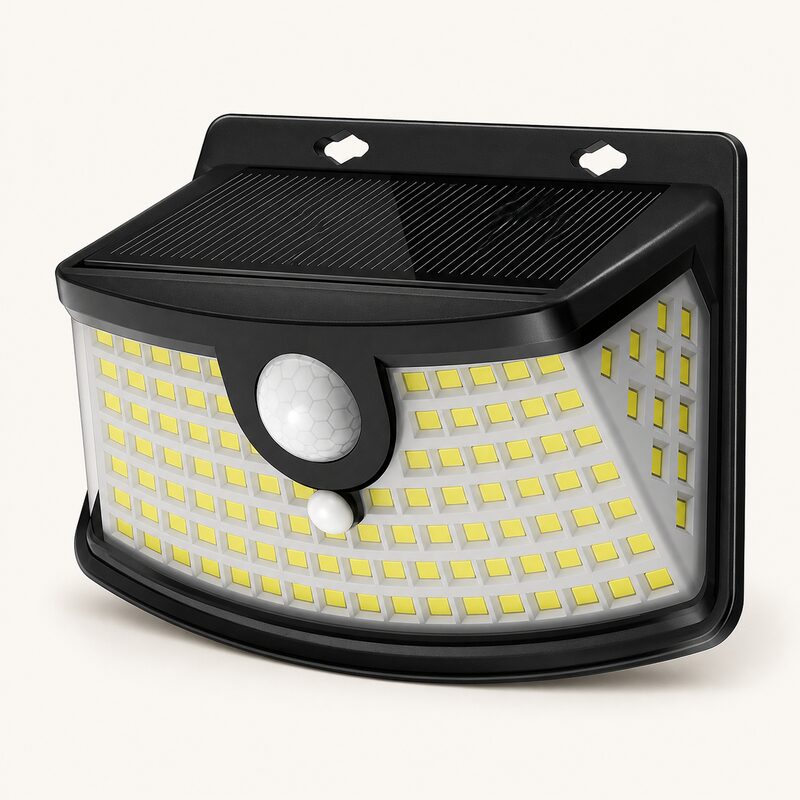
Aootek 182 LED Solar Motion Security Light
A different category from path lights — a wall-mounted floodlight for driveways, garage doors, and side-yard entry points. The 182-LED panel is genuinely bright by solar standards, and it's motion-triggered rather than always-on, staying dim or off between triggers and flaring to full output for roughly 20–30 seconds on movement.
The panel mounts separately on a cable, useful when the best light spot isn't the best sun spot. Battery capacity is generous, but a high-traffic driveway drains it faster than a quiet yard, and winter's shorter charging window compounds that. IP65-rated. Runs around $30–$40 for a two-pack.
- Motion-triggered brightness beats typical always-on solar lights
- Separate panel and light head mount independently, solving shade-vs-sun placement
- High trigger frequency on busy driveways drains the battery faster
- Detection range needs trial-and-error aiming to avoid false triggers
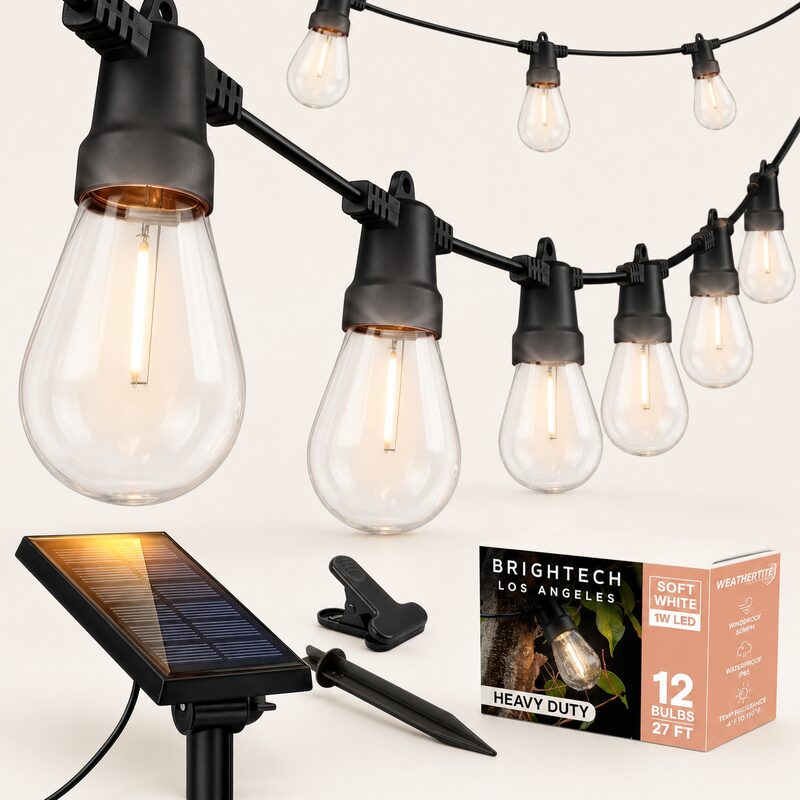
Brightech Ambience Pro Solar String Lights
Brightech's Ambience Pro line is built for patios and pergolas rather than ground lighting — shatterproof G50-style bulbs on a weatherproof cord, powered by an attached panel with dusk-to-dawn sensing. The bulbs give a warm café-string glow meant for ambiance, not task lighting or security.
The tradeoff with any solar string light is battery size versus bulb count: more bulbs on the same panel means fewer hours per charge. Expect several hours on a full summer charge, dropping in overcast weeks or winter. The battery pack is what owners most often report replacing after a season or two. Price runs roughly $40–$60 depending on length.
- Bulb quality looks closer to plug-in string lights than most solar competitors
- Detachable panel with a long lead lets it sit in full sun while the string stays shaded
- Shorter runtime per charge than a plug-in string light, less still in winter
- Battery pack is the weak point and not always easily replaceable
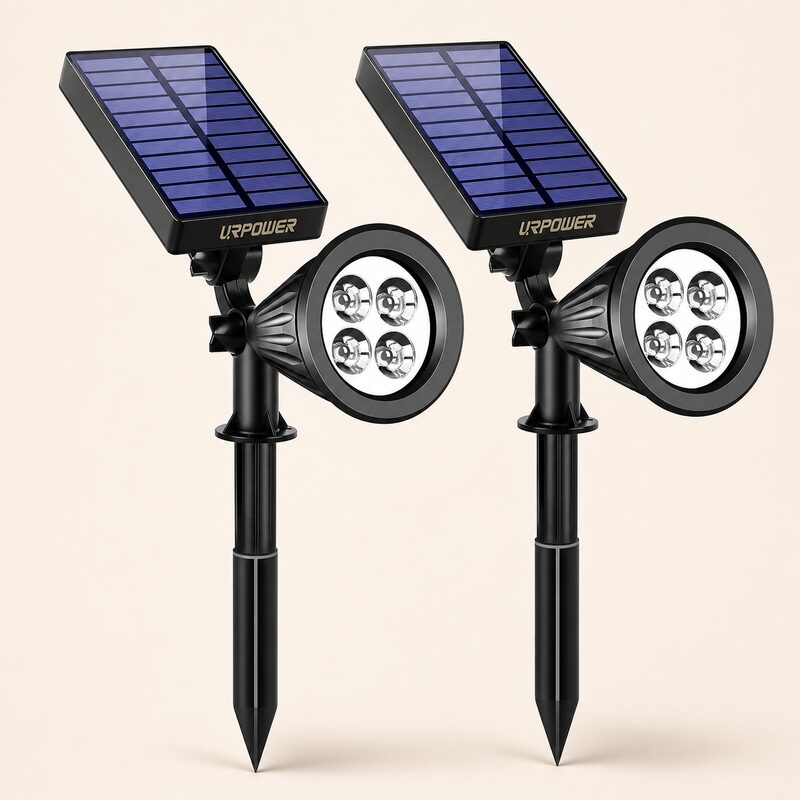
URPOWER 2-in-1 Solar Spotlights
URPOWER's spotlights are a "2-in-1" design that can stake into the ground and aim upward at a tree, or mount flush to a wall or fence pointing outward. That flexibility beats a fixed path light, letting one product uplight a tree, wash a garage door, or accent a flag depending on how it's staked.
Output is genuinely spotlight-style — tighter and more directional than a path light's ambient glow — but still modest in absolute lumens, better for highlighting a feature than replacing a floodlight. Runtime is several hours on a full summer charge and drops in winter. IP65-rated. Sold in 2 or 4-packs for $30–$50.
- Dual mounting (stake or wall) is more versatile than fixed-position path lights
- Genuinely directional beam suited to trees, flags, or architectural features
- Still accent-level brightness, not a substitute for a wired floodlight
- Plastic mounting hardware degrades faster than the light head itself
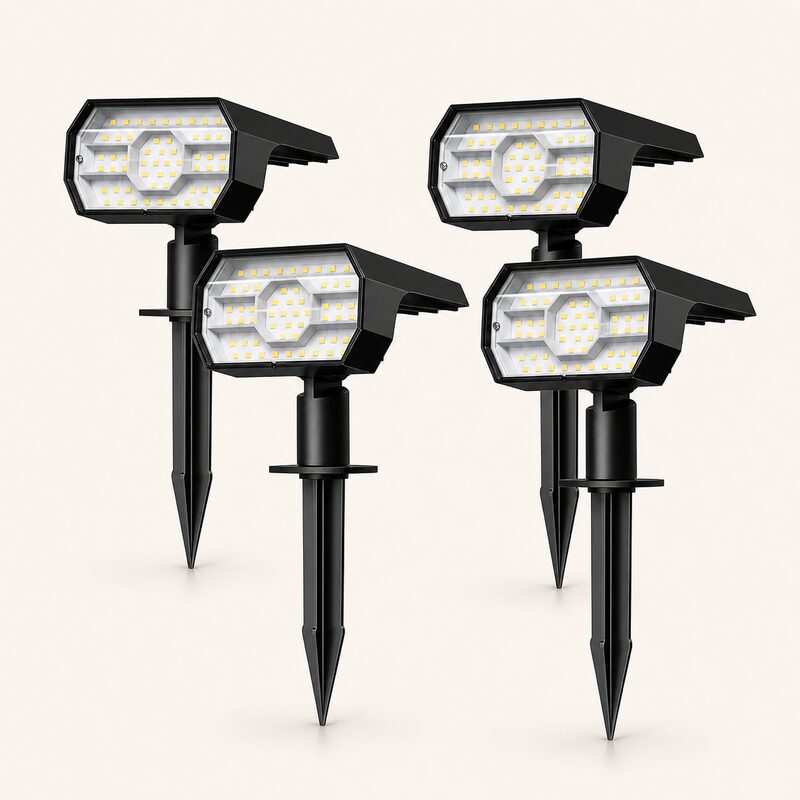
LITOM Solar Landscape Spotlights
LITOM's spotlight line covers similar ground to URPOWER at a lower price, with a stake-mounted, adjustable head aimed at uplighting shrubs, small trees, or flagpoles. It's a straightforward dusk-to-dawn light with no motion sensing or app control: stake it, aim the head, let the sensor handle on/off.
Brightness and battery capacity land in the same modest-but-usable range as most spotlights at this price — enough to make a shrub visible after dark, not to be mistaken for wired landscape lighting. Owners in colder climates report a dip in both once winter shrinks daylight, true of this whole category. Multi-packs of 4 to 8 run roughly $25–$45.
- Lower price than most 2-in-1 spotlight competitors for similar performance
- Simple, no-app dusk-to-dawn operation
- Stake only, no wall-mount option like the 2-in-1 designs
- Noticeably dimmer output in winter as charging hours shrink
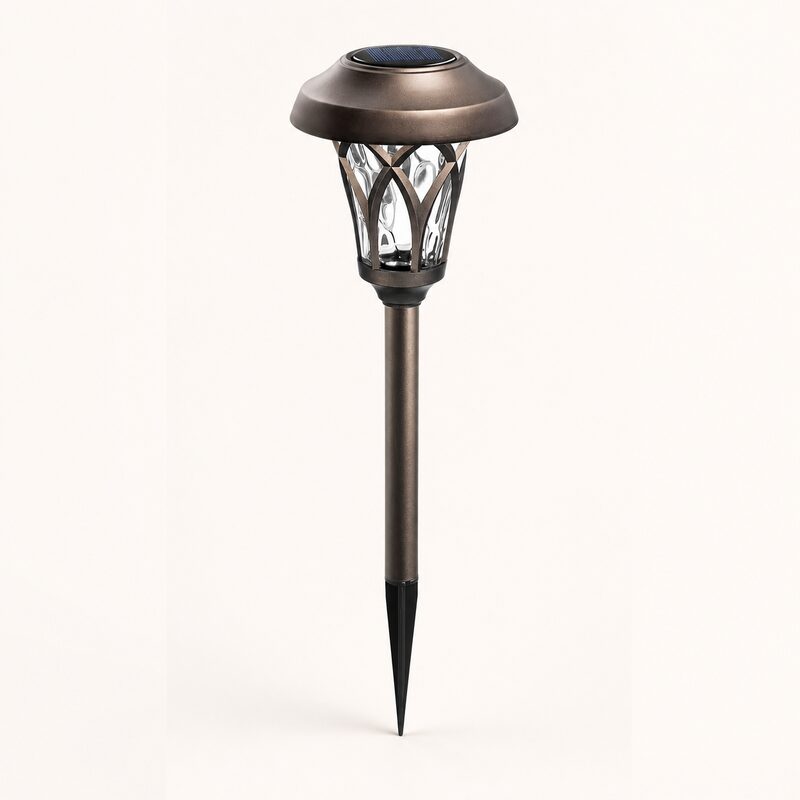
GIGALUMI Solar Path Lights
GIGALUMI sells stake-mounted path lights in large multi-packs, typically 8 or 12 units, at a per-light price well below named-brand options like Ring — a small frosted or crackle-glass dome over an LED, powered by a built-in panel and a small replaceable or sealed battery.
Brightness is on the low end even for path lights — enough to mark a walkway edge in the dark, not to light the surface for walking. Fair tradeoff at this price for outlining a border rather than functional lighting. Build quality is the honest weak point: plastic housings and stakes are prone to UV yellowing and cracking over a couple of seasons, and a portion of any multi-pack tends to fail faster than the rest — common across budget solar multi-packs generally. Runs roughly $2–$4 per light as a set.
- Lowest cost per light of any option here
- Tool-free stake installation, good for renters or seasonal use
- Dimmest output of the group — outline lighting only
- Housings and batteries commonly degrade within one to two seasons
How to choose solar outdoor lights
Match lumens to the job — path, accent, or security
Solar path and border lights typically put out 5 to 30 lumens per fixture — enough to mark an edge in the dark, not to read by or walk confidently without a phone flashlight backup. Landscape spotlights run a bit higher and more directional. Motion security lights are the only category here designed to be genuinely bright, staying dim or off and flaring to full output only when triggered. Buying a $3 path light expecting floodlight performance is the most common source of disappointment in this category.
Panel placement matters more than the spec sheet
Real-world performance depends on how much direct sun the panel gets, not the manufacturer's best-case runtime claim. A panel shaded by a tree, overhang, or tall grass for part of the day will undercharge regardless of brand. Lights with a separate panel on a cable, like the Aootek and Brightech models above, solve this by letting the light and the panel each go wherever works best.
Battery replaceability, IP ratings, and winter dips
Rechargeable batteries — usually AA NiMH or small lithium packs — degrade over one to three years of daily charge cycles. A replaceable AA-style battery can be swapped for a few dollars; a sealed pack makes the whole fixture disposable once it won't hold a charge, so check whether a battery compartment opens before assuming a light is permanent. Separately, look for at least IP44 for light rain and IP65 for standing water or snow — and expect every solar light here to run dimmer and for fewer hours from November through February, since there's less daylight to charge and the sun sits lower. That's physics, not a defect.
Why cheap multi-packs die in a season — and when that's fine anyway
Budget path light multi-packs use the smallest, least durable components available, so it's common for a portion of an 8- or 12-pack to fail or dim within one to two seasons. For a holiday season, a rental, or a temporary layout, that's an acceptable tradeoff for the price. For a permanent walkway, a single better-built product line is the better math over time.
Frequently asked questions
How bright are solar path lights compared to plug-in lights?
Considerably dimmer. Most solar path lights put out roughly 5 to 30 lumens, while a comparable wired fixture often runs 50 lumens or more. Treat solar path lights as accent or border lighting, not wired-level illumination.
Do solar lights work in winter?
Yes, but with reduced brightness and shorter runtime, since shorter days and lower sun angles mean less charging time. Snow covering the panel stops charging until cleared. Larger batteries and separate, adjustable panels hold up better through winter than basic all-in-one path lights.
How long do solar outdoor lights last before needing replacement?
The LED can last for years, but the rechargeable battery is the limiting part, typically degrading within one to three years of daily use. A replaceable AA-style battery can be kept running past that point cheaply; sealed-battery lights get replaced once the battery won't hold a charge.
Do solar motion security lights work as well as wired floodlights?
They get close on peak brightness during a trigger, since they save battery by staying dim between triggers, but can't sustain that output continuously. High-traffic areas that trigger the sensor often drain the battery faster, and performance still dips in winter.
Is it worth buying a more expensive solar light over a budget multi-pack?
For a permanent walkway, a better-built single product with a replaceable battery usually costs less over several years than repeatedly replacing a budget multi-pack. For temporary or low-stakes placement, a multi-pack getting one or two good seasons is a reasonable trade for the price.
Bottom line
For most homeowners lighting a walkway, the Ring Solar Pathlight is the strongest all-around pick, with clean design and reliable dusk-to-dawn operation, especially with a Ring ecosystem already in the house. Where security matters more than ambiance, the Aootek 182 LED earns its keep with genuinely bright motion-triggered output. Match everything else to the job: spotlights for uplighting a tree, string lights for a patio, and a budget multi-pack only where a season or two of life is an acceptable tradeoff.
Our rankings and editorial scores consider product specifications, aggregated owner feedback, availability, drawbacks, and commercial relationships. Compensation may affect inclusion or ordering; scores are our own assessments and are not Amazon or customer ratings. Commercial relationships do not permit unsupported product claims. Read more about how we review.