
This page contains affiliate links. If you buy through them, we may earn a commission at no additional cost to you. Read our affiliate disclosure.
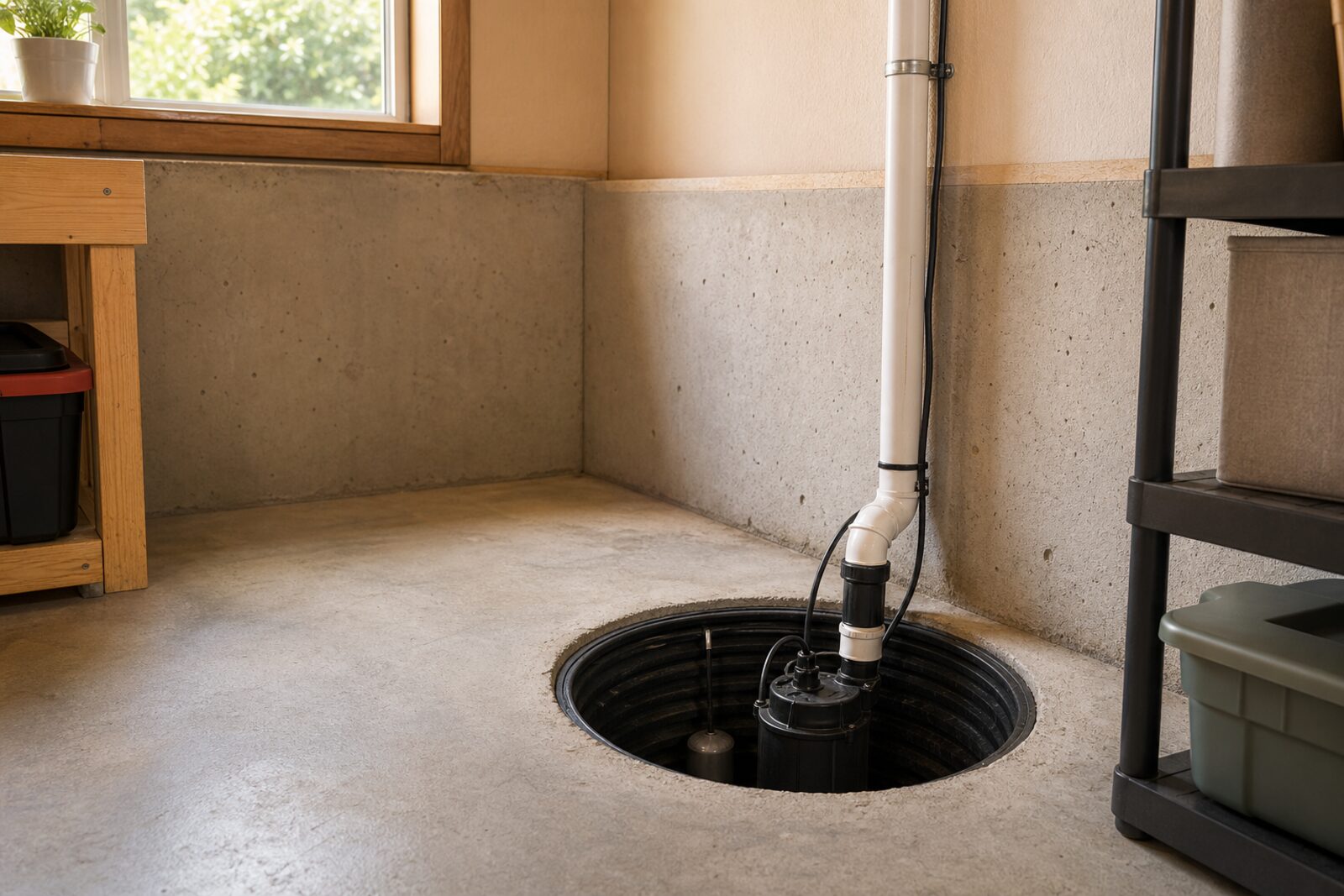
Nobody thinks about a sump pump until the sky opens up and the basement floor drain starts gurgling. It sits in a pit under a plastic lid, doing nothing, for months at a stretch — right up until a storm rolls through, the water table rises, and it either keeps the basement dry or lets a few thousand gallons in overnight. Below are six widely available sump pumps for a US home in 2026, covering primary pumps, a budget option, and battery-backup systems built for the exact moment the power also goes out.
- Zoeller M53 Mighty-Mate — Best Overall
- Superior Pump 91250 — Best Budget
- Wayne CDU980E — Best High-Capacity
- Liberty Pumps 257 — Best Cast Iron Build
- Wayne ESP25 — Best Battery Backup
- Basement Watchdog Combination System — Best All-in-One Combo
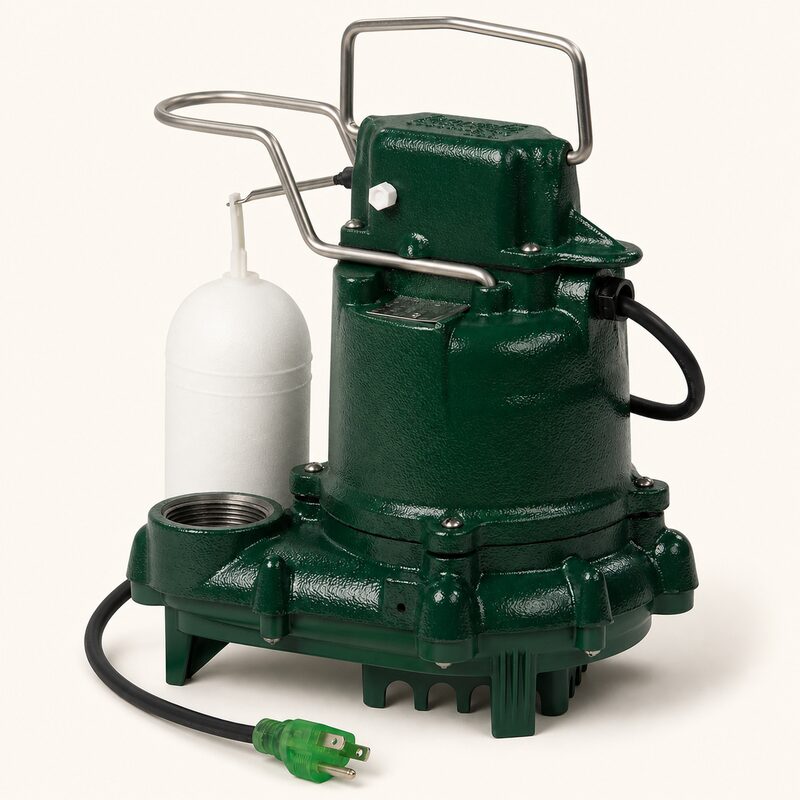
Zoeller M53 Mighty-Mate
The M53 has been a standard plumber recommendation for decades: a 1/3 HP cast-iron submersible pump rated around 43 GPM at 10 feet of head, tapering off as head height increases. Cast iron sheds heat better than an all-plastic body during the long run cycles a heavy storm demands. It uses a vertical float switch, fitting narrow pits better than a tethered float, though the trigger point isn't adjustable.
Price typically runs $150–$200 for the pump alone. It's a primary pump only, with no battery-backup version, so a flood-prone basement should pair it with a separate backup.
- Cast iron handles heat and long duty cycles better than thermoplastic pumps
- Long track record and widely available replacement parts
- Vertical float's trigger point isn't adjustable to a specific pit depth
- No battery-backup variant — no protection during a power outage
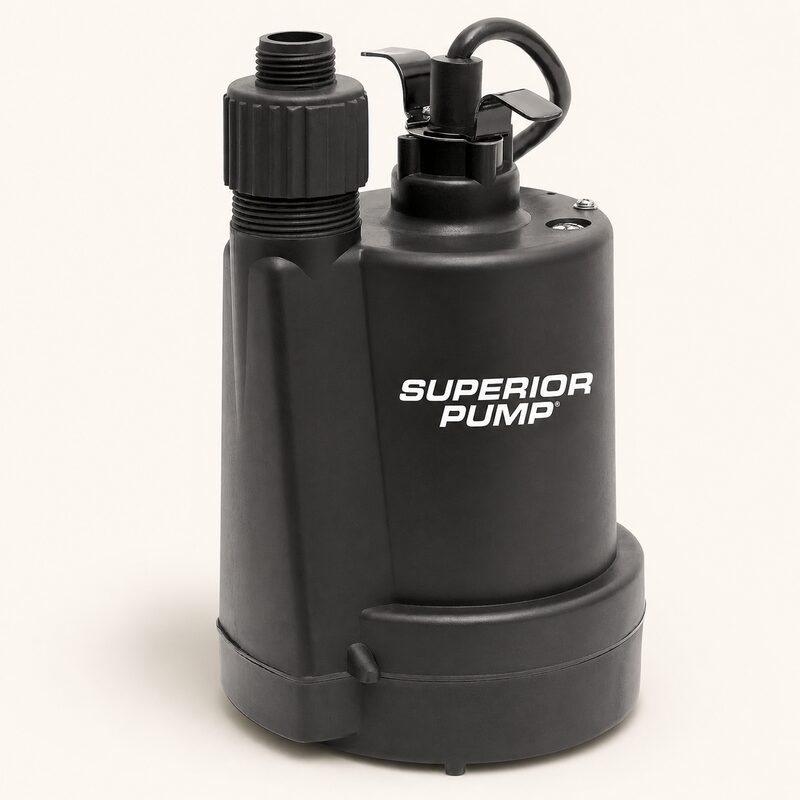
Superior Pump 91250
The 91250 is a 1/4 HP thermoplastic submersible pump, typically priced under $100 — the least expensive option here from a recognizable brand. Rated output is around 40 GPM at zero head, tapering off quickly as lift increases, so it suits a shallow pit and short discharge run better than a deep basement.
It uses a tethered float switch, which needs real clearance in the pit to swing without snagging on the wall or a discharge pipe. The thermoplastic housing keeps cost down but doesn't shed heat as well as cast iron under sustained use.
- Lowest price point among widely trusted brands
- Lightweight body is easy to install or swap without help
- Tethered float needs real clearance — a poor fit for narrow, crowded pits
- Lower horsepower means less margin for a high water table or deep pit
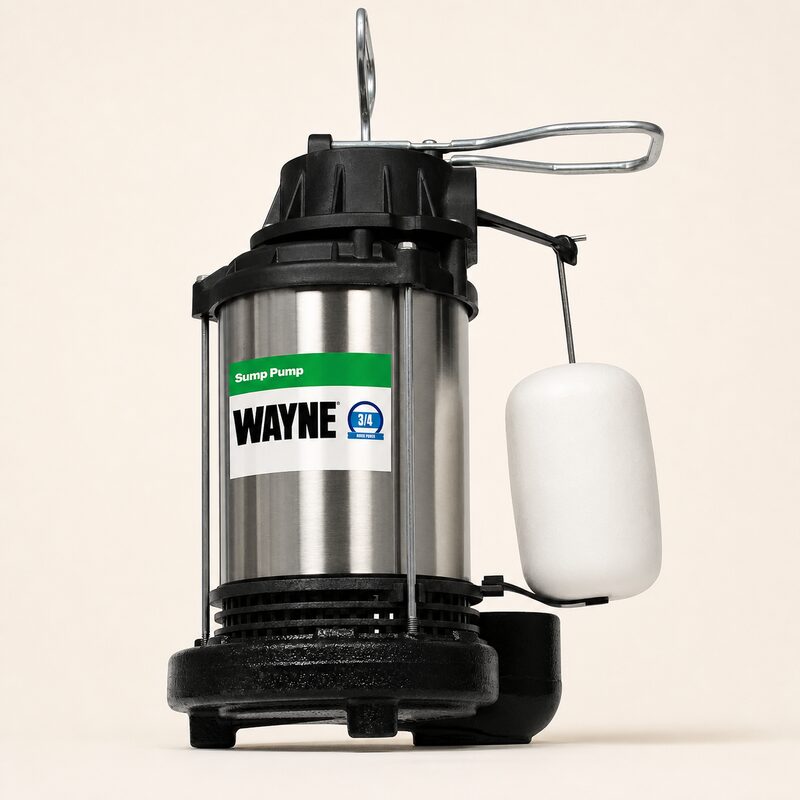
Wayne CDU980E
The CDU980E steps up to 1/2 HP and a cast-iron body, rated around 70 GPM at 10 feet of head — real headroom for a high water table or a basement that's flooded before. It uses Wayne's IntelliFloat electronic sensor instead of a mechanical float arm, avoiding the jamming that debris causes in a pit.
Price generally lands at $180–$230. The sensor beats a tethered float on reliability but still depends on continuous power — no help if the same outage that caused the flooding also kills the pump. Pairing it with a battery backup is worth considering for a basement with a history of intrusion.
- 1/2 HP and cast iron give real capacity margin for high-water-table basements
- Electronic sensor avoids the jamming failure mode of float arms
- Costs more than the 1/3 HP options here for a home that doesn't need it
- Still depends on grid power — no backup if the outage kills the pump
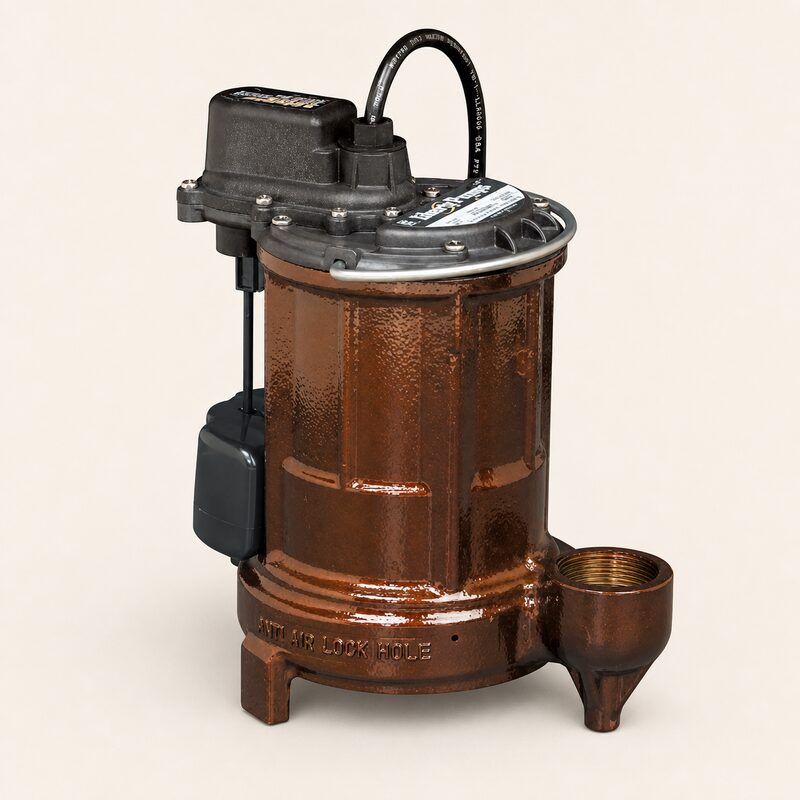
Liberty Pumps 257
Liberty's 257 is a 1/3 HP cast-iron submersible pump plumbers point to for build quality — motor housing, volute, and switch mount are all cast iron rather than mixed with plastic, backed by a longer warranty than most pumps in its class. Rated flow is around 45 GPM at 10 feet of head, in line with other 1/3 HP pumps here.
It uses a vertical float switch (a tethered version, the 257V, is also sold) and, like the Zoeller M53, is a primary pump with no built-in backup. Price typically runs $180–$230, reflecting the all-cast-iron build rather than higher output.
- All-cast-iron construction, including parts others mold in plastic
- Longer manufacturer warranty than most comparable pumps
- Costs more than comparable 1/3 HP pumps for similar rated flow
- No battery-backup variant — needs a separate system for outage protection
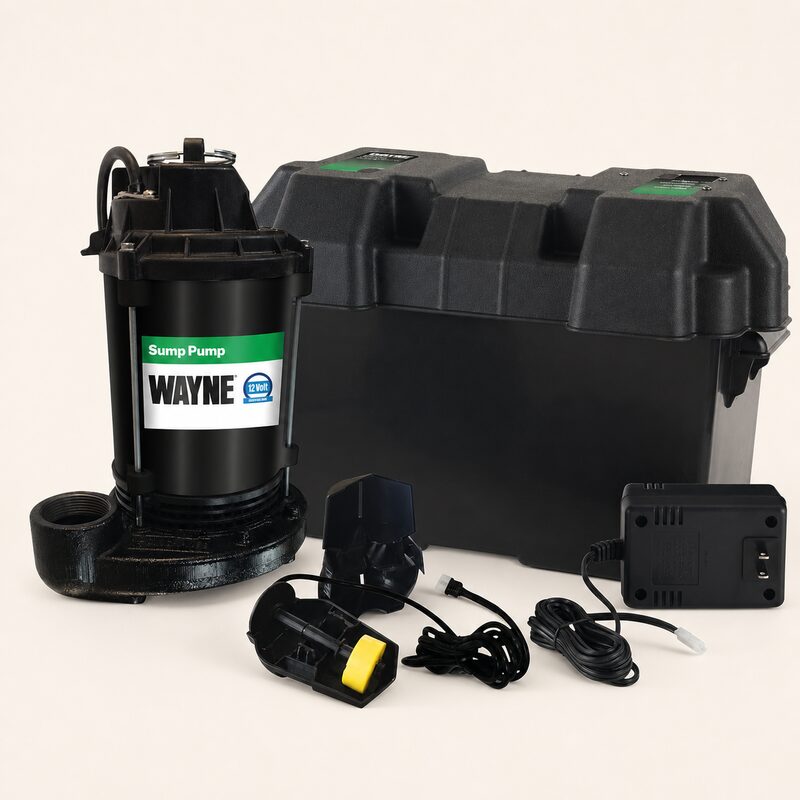
Wayne ESP25
The ESP25 is a dedicated battery-backup pump, meant to run alongside an existing primary rather than replace one. It runs on a 12V deep-cycle battery (sold separately in most kits) and switches on automatically if the primary fails or power goes out — precisely the scenario where a basement is most at risk, since the storms that flood a pit are also the storms most likely to knock out grid power. Rated output is lower than a primary pump, generally 20–25 GPM at low head, built to hold the line temporarily rather than serve as the main pump.
Wayne's system includes a monitor that alerts on primary pump failure, low battery, or high water. Price for the kit (charger and controller, no battery) runs $200–$300, with a compatible battery adding $100–$200 more.
- Runs during a power outage, exactly when many basement floods happen
- Alert system flags primary pump failure and low battery before it floods
- Battery sold separately in most kits, adding real cost beyond the price
- Lower output than a primary pump — built to buy time, not run indefinitely
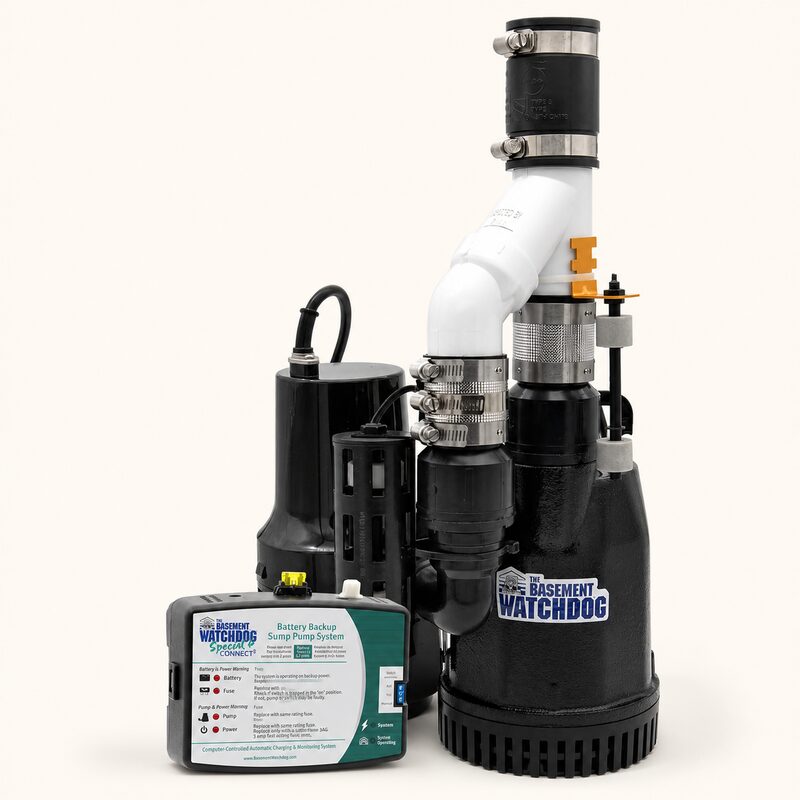
Basement Watchdog Combination System
Basement Watchdog's combination units pair a primary AC pump with a battery-backup pump in one packaged system, engineered together instead of matched by the homeowner. That simplifies both buying and fitting the pit, since switch heights and clearances are designed to work as a set.
Primary-side output typically runs 1/3 to 1/2 HP depending on the model, with the backup adding a lower-GPM safety net on battery power. Price for the full combo generally runs $350–$500 including primary pump, backup pump, and charger, with the battery itself usually a separate purchase.
- Primary and backup pumps engineered together, simplifying pit fit
- One purchase covers both normal operation and outage protection
- Battery still usually sold separately, and combo pricing runs higher
- Less flexible than mixing a favorite primary with a favorite backup
How to choose a sump pump
Sizing to your pit and water table
Horsepower and GPM ratings only tell part of the story without knowing the pit's dimensions and how fast it fills. A pit that refills slowly suits a modest 1/3 HP pump; one that refills within a minute or two during heavy rain, or a home with a genuinely high water table, needs the extra margin a 1/2 HP pump provides. Oversizing slightly costs little compared to undersizing during the storm that matters.
Head height and GPH curves, honestly explained
Every pump's GPM rating on the box is measured at a specific "head height" — usually zero — and that number drops as water travels higher to reach the discharge point. A pump rated 40 GPM at zero head might move closer to 25–30 GPM at the 8–10 feet of vertical lift a typical basement discharge line requires. The figure worth checking is flow at the head height matching the actual installation, not the headline number.
Switch reliability as the usual failure point
Pump motors are fairly durable; the switch is where most failures happen. Tethered floats need open space to swing without snagging on the wall or debris. Vertical floats take less room but have a fixed trigger height. Electronic sensors remove the moving parts but still depend on continuous power and clean contacts. None are maintenance-free; checking that the switch moves freely is worth doing at least once a year.
Why a battery backup matters
The scenario that floods most basements — a sustained heavy storm — is also the scenario most likely to knock out grid power, and a primary pump with no backup does nothing once power is gone. A battery-backup pump, standalone like the Wayne ESP25 or built into a combo like Basement Watchdog's, exists to bridge that gap until power returns or someone can intervene.
Replace vs. repair
A pump making new noise, running longer than it used to, or showing rust weeping from the housing is usually a candidate for replacement — submersible motors aren't built to be rebuilt, and diagnosing one often costs close to a new unit. A newer pump with a stuck float is often fixable by clearing pit debris. Most sump pumps are rated for 5–10 years of service; one nearing that range is worth replacing proactively, before a storm rather than after a flood.
Frequently asked questions
How often should a sump pump be replaced?
Most manufacturers and plumbers put average service life at 5–10 years, depending on cycle frequency and water quality. A pump nearing that range, or already showing rust or unusual noise, is worth replacing before the next major storm.
Do I need both a primary pump and a battery backup?
Not every basement needs one, but any basement that's flooded before, or sits somewhere prone to storm-related outages, benefits from a backup. The primary handles normal operation; the backup matters specifically during a power outage or primary failure — unfortunately also when storms are most severe.
What's the difference between a tethered float, a vertical float, and an electronic switch?
A tethered float swings up on a cord as water rises, reliable but needing clearance in the pit. A vertical float rides a rigid rod, taking less space but with a fixed trigger height. An electronic switch has no moving float arm, generally more resistant to jamming.
Why does my pump's GPH rating seem lower in real use than on the box?
The printed rating is measured near zero head height, and every pump loses flow as water is pushed higher to reach the discharge point. A basement with 8–10 feet of vertical lift will see meaningfully lower real-world flow than the box's headline number.
Can I install a sump pump myself, or do I need a plumber?
Swapping a like-for-like pump into an existing pit and discharge line is a job many homeowners handle themselves. Installing a new pit or adding a battery-backup system tied into household wiring is bigger work where hiring a plumber is the safer route.
Bottom line
For most homeowners replacing a failed pump or protecting a basement for the first time, the Zoeller M53 Mighty-Mate remains the safest default primary pump — proven, cast iron, and reasonably priced. Anyone on a tight budget can start with the Superior Pump 91250, provided the pit has room for its tethered float. A home with a high water table or history of flooding should look at the higher-capacity Wayne CDU980E or the all-cast-iron Liberty Pumps 257. But the single upgrade most basements are missing isn't more horsepower — it's a battery backup. Pairing any primary pump with the Wayne ESP25, or buying an integrated system like the Basement Watchdog combo from the start, is what actually protects a basement during the storm that also kills the power.
Our rankings and editorial scores consider product specifications, aggregated owner feedback, availability, drawbacks, and commercial relationships. Compensation may affect inclusion or ordering; scores are our own assessments and are not Amazon or customer ratings. Commercial relationships do not permit unsupported product claims. Read more about how we review.