
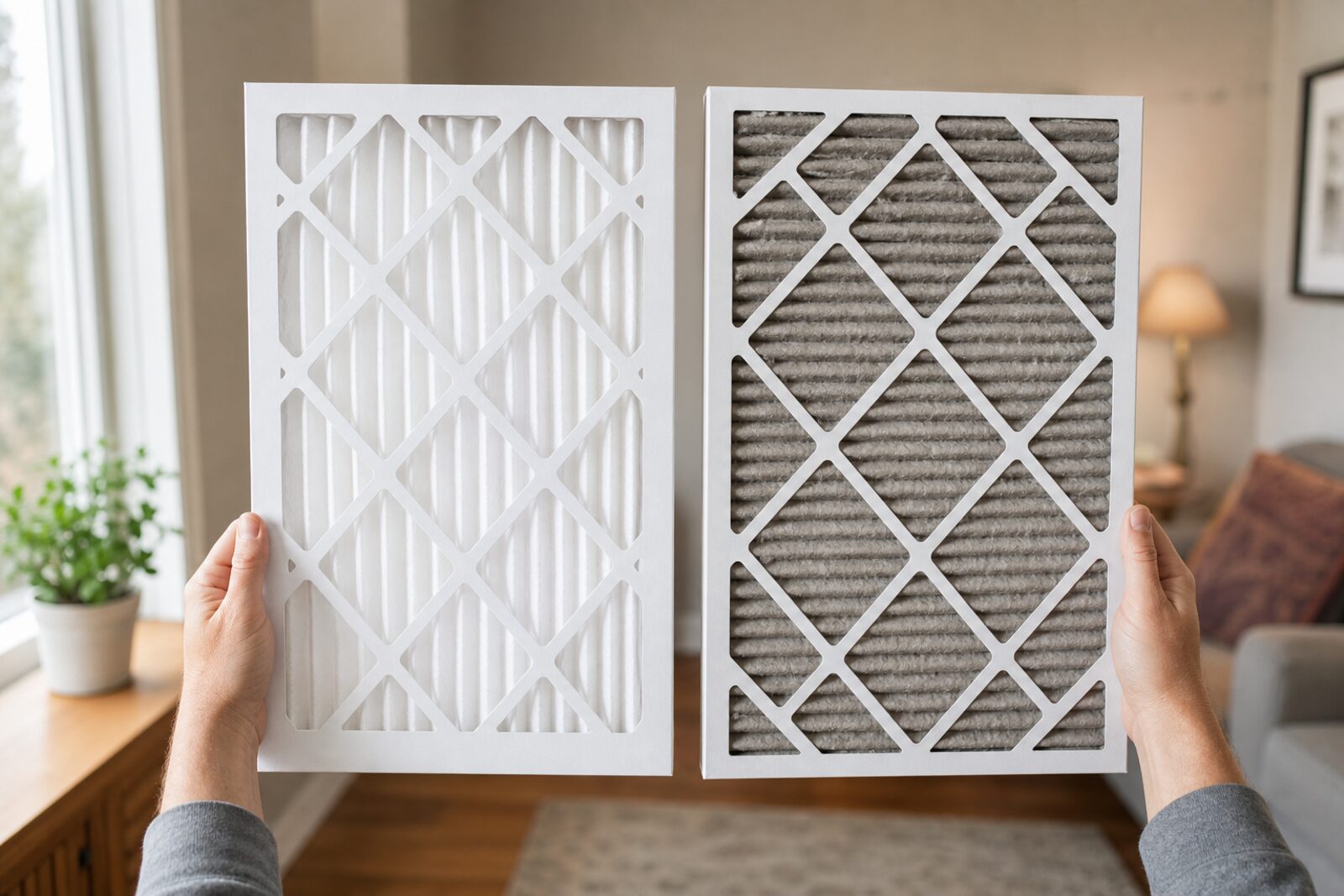
Most 1-inch furnace filters need to be replaced every 1 to 3 months, while thicker media filters built into a whole-home cabinet can often go 6 to 12 months between changes. The exact number depends on the filter's thickness, how many people and pets are in the house, and how much the system runs. This guide covers the baseline schedule by filter type, the factors that shorten or stretch it, what a neglected filter actually does to your system, and how to check yours in under a minute.
The quick answer by filter type
Filter thickness is the single biggest factor in replacement frequency. Thin filters have less surface area to trap debris, so they clog faster. Thicker filters, usually installed in a dedicated media cabinet near the furnace or air handler, have far more surface area and last correspondingly longer.
| Filter thickness/type | Typical replacement interval |
|---|---|
| 1-inch (standard fiberglass or pleated) | Every 1-3 months |
| 2-inch pleated | Every 3-6 months |
| 4-inch pleated / media | Every 6-9 months |
| 5-inch whole-home media cabinet | Every 9-12 months |
| Washable/electrostatic | Clean every 1-2 months, per manufacturer |
These are starting points, not fixed rules. A household with pets, allergies, or a system that runs constantly should lean toward the shorter end of each range.
What changes the schedule
Pets in the home
Fur and dander are two of the fastest ways to load up a filter. A home with one dog or cat typically needs to check the filter monthly even if the base recommendation for that filter type is longer. Multiple pets, or a dog that sheds heavily, can justify replacing a 1-inch filter every 30 days without exception.
Allergies or asthma in the household
If someone in the home has allergies, asthma, or another respiratory condition, a fresh filter matters more than stretching its lifespan for cost savings. HVAC technicians generally recommend the shortest interval for the filter type in these households, and sometimes a higher-MERV filter as well, with the tradeoff below in mind.
Filter rating (MERV)
A higher MERV rating means the filter catches smaller particles, which also means it captures more material and restricts airflow sooner. A MERV 13 filter will typically need replacing more often than a MERV 8 filter of the same thickness, even in the same house. If you upgrade to a higher-rated filter for allergy or air-quality reasons, check it more frequently than the box suggests until you know how fast it loads in your specific home.
Running the fan constantly
Thermostats set to "fan: on" instead of "fan: auto" circulate air through the filter around the clock, not just when heating or cooling is actively running. This traps more particles over the same calendar period, which shortens the effective lifespan of the filter compared to a system that only runs the fan on demand.
Construction or renovation dust
Drywall dust, sawdust, and debris from any remodeling project clog a filter far faster than normal household use. During active construction, check the filter every one to two weeks and expect to replace it more than once during the project, even for filters normally rated to last months.
Wildfire smoke season
In regions affected by wildfire smoke, filters can load up with fine particulate matter much faster during smoke events. Check the filter after any multi-day smoke episode and replace it if it looks visibly gray or dark, regardless of when it was last changed.
Vacation homes and low-use properties
A house that sits empty most of the year accumulates far less dust and debris, so the filter clogs more slowly. Even so, filters degrade and can develop mildew or odor issues sitting in a humid space, so replace them on a calendar schedule (such as at the start of each season) rather than assuming a low-use filter lasts indefinitely.
What happens if you don't change it
A clogged filter doesn't just get dirtier over time — it actively works against the system.
- Airflow drop. As the filter fills with debris, less air can pass through it, forcing the blower to work harder to move the same volume of air.
- Frozen evaporator coils. Restricted airflow across the coil can cause it to drop below freezing, forming ice that blocks airflow entirely and can lead to water damage as it thaws.
- Higher energy bills. A system fighting a clogged filter uses more electricity to deliver the same amount of heating or cooling, and often runs longer cycles to reach the thermostat setpoint.
- Blower motor strain. Extended operation against high resistance shortens the life of the blower motor and increases the chance of a costly repair.
- Worse dust and allergens indoors. Once a filter is fully loaded, air starts bypassing it or pushing trapped particles back into circulation, undoing the filter's job entirely.
How to check and change your filter
Locating and reading a filter takes less than a minute once you know where to look.
Finding the filter. Most systems have the filter in one of two places: a slot on the return air duct near the furnace or air handler, or inside the return air grille in a wall, ceiling, or floor somewhere in the house. If you're not sure which setup you have, check the return air grille first, since that's the more common residential location.
Reading the size on the frame. The filter's dimensions are printed on the cardboard frame, usually as three numbers such as 20x25x1. The first two numbers are length and width; the third is thickness. Buy replacements matching that exact size rather than rounding — a filter that's slightly undersized will let unfiltered air leak around the edges.
Airflow arrow direction. Every disposable filter has an arrow printed on the frame showing the direction air should flow through it. That arrow should point toward the furnace or air handler (in the direction air is being pulled), not back out toward the room. Installing it backward reduces its effectiveness and can strain the system.
The hold-it-to-the-light check. Pull the filter out and hold it up to a light source, a window, or a flashlight. If light passes through easily, it still has useful life left. If the filter looks gray, matted, or blocks most of the light, it's overdue for replacement — this simple check is more reliable than going strictly by the calendar, especially with pets or a higher-MERV filter in place.
Frequently asked questions
Can you run your HVAC system without a filter?
Running the system without any filter installed, even briefly, lets dust and debris reach the blower and coil directly, which accelerates wear and can reduce indoor air quality. If you're between filter sizes or waiting on a replacement, it's better to leave the old filter in a little past its ideal date than to run with none at all.
Are washable filters actually worth it?
Washable and electrostatic filters can reduce the ongoing cost of buying replacements, but they require consistent cleaning on a set schedule and full drying before reinstalling — putting a damp filter back in can promote mold growth. They also tend to have lower MERV ratings than comparable disposable pleated filters. Whether they're worth it usually comes down to whether you'll reliably keep up with the cleaning schedule.
Which side of the filter faces the furnace?
The side the airflow arrow points toward should face the furnace or air handler, meaning air is being pulled through the filter in that direction. If there's no visible arrow, the pleats typically angle in the direction air should flow, but checking your unit's manual for the correct orientation is worth doing once so you know for future changes.
Does a dirty filter cause an AC to freeze up?
Yes. A heavily clogged filter restricts airflow across the evaporator coil, and reduced airflow allows the coil's surface temperature to drop below freezing, causing ice to form. This is one of the most common causes of a frozen AC unit and is usually resolved simply by replacing the filter and letting the ice thaw before running the system again.
What happens if you change your filter too often?
There's little downside to replacing a filter earlier than strictly necessary, aside from the added cost of filters. The bigger risk is the opposite: assuming a filter is fine because it hasn't reached its "official" interval, when household conditions have actually loaded it up faster than average.
Bottom line
Start with the baseline for your filter's thickness, then adjust down for pets, allergies, high-MERV filters, or constant fan use. A quick visual check against a light source is the fastest way to confirm whether a filter needs changing now or can wait. For help picking a filter that fits your system and household, see our best HVAC air filters roundup.
Our rankings and editorial scores consider product specifications, aggregated owner feedback, availability, drawbacks, and commercial relationships. Compensation may affect inclusion or ordering; scores are our own assessments and are not Amazon or customer ratings. Commercial relationships do not permit unsupported product claims. Read more about how we review.